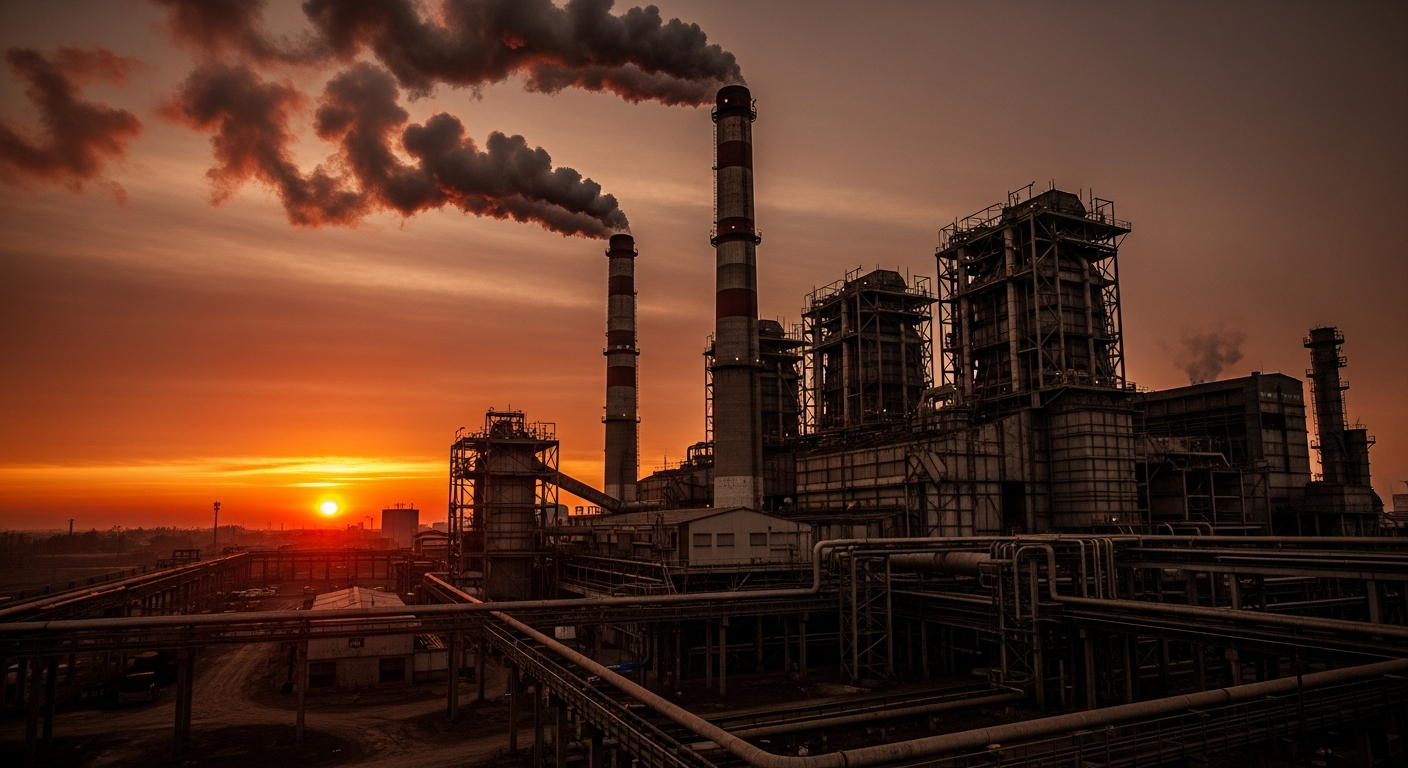
The "endangerment finding," established in 2009 under the Obama administration, declared that greenhouse gases pose a threat to public health and welfare. This scientific and legal conclusion was critical, as it triggered the EPA's authority to regulate these emissions under the Clean Air Act, a foundational piece of U.S. environmental legislation designed to control air pollution.
Key Takeaways
-
Foundational Ruling Reversed: The Trump administration has formally overturned the EPA's 2009 "endangerment finding."
-
Regulatory Authority Undermined: This finding has been the legal basis for all federal regulations on greenhouse gas emissions, primarily under the Clean Air Act.
-
Broad Impact: Rather than repealing individual climate rules, this action attacks the core authority, potentially invalidating a wide array of existing and future regulations.
-
Focus on Tailpipe Emissions: The immediate context for the repeal is part of an overhaul of tailpipe pollution standards, but its reach extends far beyond.
-
Legal & Environmental Ramifications: The move is expected to trigger significant legal challenges and marks a dramatic shift in U.S. climate policy.
Main Analysis
The Endangerment Finding: A Regulatory Cornerstone
The 2009 endangerment finding was not merely a policy decision but a scientific conclusion affirmed by extensive research and upheld by the Supreme Court. It posited that six specific greenhouse gases—carbon dioxide, methane, nitrous oxide, hydrofluorocarbons, perfluorocarbons, and sulfur hexafluoride—endanger public health and welfare. This finding provided the legal impetus for the EPA to issue a range of regulations, from vehicle emissions standards to power plant pollution limits. By establishing that these gases were pollutants under the Clean Air Act, it empowered the agency to tackle climate change through domestic regulatory mechanisms.
Prior to this finding, the Clean Air Act, primarily designed for conventional pollutants like sulfur dioxide and particulate matter, had not explicitly addressed greenhouse gases. The endangerment finding bridged this gap, transforming a broad environmental law into a potent tool for climate action. Its repeal represents a direct challenge to the scientific consensus on climate change and the legal framework built upon it.
The Trump Administration's Deregulatory Agenda
The Trump administration has consistently pursued a deregulatory agenda, particularly concerning environmental protections deemed burdensome to industry. The decision to overturn the endangerment finding is consistent with this broader philosophy. While explicitly framed as part of an effort to overhaul tailpipe pollution standards, the method chosen—attacking the underlying legal authority—reveals a more comprehensive objective: to fundamentally limit the EPA's capacity to regulate greenhouse gases across all sectors.
This approach avoids the more protracted process of repealing individual rules and instead seeks to invalidate them en masse by removing their legal foundation. Critics argue this represents an attempt to bypass established environmental safeguards, prioritizing short-term economic gains over long-term environmental and public health concerns. Proponents, however, contend that the finding represented federal overreach and imposed undue economic burdens on industries.

Broader Implications for U.S. Climate Policy
The immediate impact of this repeal is expected to be felt across various sectors, not just automotive. Efforts to regulate emissions from power plants, oil and gas operations, and other industrial sources could face significant legal challenges or be entirely dismantled. The move also signals a retreat from global climate leadership, potentially complicating international efforts to address climate change at a critical juncture.
Environmental organizations and states committed to climate action are expected to mount robust legal challenges, arguing against the scientific and legal basis of the repeal. The ensuing legal battles could stretch for years, creating significant uncertainty around the future of U.S. climate policy and regulatory enforcement. This uncertainty may deter investment in cleaner technologies and leave the nation's environmental protection framework in flux.
Public Sentiment
The decision has predictably drawn a sharp divide in public and political sentiment. Environmental advocacy groups have vehemently condemned the repeal, labeling it a dangerous rollback of public health protections and a capitulation to polluters. Organizations like the Sierra Club and the Natural Resources Defense Council are expected to lead legal challenges, emphasizing the scientific consensus on climate change and the EPA's mandate to protect the environment. They argue that this move threatens air quality and accelerates the climate crisis.
Conversely, some industry groups and conservative think tanks have applauded the administration's actions, characterizing the endangerment finding as an example of regulatory overreach that stifled economic growth. They advocate for a more limited role for federal agencies in environmental regulation, preferring market-based solutions or state-level controls. The debate underscores the deep ideological chasm concerning environmental governance and the balance between economic development and ecological protection in the United States.
Conclusion
The Trump administration's reversal of the "endangerment finding" represents a pivotal moment in U.S. environmental history. By targeting the legal foundation rather than individual regulations, the administration has launched a broad assault on federal climate policy, aiming to drastically curtail the EPA's authority to combat greenhouse gas emissions. While the immediate consequences will unfold in the courts and through further policy adjustments, the long-term implications for public health, environmental quality, and America's role in global climate efforts are substantial and far-reaching. The battle over the future of climate regulation in the United States is far from over, with legal challenges and future electoral outcomes poised to determine the ultimate fate of this foundational environmental safeguard.