Key Takeaways
-
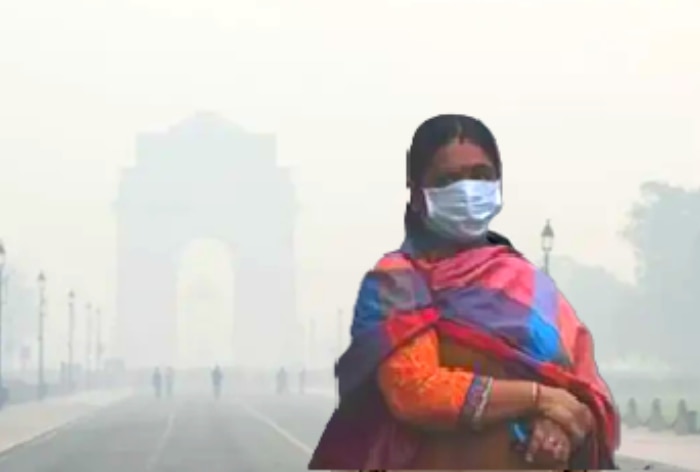
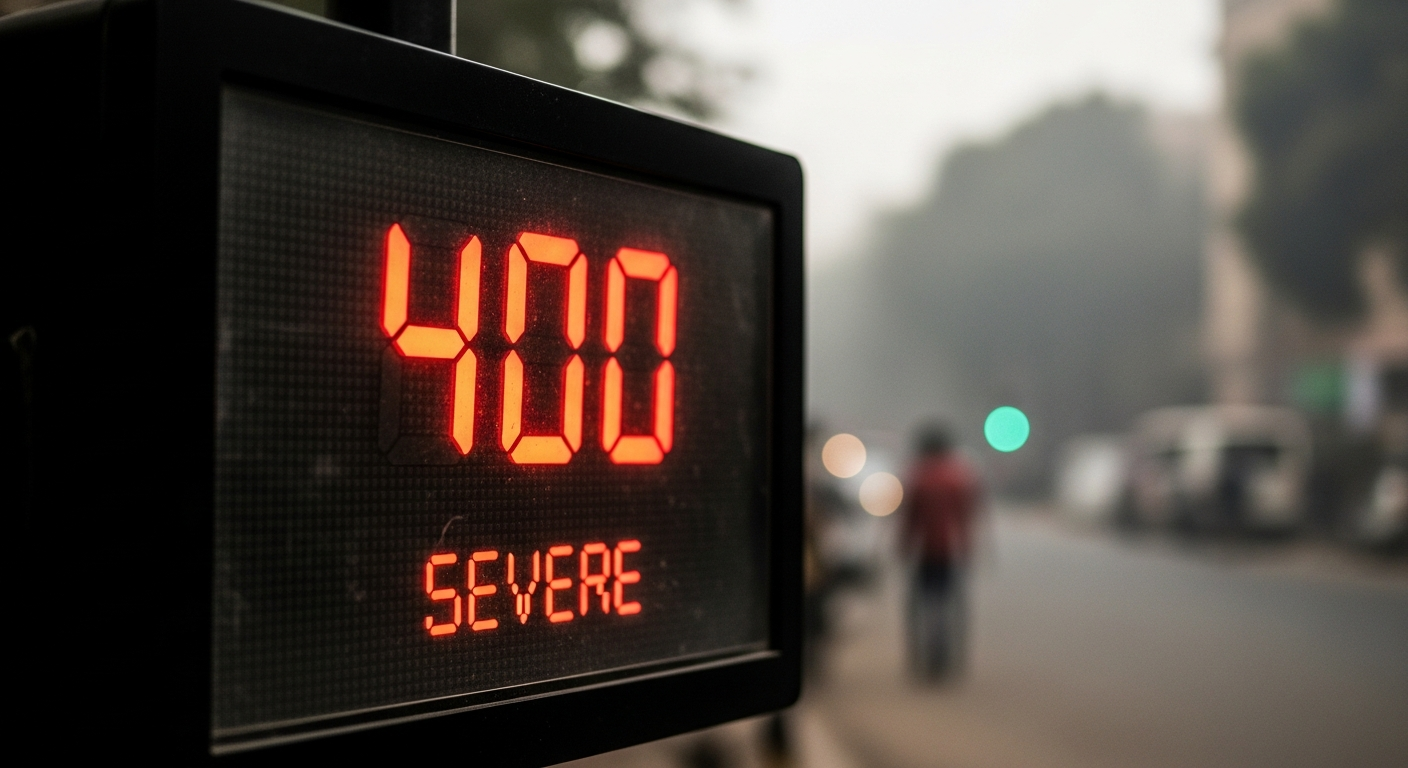
Critical Air Quality: Delhi's Air Quality Index (AQI) has broadly surpassed 300, registering 'very poor', with Anand Vihar reaching a alarming 400, classified as 'severe'.
-
Intensifying Cold Wave: Temperatures have plummeted to 3.2°C in areas like Safdarjung, triggering an IMD Orange alert for cold wave conditions.
-
Dense Fog Impact: Widespread dense fog has drastically reduced visibility, leading to significant travel disruptions across the capital and NCR.
-
Synergistic Crisis: The combined effect of cold, fog, and stagnant air is trapping pollutants, exacerbating the overall environmental challenge.
Intertwined Crises: Cold Wave, Dense Fog, and Stagnant Air
Delhi and its adjoining National Capital Region (NCR) are currently grappling with an acute environmental crisis characterized by the simultaneous intensification of a severe cold wave, dense fog, and alarmingly high air pollution levels. The India Meteorological Department (IMD) has issued an 'Orange Alert' for cold wave conditions, signifying the severity of the drop in temperatures, with Safdarjung recording a chilling 3.2°C. This extreme cold not only poses direct health risks but also contributes to the atmospheric conditions that worsen air quality.
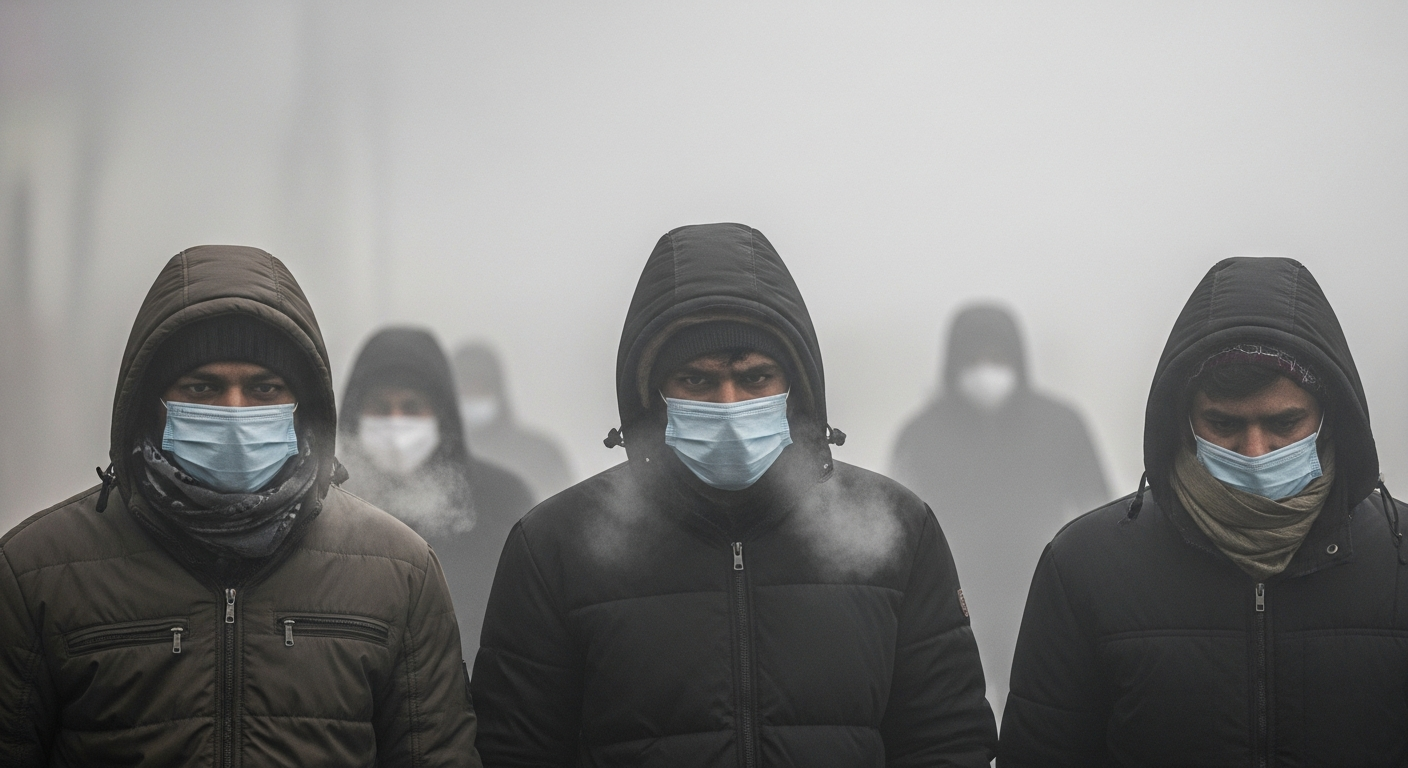
Dense fog has enveloped the region, dramatically reducing visibility and bringing daily life to a crawl. Flights and train services have faced delays and cancellations, impacting thousands of commuters. Beyond travel disruptions, the fog acts as a blanket, trapping pollutants closer to the ground, preventing their dispersion and intensifying the particulate matter concentration in the breathing air.
The Deteriorating Air Quality Landscape
The air quality in Delhi has seen a significant deterioration, with the Air Quality Index (AQI) registering above 300 in most parts of the capital, consequently categorizing the air as 'very poor'. Alarmingly, several areas have seen their AQI levels surge into the 'severe' category, with Anand Vihar recording an AQI of 400. This level of pollution is extremely hazardous, particularly for vulnerable populations including children, the elderly, and individuals with respiratory or cardiovascular conditions.
The 'very poor' category indicates that prolonged exposure can lead to respiratory illnesses, while 'severe' air quality can affect even healthy individuals and cause serious health impacts. The primary drivers for this surge in pollution during winter often include vehicular emissions, industrial discharge, stubble burning from surrounding agricultural regions, and localized sources like construction dust and biomass burning for warmth. The lack of strong winds during cold, foggy conditions prevents the natural dispersal of these pollutants, allowing them to accumulate to dangerous levels.
Public Sentiment
Public sentiment across Delhi reflects a growing sense of frustration and concern regarding the recurring environmental challenges. "Every winter, it's the same story – the air becomes unbreathable, and the cold just adds to the misery," lamented a resident of Lajpat Nagar. Another citizen from Noida voiced, "It's a double whammy; we are forced to stay indoors because of the cold, but even indoors, the air quality feels compromised. What about our children's future?" There is a palpable demand for more decisive and sustained action from authorities to address the root causes of pollution rather than just reactive measures.
Conclusion
The current situation in Delhi highlights a critical urban vulnerability where extreme weather conditions exacerbate pre-existing environmental challenges. The 'very poor' air quality, coupled with a severe cold wave and dense fog, creates a hostile environment for its inhabitants, disrupting daily routines and posing serious long-term health implications. Addressing this multifaceted crisis requires a comprehensive and coordinated strategy encompassing emission control, sustainable urban planning, and effective public health advisories to safeguard the well-being of Delhi's populace.