Key Takeaways
-
Analog Accuracy: Manual templating tools offer unparalleled on-site precision for complex, irregular geometries.
-
Cost-Effectiveness: Often more economical and faster for one-off or unique fabrication challenges than digital scanning and CNC.
-
Skill Preservation: Embracing these methods fosters crucial tactile skills and practical problem-solving in the modern workforce.
-
Complementary, Not Obsolete: Manual techniques perfectly complement, rather than compete with, advanced digital design and manufacturing.
-
Universal Application: Relevant across diverse industries, from traditional carpentry and masonry to shipbuilding and specialized construction.
Main Analysis
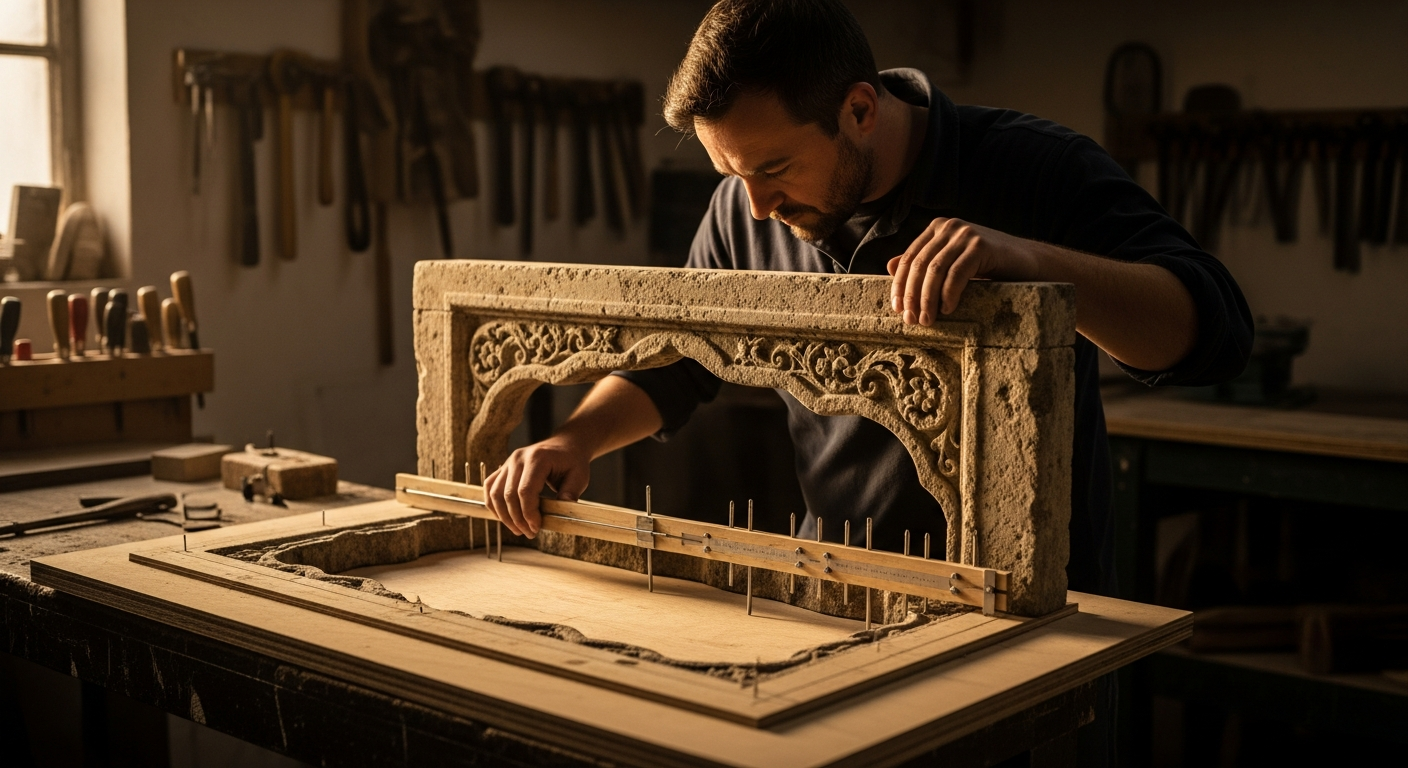
In a world increasingly reliant on laser scanners, CAD software, and CNC machining, it might seem counterintuitive to sing the praises of a method as seemingly rudimentary as the "Tick Stick" – essentially, a manual way to transfer the exact contour of an irregular shape. Yet, for any seasoned fabricator, architect, or artisan who has wrestled with a custom fit, the value of this tactile, hands-on approach is not just understood; it's revered. This isn't about rejecting progress; it's about acknowledging the enduring efficacy of fundamental principles and tools that continue to solve problems where high-tech solutions often falter or become prohibitively expensive for bespoke applications.
The Enduring Utility of Simple Tools: Precision in the Imperfect World
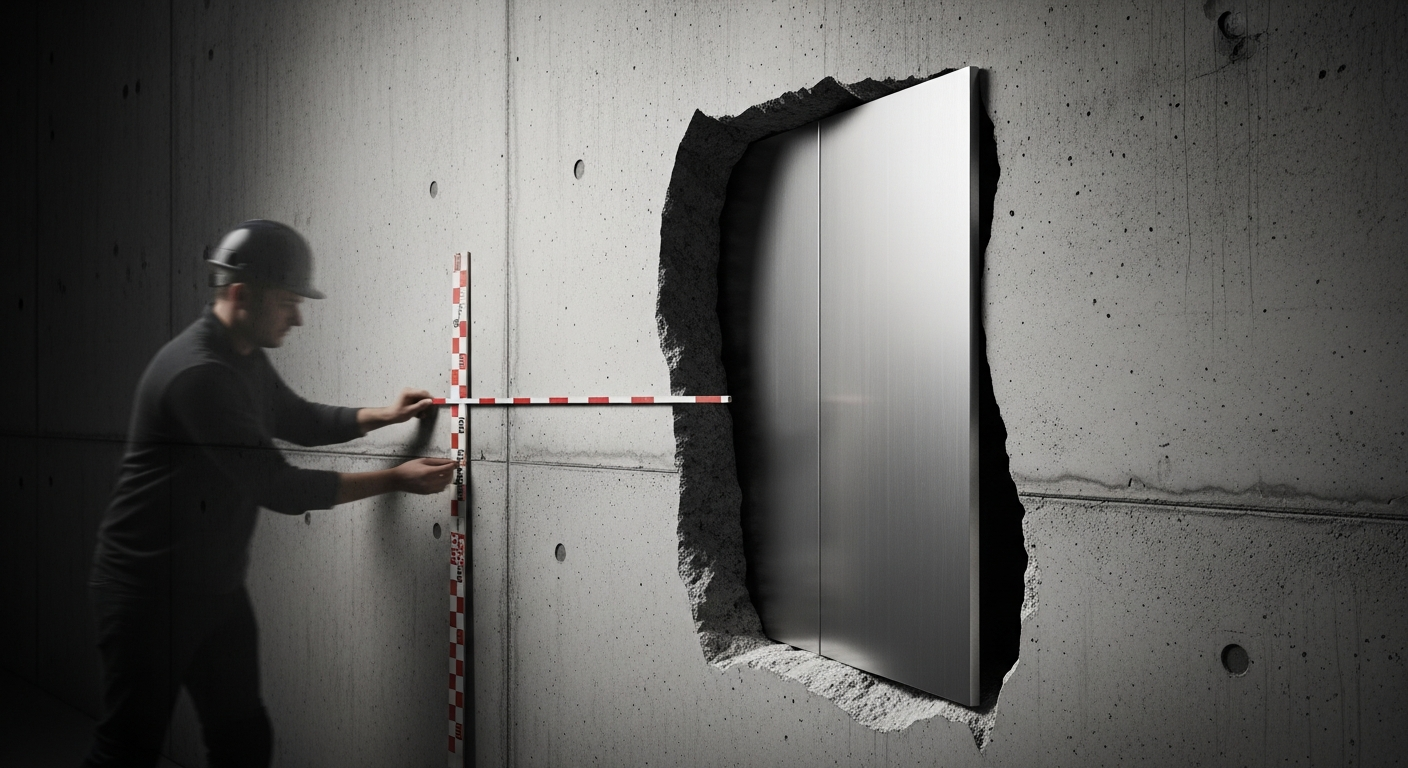
The physical world is rarely as perfect as a CAD rendering. Old buildings settle, materials warp, and custom designs inherently possess unique imperfections. Attempting to digitally scan an irregularly shaped fireplace opening, process the data, and then fabricate a precisely cut stone or metal insert can be an arduous, error-prone, and time-consuming process. Minor inaccuracies in scanning or subsequent CNC programming can lead to costly rework. The "Tick Stick" method, or indeed any manual templating technique using simple gauges, battens, or even cardboard, bypasses these digital translation challenges. It captures the true, physical anomaly directly, allowing for a piece to be cut that genuinely mirrors the existing irregularity. This direct physical replication offers a level of confidence and fit that is often superior for unique, "first-time-right" scenarios.
Precision Beyond Pixels: The Tactile Advantage
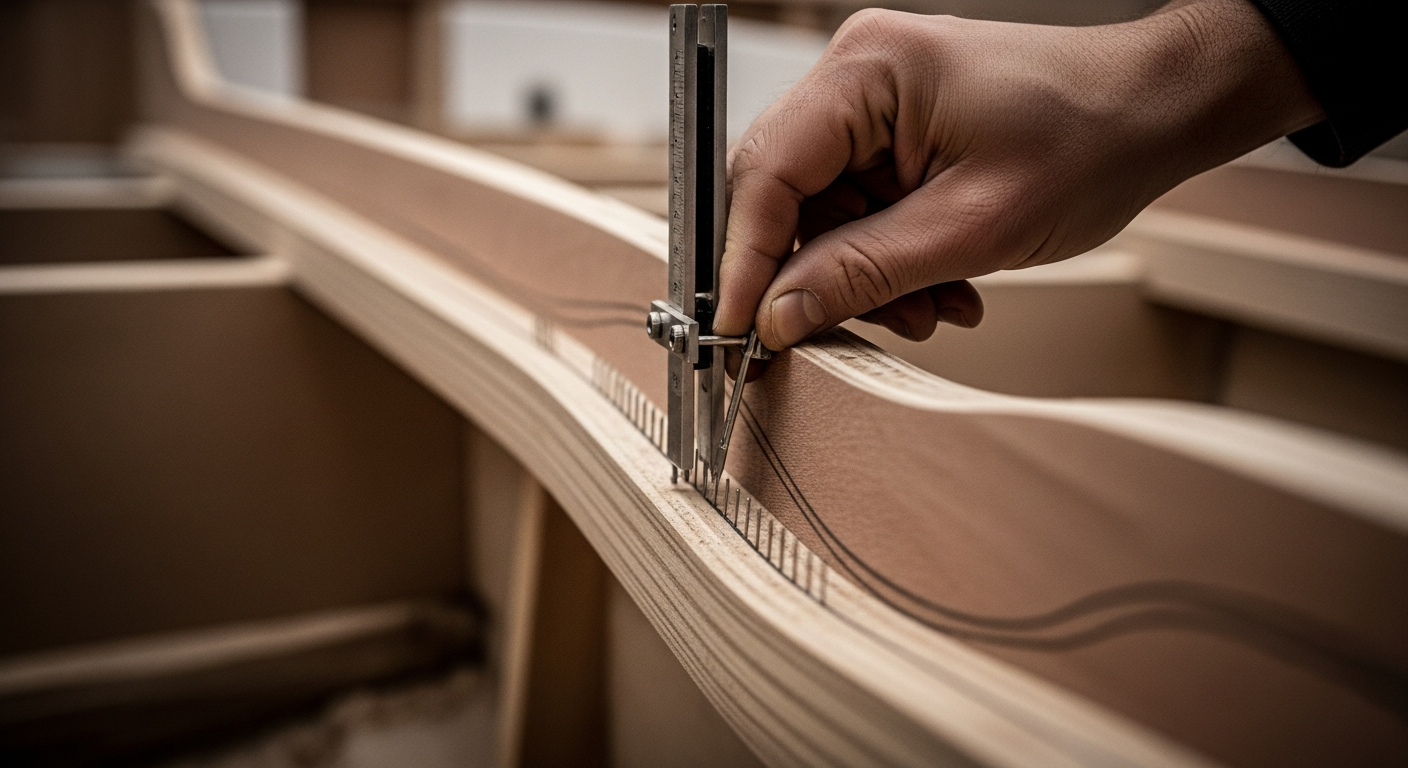
While digital tools promise absolute precision, they operate within a defined, often idealised, coordinate system. The human eye and hand, however, can interpret nuances, subtle curves, and compound angles that digital scanners might miss or render inaccurately without significant post-processing. A craftsman using a tick stick isn't just measuring points; they are feeling the contour, understanding the material's potential give, and intuitively anticipating how the new piece will seat. This tactile engagement builds an intimate understanding of the project's specific challenges, fostering a level of adaptive problem-solving that purely algorithmic approaches lack. For intricate joinery, custom marine fittings, or complex architectural elements, this human-centric precision can mean the difference between a passable fit and a masterpiece. It underscores a fundamental truth: some problems are best solved not with more technology, but with deeper human engagement with the physical environment.
Bridging Tradition and Innovation: A Modern Relevance
Far from being an anachronism, the principles behind the "Tick Stick" are increasingly finding their place alongside modern techniques. Consider a high-end yacht requiring custom cabinetry for its curved bulkheads. While the hull might be digitally modeled, the interior fit-out often demands bespoke solutions that manual templating can deliver with unmatched efficiency and accuracy. Similarly, in heritage restoration, where original structures are rarely plumb or square, these traditional methods are essential. The ideal scenario isn't one technique replacing the other, but rather a synergistic approach: using digital tools for initial design and large-scale fabrication, and manual templating for the critical, final fit and finish. This hybrid methodology ensures that the unparalleled precision of human craftsmanship is maintained, even as industrial processes evolve.
Public Sentiment
"People think everything needs a laser and a computer now, but for a truly custom fit, nothing beats getting your hands on it," remarks one veteran cabinetmaker from Bengaluru. A young engineer working on ship interiors in Kochi adds, "We use CAD extensively, but when it comes to those complex hull curves for internal panels, a good old batten and scribe will save you hours of digital tweaking and trial-and-error." There's a shared sentiment across the industrial landscape: while technology speeds up mass production, for bespoke precision, the analog methods remain surprisingly competitive and often superior in terms of final quality and material efficiency.
Conclusion
The "Tick Stick," in its various forms, embodies a powerful lesson: simplicity, when applied with skill and understanding, can often outperform complexity. It reminds us that fundamental tactile skills are not just legacies of the past but vital assets for the future. As industries push the boundaries of bespoke design and fabrication, the ability to accurately capture and replicate irregular forms directly from the physical world remains an invaluable, cost-effective, and remarkably precise art. Investing in the understanding and application of these time-honoured techniques isn't a step backward; it's a strategic embrace of foundational engineering principles that continue to drive innovation in an imperfect, yet wonderfully tangible, world.