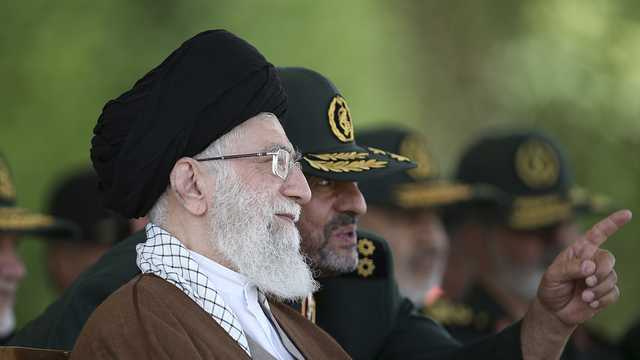
For 35 years, Ayatollah Ali Khamenei meticulously sculpted the Islamic Republic into a formidable, albeit deeply controversial, regional power. His passing at 86, under the ominous cloud of a joint US-Israeli attack, concludes a reign marked by an unyielding grip on power, a relentless pursuit of nuclear ambitions, and a brutal suppression of domestic dissent. The "Rusty Tablet" examines the profound implications of his exit.
Key Takeaways:
-
Khamenei's death at 86 marks the end of a 35-year reign characterized by an iron grip on power and regional confrontation.
-
He dramatically expanded the Revolutionary Guard's influence, turning it into Iran's dominant military and economic force.
-
His rule was marked by brutal crackdowns on domestic dissent, including the deadliest suppression in nearly 50 years after the Mahsa Amini protests.
-
The "Axis of Resistance" he painstakingly built appears to be unraveling, culminating in direct military exchanges with Israel and the US.
-
A clear successor is absent, setting the stage for an unpredictable power vacuum and potential instability, with the Revolutionary Guard as a key arbiter.
-
Iran's nuclear program has advanced to near-weapons-grade levels, posing a significant challenge to international security in the post-Khamenei era.
The Architect of Theocratic Rigidity
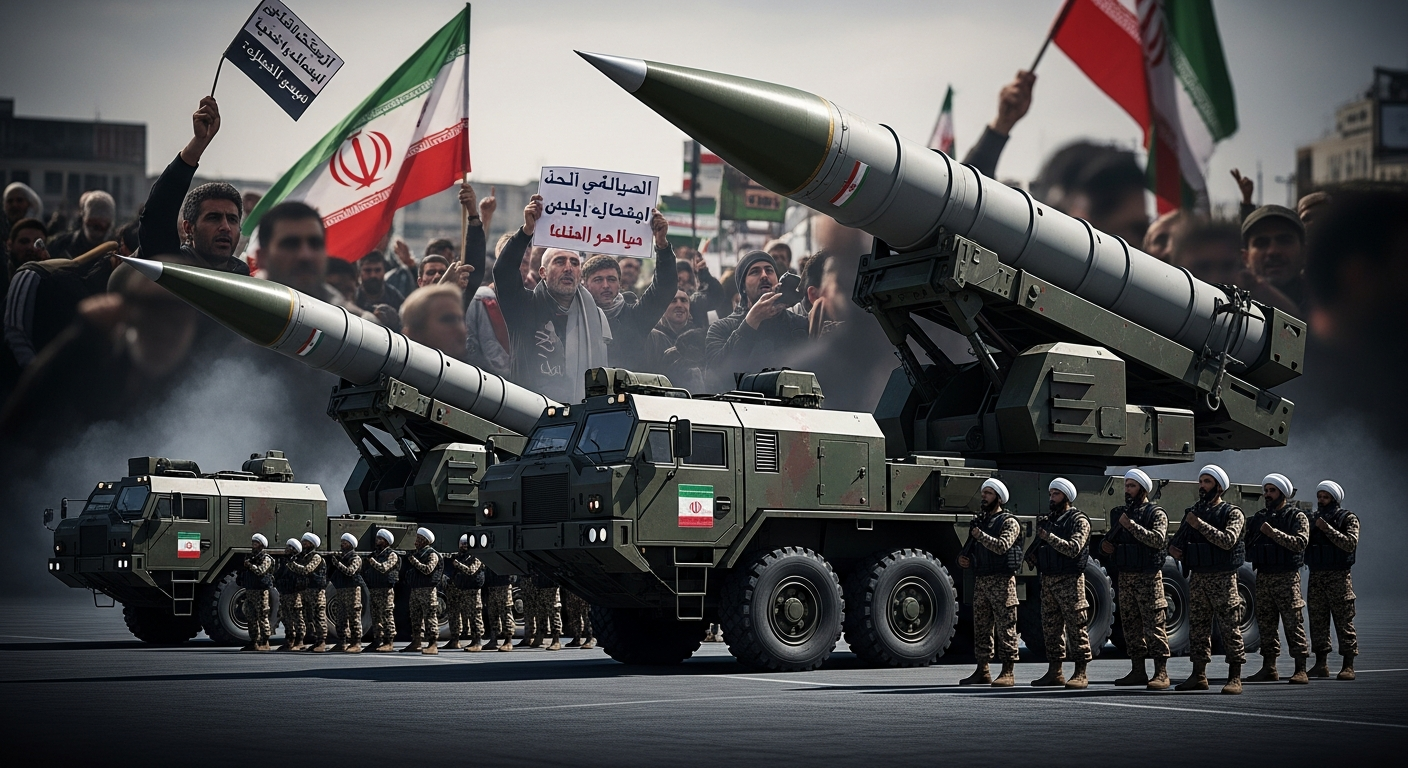
When Khamenei inherited the mantle of Supreme Leader from Ayatollah Ruhollah Khomeini in 1989, he faced skepticism regarding his relatively modest religious credentials. Yet, with a leaden demeanor that belied his strategic acumen, he transformed Khomeini's revolutionary vision into a sprawling state establishment. He outlasted his predecessor, expanding the Shiite clerical class and, crucially, elevating the paramilitary Revolutionary Guard into an untouchable military and business behemoth. The Guard became the ultimate guarantor of his rule, an elite force with control over ballistic missiles and hands in nearly every economic sector, effectively cementing a parallel state apparatus loyal only to him.
Decades of Dissent and Iron Fist Rule
Despite his consolidation of power, Khamenei’s reign was a constant battle against the aspirations of his own people. Waves of mass protests – from the reformist movements of 1997 and 2009 to the economic unrest of 2017 and 2019 – continually challenged the regime's legitimacy. The 2022 death of Mahsa Amini, sparking protests against mandatory headscarves and social restrictions, escalated into a nationwide cry of "Death to Khamenei." His response was chillingly consistent: the deadliest crackdown in nearly 50 years, with security forces opening fire on crowds, claiming thousands of lives. The government’s ideological bankruptcy, as analyst Mehdi Khalaji observed in 2017, became increasingly apparent.
A Fractured Axis, A Nuclear Brink
Internationally, Khamenei meticulously constructed the "Axis of Resistance," using proxy forces like Hezbollah, Hamas, and the Houthi rebels to project Iranian power across the Middle East. However, the Mideast wars sparked by Hamas's October 7, 2023, attack on Israel dramatically exposed the Axis's vulnerabilities. Israel and Iran engaged directly for the first time in 2024, escalating further with a joint US-Israeli strike in June 2025 that targeted Iran's nuclear program and eliminated top military officers and scientists. The unraveling continued with the deaths of key figures like Hamas leader Ismail Haniyeh and Hezbollah's Hassan Nasrallah, culminating in the collapse of the Assad regime in Syria – a critical Iranian ally.
Simultaneously, Khamenei stubbornly pushed Iran's nuclear program to near-weapons-grade levels, dismissing international sanctions and diplomatic efforts. His verbal fatwa against nuclear weapons stood in stark contrast to the country's relentless uranium enrichment, a move he justified by citing the fate of Libya's Moammar Gadhafi as a cautionary tale for giving up nuclear ambitions.
The Unscripted Succession
Khamenei’s death leaves a gaping void at the apex of Iran’s power structure. The 88-seat Assembly of Experts, comprised of hardline clerics, is constitutionally tasked with choosing a successor. However, no clear candidate has emerged, setting the stage for an unprecedented and potentially volatile power struggle. US President Donald Trump, launching Saturday's bombing, provocatively called on Iranians to "take over your government. It will be yours to take. This will be probably your only chance for generations." The coming days and weeks will test the resilience of the Islamic Republic, with bodies like the Revolutionary Guard poised to wield overwhelming force to maintain control, even as Iran's 90 million citizens grow increasingly disenchanted.
A Question of Legacy
Khamenei's legacy is a complex tapestry of stability achieved through repression, regional influence gained through proxy warfare, and ideological purity maintained at the cost of his people's freedoms. His death, coupled with the tragic loss of his daughter, son-in-law, grandchild, and daughter-in-law in the same attack, plunges Iran into a period of profound uncertainty. The 40 days of public mourning declared by the government will merely mask the underlying currents of change and potential chaos now swirling within the Islamic Republic.