Key Takeaways
-
Robert Playter is stepping down as CEO of Boston Dynamics after 30 years with the company, including six years at the helm.
-
Playter oversaw critical phases, including the commercialization of the agile Spot robot and the continued development of the humanoid Atlas.
-
His departure marks a significant leadership change for a leading robotics firm known for pushing the boundaries of what robots can do.
-
The move prompts questions about Boston Dynamics' future strategic direction, particularly regarding product development, market expansion, and ethical considerations.
-
The broader robotics industry watches closely for the impact of this transition on Boston Dynamics' innovation trajectory and market position.
[FEATURED]
A Three-Decade Journey at the Forefront of Robotics
Robert Playter's tenure at Boston Dynamics began in 1993, a period when advanced robotics was largely confined to academic research labs and specialized defense applications. Over the course of three decades, Playter ascended through various critical roles, culminating in his appointment as CEO in 2017. His journey mirrored the evolution of Boston Dynamics itself, from its early days as a spin-off from MIT to a globally recognized leader in dynamic, mobile robots.
Initially funded by DARPA (Defense Advanced Research Projects Agency), Boston Dynamics gained early notoriety for its animal-inspired robots, such as BigDog and Cheetah, designed for military applications and advanced research. Playter was instrumental in many of these foundational projects, contributing significantly to the engineering and operational strategies that defined the company's unique approach to robotics.
Under his leadership, and through a series of high-profile acquisitions by Google (2013), SoftBank (2017), and most recently Hyundai Motor Group (2020), Playter navigated Boston Dynamics through periods of intense technological development, strategic shifts, and significant growth. His leadership was particularly crucial during the transition from a pure research entity to a company focused on commercializing its innovations.
Commercialization and Market Impact Under Playter's Leadership
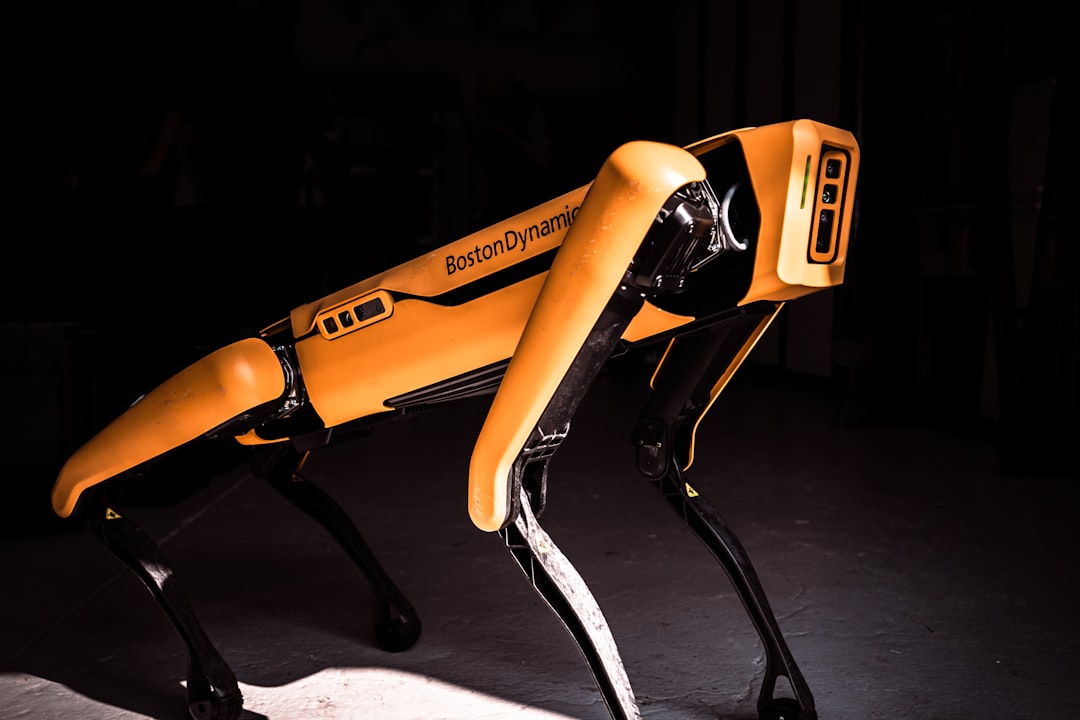
The most visible achievement of Playter's CEO tenure was the successful commercialization of the Spot robot. Launched for sale in 2020, Spot marked a pivotal moment for Boston Dynamics, shifting its focus from primarily government-funded research to the broader enterprise market. Spot's agility, terrain navigation capabilities, and customizable payload options quickly found applications in diverse sectors, including construction, public safety, energy inspection, and even entertainment. Its deployment signified a tangible step towards integrating advanced mobile robots into everyday industrial operations.
While Spot moved into commercial markets, the humanoid robot Atlas continued to push the boundaries of research and development. Under Playter, videos showcasing Atlas's increasingly complex gymnastic feats and precise manipulation skills consistently captivated global audiences, reinforcing Boston Dynamics' reputation for unparalleled robotic dexterity and dynamic balance. These demonstrations, while not directly commercial, served as a powerful testament to the company's core engineering prowess and vision for future robotics.
Playter also oversaw the development and market introduction of Stretch, a highly mobile robot designed for warehouse automation. This expansion into logistics further diversified Boston Dynamics' product portfolio, positioning it to address the growing demands of e-commerce and supply chain optimization. His strategic decisions helped transition Boston Dynamics from a robotics marvel to a tangible solutions provider, impacting multiple industries.
The Road Ahead for Boston Dynamics
Robert Playter's departure opens a new chapter for Boston Dynamics, a company that now stands at a critical juncture. The next CEO will inherit a robust product line and a legacy of innovation, but also face the challenge of scaling commercial operations, expanding market reach, and integrating more deeply with Hyundai's long-term vision for mobility solutions. The synergy with Hyundai, particularly in areas like smart factories, autonomous driving, and future mobility concepts, presents significant opportunities but also demands careful strategic alignment.
Further, the robotics industry is rapidly evolving, with increasing competition from established tech giants and innovative startups. Boston Dynamics' future leadership will need to navigate this competitive landscape, continuing to innovate while also focusing on cost-effectiveness, user-friendliness, and broad adoption. Ethical considerations surrounding advanced robotics, particularly as they become more ubiquitous and capable, will also remain a key area of focus for the company's leadership.

The Broader Robotics Landscape
Playter's departure occurs at a time when the global robotics market is experiencing unprecedented growth. Driven by advancements in artificial intelligence, sensor technology, and automation, robots are increasingly moving beyond controlled factory environments into logistics, healthcare, retail, and domestic settings. Boston Dynamics, with its reputation for creating some of the world's most dynamic and sophisticated robots, has undeniably played a crucial role in popularizing this vision of a more automated future.
His leadership has helped shape not just Boston Dynamics but also the public perception of what advanced robotics can achieve. The company's viral videos, often showcasing seemingly impossible feats of balance and agility, have served as both inspiration for engineers and a window into the future for the general public. The transition at the top of such a pioneering firm is therefore watched with keen interest by the entire industry.
Public Sentiment
The news of Robert Playter's resignation has elicited a range of responses from the public and the industry. On social media platforms and professional forums, many expressed admiration for his long and impactful career. "Thirty years at the cutting edge of robotics is an incredible achievement," commented one user on LinkedIn, reflecting a general sentiment of respect for his dedication. "He helped bring some truly sci-fi concepts into reality."
Others voiced curiosity and anticipation for what comes next for Boston Dynamics. "It's a huge loss for their immediate leadership, but also an exciting opportunity for new vision," wrote a robotics enthusiast on X (formerly Twitter). "Will we see more aggressive commercialization, or a renewed focus on groundbreaking research?" The consensus points to a recognition of Playter's substantial legacy, coupled with a forward-looking perspective on the future direction of one of the world's most influential robotics companies.
Conclusion
Robert Playter's retirement from Boston Dynamics marks the end of an era defined by relentless innovation and the bold pursuit of advanced robotic capabilities. His three decades, including six years as CEO, were instrumental in transforming a research powerhouse into a commercial entity poised to reshape industries. As Boston Dynamics embarks on its next chapter, the foundation laid by Playter and his teams will undoubtedly continue to drive its mission to create robust, agile, and intelligent robots that address some of the world's most complex challenges. The industry now looks forward to the unveiling of new leadership and the strategic direction that will guide this iconic company into the future of robotics.