Key Takeaways:
-
Miniature robotics, exemplified by projects like Dorian Todd's quadruped, demonstrate sophisticated capabilities with minimalist components.
-
The accessibility of low-cost, off-the-shelf electronics is significantly lowering the barrier to entry for robotic innovation.
-
Compact designs are opening new avenues for applications in inspection, research, and education, often in environments inaccessible to larger machines.
-
Engineering challenges inherent in miniaturization are driving significant advancements in power management, actuator design, and sensory integration.
-
The perception of what constitutes "impressive" in robotics is evolving, valuing efficiency and intricate design as much as scale.
The Allure of Miniaturization in Robotics
For decades, the popular image of a robot has been that of a formidable, often human-sized or larger, entity. However, a quiet revolution is underway in the field of micro-robotics, where size is inversely proportional to the impact on innovation. Projects like the tiny quadruped robot developed by Dorian Todd serve as compelling proof points: robots do not require imposing dimensions to exhibit remarkable capabilities. This shift towards miniaturization is driven by several factors, including the imperative for cost reduction, increased operational agility, and the potential to access previously unreachable environments. Small robots, by their very nature, offer discretion, lower material consumption, and reduced energy footprints, making them attractive for a myriad of specialized applications. Their smaller mass also reduces kinetic energy, making them safer for interactions in certain contexts, and their compact form factor allows for easy deployment and transport.
Engineering Simplicity Meets Sophistication
The core marvel of many small-scale robotic projects lies in their ability to achieve complex behaviors using what, at first glance, appear to be remarkably simple components. The description of Todd's quadruped employing "simple electronics and a few servos" is instructive. Modern microcontrollers, often costing mere dollars, pack immense processing power into minuscule packages, capable of managing intricate locomotion algorithms and sensor data fusion. Similarly, compact servo motors have evolved to offer high torque and precision in extremely small forms, enabling dynamic movement patterns crucial for quadrupedal gaits. This confluence of accessible, high-performance components allows engineers to iterate rapidly and design sophisticated systems without the overhead associated with large-scale industrial hardware. The challenge lies in optimizing these basic elements to work cohesively, overcoming limitations of power, processing speed, and payload capacity inherent in miniature designs. This process often necessitates innovative mechanical designs and efficient software architectures.
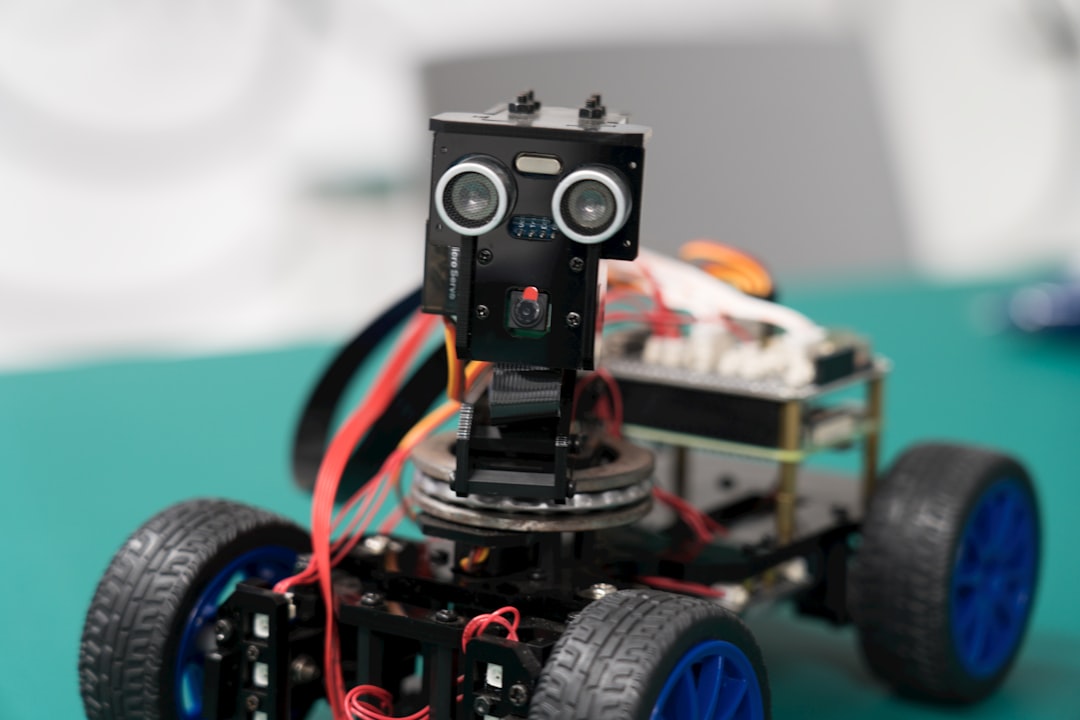
The integration of these elements in a constrained space is a testament to the meticulous planning and execution required in micro-robotics.
Accessibility and the Democratization of Innovation
Perhaps one of the most significant implications of this trend is the democratization of robotics. The availability of platforms like Arduino, Raspberry Pi, and ESP32, combined with affordable servo motors, 3D printing capabilities, and a wealth of online resources, means that advanced robotic development is no longer confined to well-funded university labs or corporate R&D departments. Individual engineers, hobbyists, and educators can now experiment and innovate with sophisticated designs. This accessibility fosters a vibrant community of creators, accelerating the pace of discovery and bringing diverse perspectives to problem-solving in robotics. Dorian Todd's project, emerging from this landscape, exemplifies how grassroots innovation can challenge established norms and inspire new directions in the field. This bottom-up approach to development is fertile ground for unexpected breakthroughs and novel applications.
Beyond the Lab: Potential Applications
The practical applications for highly capable, small-scale quadruped robots are expanding rapidly. In industrial settings, they could be invaluable for conducting inspections in confined spaces, navigating complex machinery, or monitoring environmental conditions where human access is difficult or dangerous. For instance, inspecting pipes, air ducts, or the internal structures of large machines could become routine tasks for agile micro-robots. In scientific research, they offer platforms for studying complex animal locomotion, developing novel control algorithms, or exploring intricate terrains for data collection. Educational institutions are also leveraging these accessible platforms to teach fundamental principles of mechanics, electronics, and programming, providing hands-on experience that was once prohibitively expensive. As capabilities improve, the potential for deployment in environmental monitoring, search and rescue in disaster zones, or even highly specialized medical applications becomes increasingly tangible.
Challenges and Future Prospects
Despite their promising capabilities, miniature robots face inherent challenges. Power management remains a critical hurdle; packing sufficient energy density into a small form factor while maintaining operational endurance is a constant battle. Processing power, though significantly advanced, is still limited compared to larger systems, impacting onboard AI and complex decision-making. Robust navigation in unpredictable real-world environments, especially without extensive sensor arrays, also presents significant engineering obstacles. However, these challenges are precisely what drive innovation. Advances in battery technology, energy harvesting, edge computing, and highly efficient sensor fusion algorithms are continually pushing the envelope. The future of micro-robotics promises even greater autonomy, more sophisticated interactions with their environment, and an expanding array of specialized functions, further solidifying their role as essential tools in the evolving technological landscape.
Public Sentiment
The public discourse surrounding miniature robotics often oscillates between genuine awe and practical curiosity. There's a widespread appreciation for the intricate engineering involved, frequently expressed as admiration for how "so much can be packed into so little." Analysts often observe a shifting perception where raw power is increasingly complemented by precision and efficiency as markers of technological advancement. Synthesized feedback frequently highlights the potential for small robots to perform tasks that are dangerous or mundane for humans, envisioning a future where these tiny machines contribute significantly to safety and productivity across various sectors. The accessibility aspect also resonates, with many seeing these developments as opening doors for a new generation of inventors and engineers.
Conclusion
Dorian Todd's compact quadruped robot is more than just a proof of concept; it is a tangible representation of a burgeoning trend in robotics. It challenges the conventional wisdom that size equates to significance, demonstrating that ingenuity, accessibility, and efficient design can yield impressive results in the smallest packages. As the components continue to shrink and capabilities expand, these miniature marvels are poised to redefine not only how we perceive robots but also how they will integrate into and enhance our industrial, scientific, and daily lives. The future of robotics is not just big; it is also profoundly, and impressively, small.