The Siren Song of Simplicity: A False Economy?
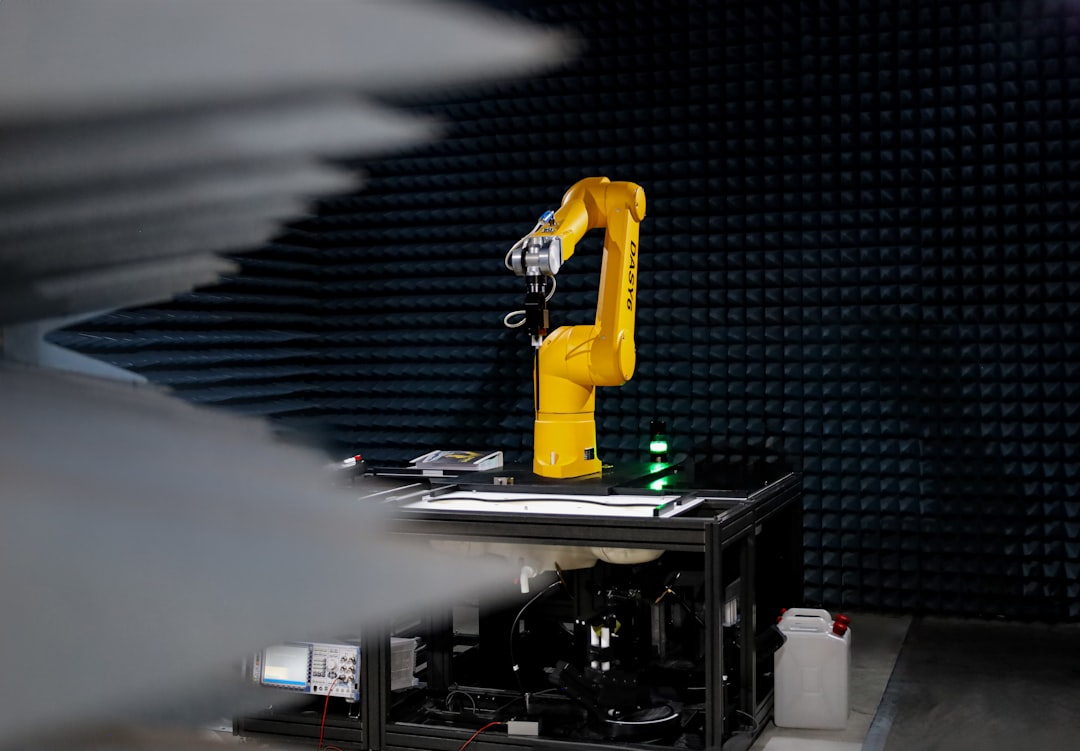
The allure of building a light-following robot without the perceived overhead of a Raspberry Pi or complex computer vision systems is understandable. On the surface, it promises a return to fundamental engineering, a hands-on approach where logic is hard-wired rather than programmed. However, this "simplicity" often proves to be a mirage. While a basic analog circuit can indeed guide a robot towards a light source, its elegance quickly dissipates when faced with real-world complexities. Analog components, by their very nature, are susceptible to noise, temperature fluctuations, and component drift, requiring constant calibration and a level of meticulous tuning that can quickly surpass the initial setup of a well-designed digital system. The perception of avoiding complexity merely shifts it from the realm of software abstraction to the arduous, often frustrating domain of physical hardware fine-tuning.
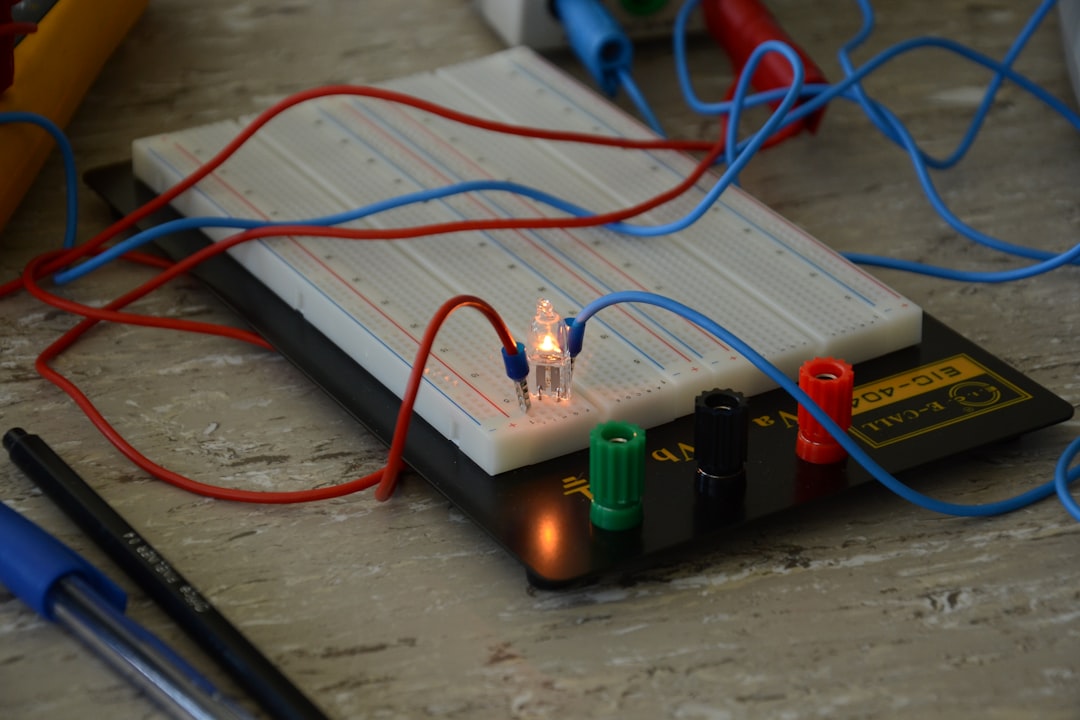
This isn't innovation; it's a re-tread of challenges that digital solutions have largely overcome.
Beyond the Breadboard: Scalability and Integration Challenges
The most glaring limitation of a purely analog light-following mechanism lies in its inherent inability to scale. A simple photoresistor and comparator circuit might work for a small, singular task, but what happens when you need the robot to distinguish between multiple light sources, identify patterns, or dynamically alter its behavior based on environmental cues? Analog systems struggle immensely with such demands. Each new behavior or sensory input typically requires a complete redesign or significant modification of the underlying circuitry, leading to an explosion of components and an intractable wiring nightmare.
Digital systems, conversely, offer unparalleled flexibility. A software update can introduce new algorithms for advanced light detection, object recognition, or even integrate the light-following behavior with navigation, obstacle avoidance, and communication protocols. The digital backbone allows for seamless integration with other sensors (ultrasonic, infrared, lidar) and actuators, creating a truly intelligent, multi-functional robot. An analog light-follower remains an isolated curiosity, incapable of participating in the broader ecosystem of smart devices and automated processes that define modern industry.
Missed Opportunities: The Cost of Digital Aversion
To deliberately bypass the capabilities offered by modern digital electronics is to accept a profound handicap. Consider the wealth of data that could be gathered: light intensity over time, spectral analysis of light sources, mapping of light gradients. A digital system, even a rudimentary one like a microcontroller, can log this data, analyze it, and use it to inform more nuanced decisions. It can learn from its environment, adapt to changing conditions, and even communicate its observations to a central hub.
An analog robot, by its very design, remains blind to these possibilities. It acts purely on immediate, uncontextualized input. It cannot differentiate between a guiding light and a distracting glare, nor can it remember past light paths or anticipate future ones. This isn't just about "doing it the analog way"; it's about doing it the unintelligent way. In a world increasingly driven by data and connectivity, a robot that cannot collect, process, or transmit information is not merely simple; it is fundamentally limited in its utility and potential for evolution.
Future-Proofing or Fossilizing?
The argument for analog simplicity often harks back to an era of bare-metal electronics, a romanticized view of hardware engineering. While there's value in understanding fundamental principles, clinging to purely analog solutions for core robotic functions in 2024 is akin to advocating for a steam engine in a hyperloop era. The entire trajectory of robotics and automation points towards greater intelligence, connectivity, and adaptability – all hallmarks of digital and AI-driven systems.
Investing in analog-only solutions for anything beyond pedagogical curiosities or highly specialized, isolated niches is a short-sighted approach that guarantees rapid obsolescence. Maintenance becomes more challenging as components age and drift. Debugging complex analog interactions is notoriously difficult compared to tracing logic errors in software. While digital systems have their own vulnerabilities, their capacity for updates, upgrades, and integration ensures a much longer, more adaptable lifecycle.
Public Sentiment
The unveiling of such projects often emits a mixed bag of reactions, typically leaning towards skepticism in professional circles:
-
"It's a nice throwback, I suppose, for a high school science fair. But in a real-world application? Absolutely impractical. We moved past this for a reason." – Dr. Lena Khan, Robotics Engineer, Synapse Dynamics
-
"While I appreciate the fundamental understanding it demonstrates, equating 'analog' with 'simplicity' is a dangerous oversimplification. Debugging analog noise can be infinitely more complex than software glitches." – Professor Mark Jensen, Electrical Engineering Department, MIT
-
"The charm wears off when you realize it can't tell the difference between a flashlight and a wildfire. That's the difference digital context provides." – Aisha Sharma, Tech Investor
-
"It might be cheaper to build initially, but try scaling it to a fleet of 100, or adding a camera. The 'savings' evaporate quickly." – David Chen, CEO, Quantum Robotics
Conclusion
While the spirit of invention and the pursuit of elegant solutions are commendable, the fascination with purely analog robotics, particularly for core functions like light-following, often borders on engineering nostalgia rather than genuine progress. In a world demanding increasingly intelligent, scalable, and adaptable autonomous systems, the "analog way" presents not a clever simplification, but a significant bottleneck. "Rusty Tablet" contends that true innovation lies not in shying away from digital complexity, but in mastering it to unlock capabilities that analog systems, by their fundamental nature, can never hope to achieve. The future of robotics is digital, connected, and intelligent; proposals that ignore this reality risk relegating themselves to the dusty shelves of historical curiosities.