For decades, the trajectory of robotics has been inextricably linked to the relentless advance of microprocessor technology. Faster chips, more memory, more intricate algorithms—these have been the hallmarks of progress, pushing robots into increasingly complex cognitive domains. Yet, quietly, almost defiantly, a project by Jeremy (whose full name deserves to be shouted from the rooftops of every engineering university) presents a profound counter-narrative: a light-seeking robot that functions with impressive efficacy, entirely devoid of a CPU.
The Elegance of the Unburdened Machine
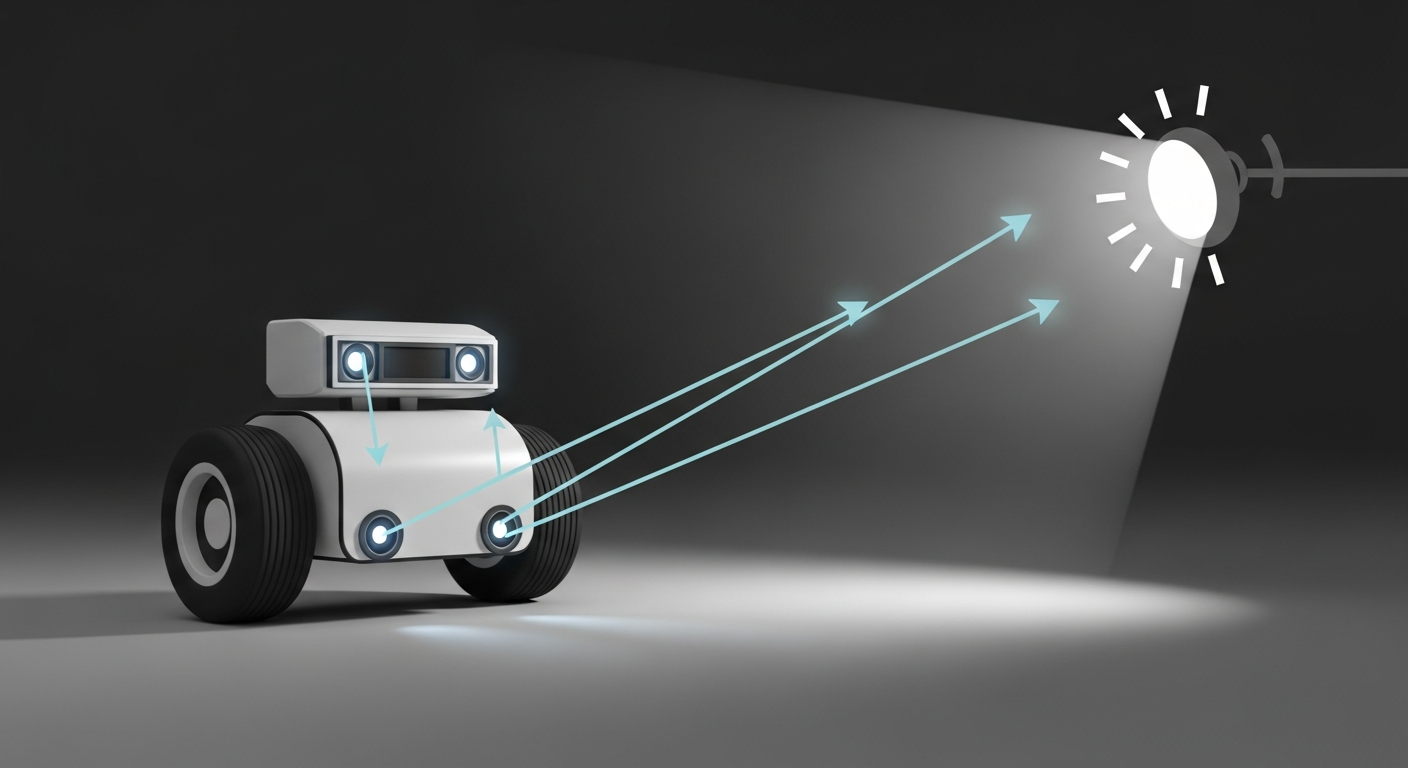
This isn't a parlor trick; it's a masterclass in minimalist design. While the broader tech industry pours billions into AI models demanding colossal computational resources, Jeremy's robot operates on the sheer elegance of direct sensory-motor coupling. Light hits a sensor, which directly influences a motor, creating a feedback loop that guides the robot towards the illumination. It’s the mechanical equivalent of a plant turning towards the sun, a biological process achieved without a brain, replicated in silicon and wire. The nostalgic flicker for anyone who ever wrestled with line-following bots is palpable, reminding us that sometimes the simplest paths yield the most insightful journeys.
Beyond the Microprocessor Monoculture
We live in a microprocessor monoculture. Every smart device, every industrial arm, every IoT gadget assumes a CPU as its fundamental building block. This paradigm has undoubtedly enabled incredible innovation, but it has also fostered a pervasive "solutionism" where every problem, no matter how simple, is met with an algorithmic hammer. Need a light to turn on when it's dark? Add a micro-controller, program it, debug it. Jeremy’s robot asks: Why?
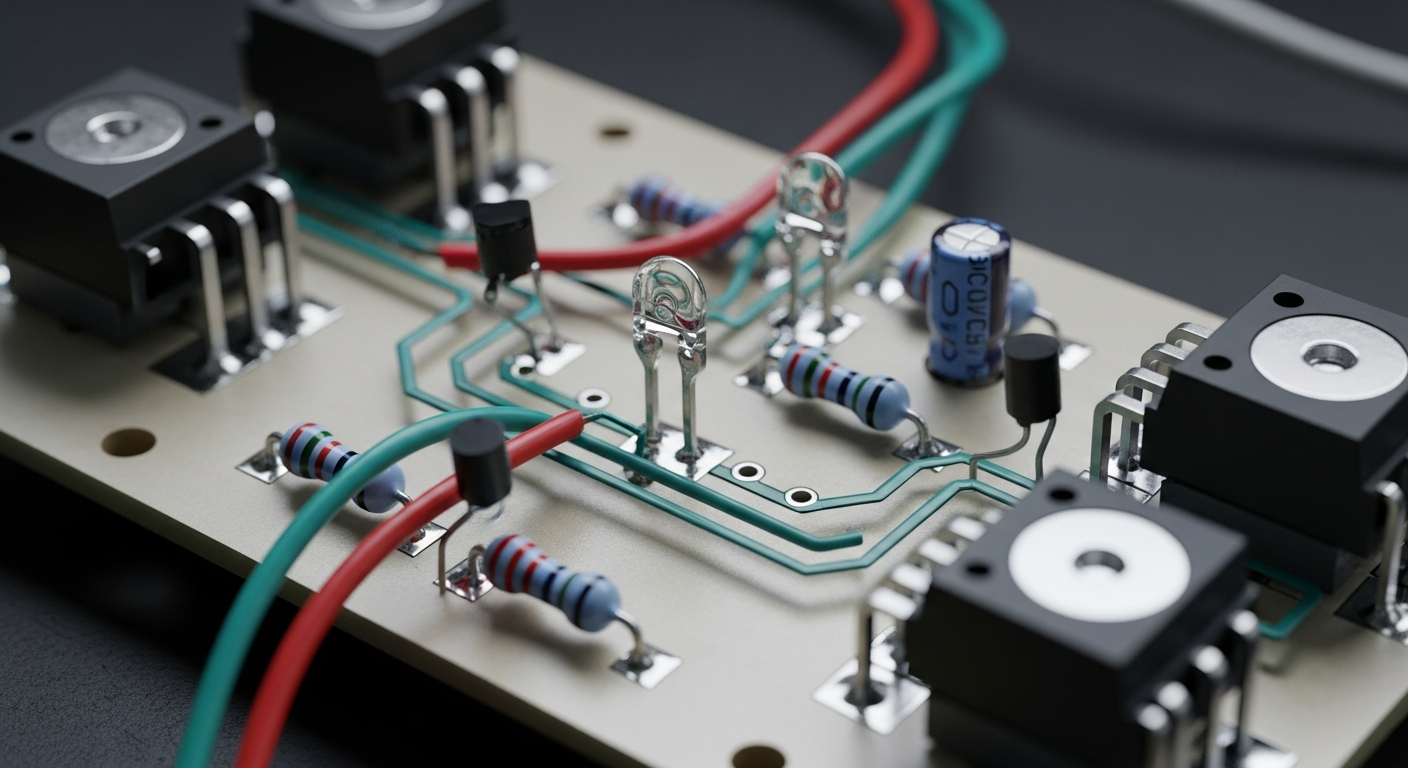
This simplicity translates directly into robustness, cost-effectiveness, and often, energy efficiency. Without a CPU, there's no code to bug, no operating system to patch, no complex power management protocols. The hardware is the logic. This approach isn't about replacing advanced AI; it's about re-contextualizing where computation is truly necessary and where direct, reactive engineering offers a more resilient, perhaps even more "intelligent," path. It's a return to first principles, a powerful argument against the often-unquestioned accretion of complexity.
Reigniting Foundational Principles
The very existence of this CPU-less marvel should be mandatory viewing for every aspiring engineer. It forces a return to the foundational principles of control theory, analog electronics, and emergent behavior—concepts often overshadowed by the allure of coding boot camps and AI frameworks. Jeremy’s robot is a modern iteration of Valentino Braitenberg's "Vehicles," theoretical constructs demonstrating how simple sensor-motor connections can lead to surprisingly complex, seemingly intentional behaviors.
Such projects aren't just academic exercises; they represent a radical rethinking of what "intelligence" means in a machine. Is it purely computational, or can it be an emergent property of finely tuned physical interactions? The robot's "decision-making" is encoded in its physical architecture, not in lines of code. This challenges us to consider biomimicry not just in form, but in the very mechanisms of operation, where biological systems often achieve astonishing feats without centralized processing.
Implications for Future Design
What are the practical implications of such a minimalist philosophy? For starters, it could drastically reduce the bill of materials and power consumption for a host of specialized, single-purpose robotic tasks—think environmental sensors, simple actuators in harsh conditions, or educational kits. Imagine resilient robots for disaster zones, where the failure of a single micro-controller could be catastrophic, but a purely analog system might persist.
Furthermore, it offers a crucial pedagogical tool. In an age where children often learn programming before they understand basic circuits, projects like this ground innovation in tangible physics and electronics. It encourages a different kind of problem-solving, one that starts with materials and forces rather than abstract algorithms.
Public Sentiment
"Honestly, when I first heard 'no CPU,' I thought it was a joke," admitted one veteran robotics hobbyist online. "But seeing it work, it's just... elegant. Makes you question all the fancy chips we cram into everything." Another commented, "This reminds me of the good old days of basic electronics. So much to learn from going back to basics, truly inspiring for my kids." However, not everyone was convinced. "Sure, it seeks light. What else can it do? You can't scale that for anything truly complex," argued a software engineer. "It's a nice demo, but let's not pretend it's the future of robotics." Yet, even the skeptics conceded its educational value, a testament to its undeniable instructional power.
Conclusion
Jeremy's CPU-less light-seeking robot is far more than a clever invention; it's a timely manifesto. It stands as a silent but powerful critique of technological excess, a reminder that ingenuity isn't solely the domain of complex algorithms and advanced processors. In its beautiful simplicity, it illuminates a path forward where robustness, efficiency, and elegant design are prioritized, challenging us to ask not just what can be built, but what should be built, and with what level of fundamental integrity. It's a beacon, literally and metaphorically, pointing towards a future where intelligent machines might just get a little bit smarter by becoming a whole lot simpler.