Navigating the Tempest: What One-Winged Squids Unveil for Airship Stability in a Changing Climate
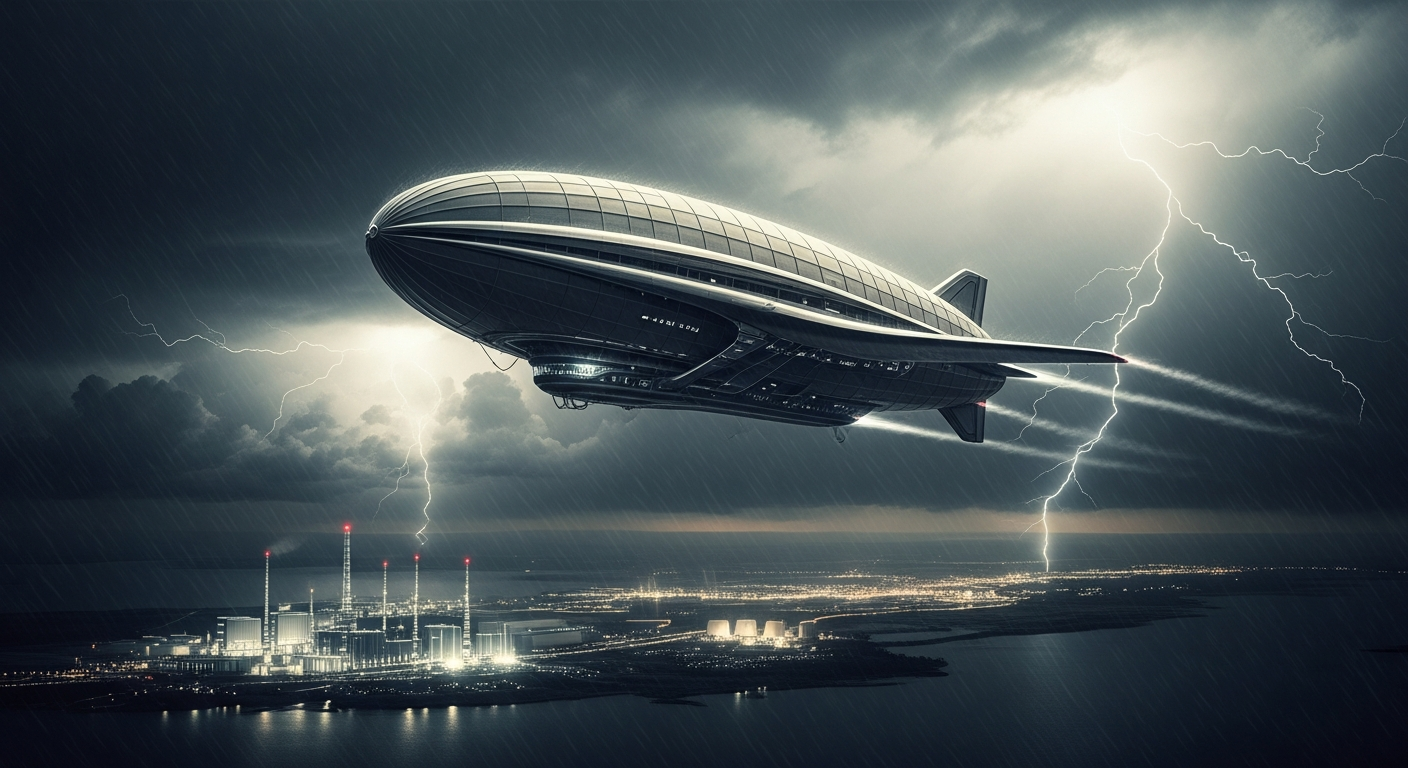
It’s a blustery January day outside Lakehurst, New Jersey. The East Coast of North America is experiencing its worst weather in decades, and all civilian aircraft have been grounded. Yet, above the churning grey, a new class of resilient airships — sleek, silent giants of the sky — is being imagined, drawing inspiration from the unlikeliest of sources: a deep-sea cephalopod with a singular, powerful hydrofoil. As the world grapples with increasingly unpredictable weather patterns, the once-derided airship is poised for a renaissance, but only if it can master the winds that proved its historical undoing. This is where Unifex volantis enters the hangar.
Key Takeaways:
-
The Airship Imperative: With climate change driving extreme weather events, traditional aviation faces grounding, highlighting the need for more resilient, sustainable transport solutions.
-
Bio-Mimicry's Radical Shift: Engineering is looking beyond birds and fish, finding surprising answers in the dynamic, asymmetrical propulsion of Unifex volantis, a deep-sea squid.
-
Asymmetrical Stability: The squid’s single-fin design offers insights into achieving stability and controlled maneuverability in turbulent environments, crucial for airships battling gust fronts and crosswinds.
-
Future Applications: This research could lead to airships with adaptive aerodynamic surfaces, active thrust vectoring, and self-correcting flight systems, transforming aerial logistics and travel.
[FEATURED]
The Airship Renaissance and its Achilles' Heel
For decades, the mention of airships conjured images of the Hindenburg, a specter of fiery disaster. Today, however, a quiet revolution is underway. Modern airships, powered by advanced materials, inert lifting gases, and hybrid propulsion systems, are being touted as the future of eco-friendly heavy-lift cargo and even luxury travel. Their ability to operate from minimal infrastructure, consume less fuel than conventional aircraft, and carry immense payloads makes them attractive for logistics in remote regions and environmentally sensitive areas.
Yet, the fundamental challenge remains: airships, by their very nature, present a large surface area to the wind. While their predecessors struggled with structural integrity and flammable gases, contemporary designs grapple with mastering atmospheric turbulence. Lakehurst, ironically, remains a potent symbol — a location historically linked to airship disaster, now a conceptual backdrop for the next generation of resilient aerial vessels. Gust fronts, microbursts, and persistent crosswinds pose significant operational hazards, limiting flight envelopes and impacting safety margins. Engineers need a paradigm shift in thinking about stability.
The Unlikely Mentor: Unifex volantis
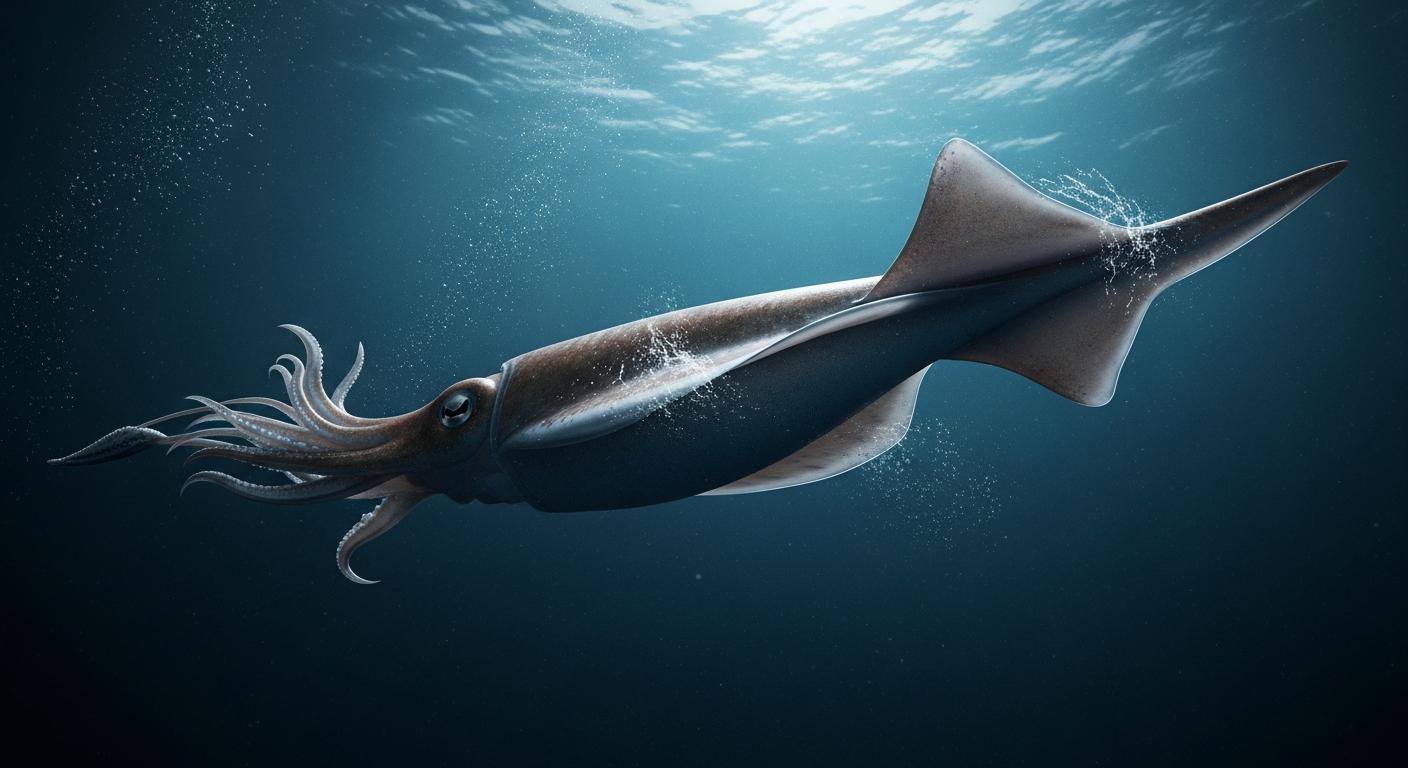
Enter Unifex volantis, an enigmatic deep-sea squid discovered in the turbulent thermoclines of the abyssal Pacific. Unlike its symmetrical kin, Unifex possesses a single, remarkably powerful caudal fin, offset to one side of its mantle. Scientists initially theorized this asymmetry was a developmental anomaly. However, extensive submersible observation and bio-locomotion modeling have revealed a profound truth: this 'one-winged' design is a masterclass in dynamic stability and asymmetrical propulsion within its highly volatile aquatic environment.
Unifex uses its singular fin not merely for thrust but as a sophisticated hydrofoil, constantly adjusting its angle of attack and curvature to generate lift, drag, and precise directional control. Its mantle musculature, coupled with a highly evolved nervous system, allows for rapid, minute adjustments, enabling it to 'crab walk' through powerful underwater currents, hunt with astonishing agility, and recover from sudden, destabilizing eddies. It's a living testament to achieving robust control with minimal, albeit dynamically adjusted, surfaces.
From Cephalopod to Zeppelin: Engineering Bio-Mimicry
The conceptual leap from a deep-sea mollusk to a multi-ton airship is immense, yet the principles of Unifex's stability are proving surprisingly translatable. Researchers at the Rusty Tablet Institute of Aerodynamic Studies (RTIAS) are focusing on several key areas:
-
Dynamic Aerodynamic Surfaces: Instead of fixed fins or rudders, airships could employ 'active skin' or deployable, shape-shifting aerodynamic surfaces that mimic Unifex's fin. These surfaces would constantly adjust in real-time, responding to wind sheer and gusts to provide counter-forces and maintain equilibrium.
-
Asymmetrical Thrust Vectoring: While Unifex uses its fin for propulsion, airships could adapt the concept to their thrusters. By dynamically altering the direction and intensity of individual propulsors, an airship could generate asymmetrical thrust to counteract external forces, much like the squid uses its single fin to 'push' against turbulent water.
-
Advanced Sensor Fusion and AI Control: Emulating the squid's highly responsive nervous system, future airships will require sophisticated sensor arrays (LIDAR, doppler radar, inertial measurement units) coupled with predictive AI. This system would anticipate turbulence, model optimal responses, and direct active surfaces and thrusters with unparalleled precision, allowing for 'squid-like' agility in the sky.
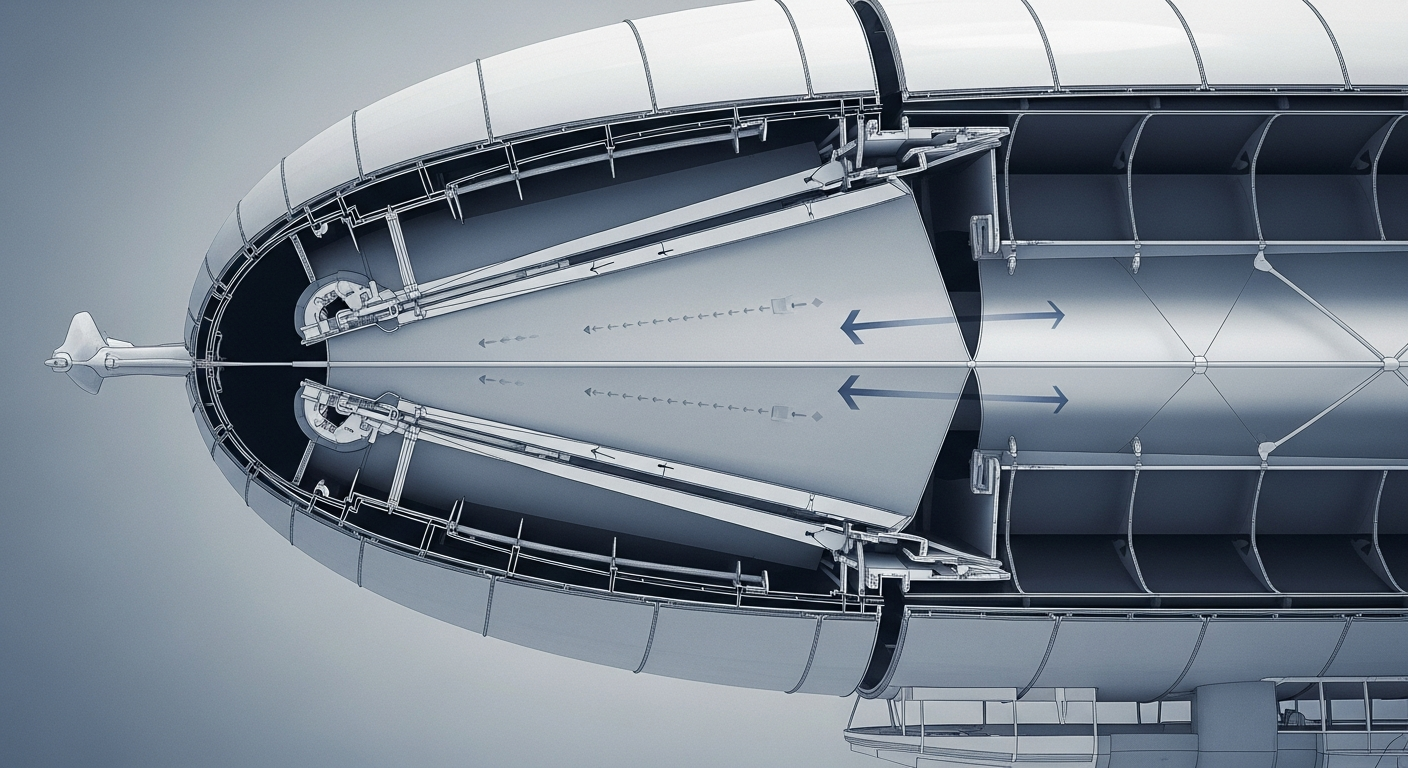
Initial simulations suggest that such bio-inspired designs could significantly reduce drag in turbulent conditions, improve fuel efficiency by optimizing flight paths, and drastically enhance the safety envelope, allowing airships to operate reliably in weather that would ground conventional aircraft.
Public Sentiment
“It sounds absolutely wild,” admits Captain Elara Vance, a veteran airship pilot. “The idea of designing a craft inspired by a one-winged squid… but honestly, if it means we can fly safely through a level five storm, I’m all for it. We need innovation.”
Dr. Kenji Tanaka, lead aerodynamicist at Skyward Aerospace, comments, “The beauty of Unifex volantis lies in its efficiency under duress. It’s not about brute force; it’s about intelligent adaptation. Applying this to structures as massive as airships requires rethinking fundamental principles, but the potential gains in stability and operational resilience are too significant to ignore.”
“Anything that makes air travel more sustainable and less vulnerable to climate impacts is a win for everyone,” states Anya Sharma, an environmental policy analyst. “The idea that nature, even in its most bizarre forms, holds blueprints for our future technologies is deeply inspiring.”
Conclusion
The unexpected wisdom of Unifex volantis underscores a powerful truth: some of the most elegant solutions to engineering challenges are already perfected in the natural world. As the airship renaissance gains momentum, the ability to navigate a world of increasingly extreme weather will be paramount. By studying the dynamic stability of a deep-sea squid, engineers are not just designing new airships; they are crafting a future where humanity's aerial ambitions can truly soar, resilient and reliable, above the tempestuous skies.