The Luminary Insight: How PopWheels 'Discovered' Batteries Power Things (Besides E-Bikes)
Nut Graph: In a stunning testament to the enduring human capacity for iterative 'innovation', PopWheels, a company previously synonymous with enabling transient gig-economy mobility, has unveiled a groundbreaking new application for its battery swapping network: powering things that... well, need power. Specifically, they've set their sights on the humble food cart, in a move hailed by some as merely logical and by others as a profound rethinking of basic physics.
Key Takeaways:
-
The Obvious, Reinvented: PopWheels' "discovery" that their e-bike batteries can power stationary objects like food carts is either a stroke of genius or a testament to how long it takes tech companies to notice the obvious.
-
Aggressive Rollout, Modest Innovation: The company's plan for an "aggressive rollout" this summer suggests a frantic race to monopolize a market segment that, until now, was largely served by extension cords and the occasional sputtering generator.
-
Sustainable, Sort Of: Swapping batteries is certainly cleaner than petrol generators, but the underlying infrastructure and resource consumption remain part of the grand circular economy of manufactured obsolescence.
-
The Future is Modular (and Subscription-Based): Expect more everyday items to become 'smart' by integrating with proprietary battery networks, transforming ownership into perpetual rental.
The Eureka Moment (or Lack Thereof)
One must pause to appreciate the sheer audacity of an industry that can package a fundamental principle of electricity into a "realization." PopWheels, in what can only be described as a moment of profound corporate introspection, "realized its battery swapping network could be used for more than food delivery workers who need to charge their e-bikes." Indeed. One pictures a frantic whiteboard session, perhaps involving several highly paid consultants and a venture capitalist pointing vaguely at a diagram of a battery, asking, "But what else could it do?"
The answer, it turns out, was "powering a street vendor's falafel fryer." A revelation that, while perhaps not quite on par with Newton's apple or Archimedes' bathtub, certainly has its own unique, understated charm in the annals of modern tech breakthroughs. The food cart, that bastion of entrepreneurial spirit and often questionable exhaust fumes, has long been a symbol of urban culinary grit. Now, it stands poised to become a showcase for modular energy solutions, swapping the roar of a generator for the quiet hum of a conveniently interchangeable power pack. It’s almost poetic, if you squint hard enough and ignore the carbon footprint of manufacturing all those batteries.
The Aggressive Rollout: A Race Against... What, Exactly?
"Now, its planning for an 'aggressive rollout' this summer." The phrase itself conjures images of industrial titans squaring off, vying for market dominance in a brutally competitive landscape. But for what? The lucrative world of food cart generator replacement? One wonders about the urgency. Is there a rival consortium of battery-swapping behemoths secretly plotting to corner the mobile hot dog stand market? Or is the "aggressive" part simply a standard corporate adjective, like "synergy" or "disruptive," intended to inject a much-needed dose of urgency into an otherwise incremental innovation?
The ambition is certainly commendable. To transition thousands of small businesses from noisy, polluting generators to a sleek, subscription-based battery service requires a certain level of logistical chutzpah. One can only imagine the pitch: "Forget messy fuel, unpredictable power, and the quaint aroma of diesel! Embrace the future of silent, predictable, pre-charged energy! (Terms and conditions apply, including mandatory monthly fees and a 20-year commitment to our proprietary battery format)."
The Food Cart's New Lease on Life (and Battery Contracts)
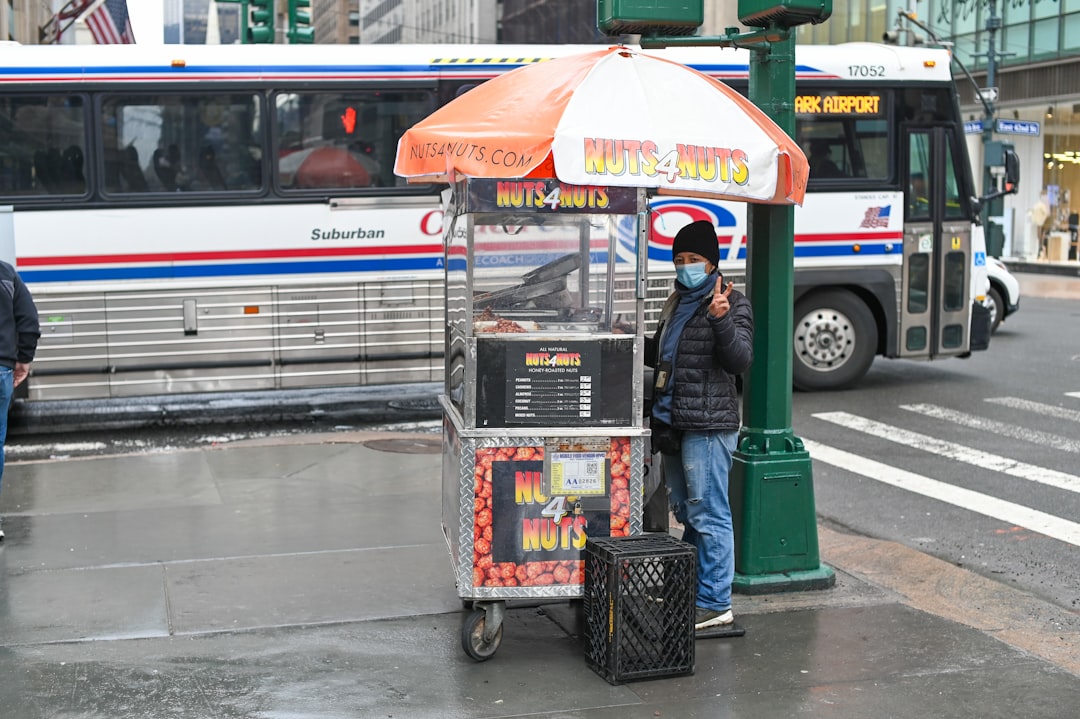
For the food cart owner, this shift represents a genuine improvement in quality of life, at least on the surface. No more hauling heavy fuel canisters, no more wrestling with balky pull-starts, and crucially, no more explaining to irate residents why their window rattles every time the gyros machine fires up. Instead, they get a clean, quiet power source, ensuring their frozen custard remains frozen and their espresso machine maintains optimal pressure, all powered by a neatly packaged block of lithium-ion cells.
But beneath the veneer of progress lies the subtle hum of a new dependency. No longer beholden to the local gas station, the food cart now enters a symbiotic relationship with PopWheels. The energy, once a simple commodity, becomes a service, a managed utility. This isn't just about swapping batteries; it's about swapping one set of operational challenges for another, with the added benefit of predictable recurring revenue for PopWheels. The street vendor, a symbol of independence, now quietly integrates into the broader network economy, one charged battery at a time.
Beyond the Kebab Cart: A Modest Proposal
If PopWheels can unlock the latent potential of their e-bike batteries to power a street taco stand, what other breathtaking "realizations" await us? Will we soon see public benches powered by PopWheels, offering conveniently charged USB ports for a nominal fee? Perhaps traffic lights, tired of drawing power from the antiquated grid, will begin their own "aggressive rollout" of PopWheels battery integration. One can even envision municipal squirrels, tasked with powering small city clocks, having their tiny dynamos replaced by a network of miniature PopWheels battery stations. The possibilities, as they say, are only limited by how much corporate jargon one is willing to endure to describe them.
Public Sentiment: A Synthesized Chorus of Mild Amusement
"Honestly, it makes sense, doesn't it?" remarked a local barista, sipping their artisanal kombucha. "It's like they just figured out a spoon can stir coffee, not just eat soup. Revolutionary!"
A veteran street vendor, wiping grease from his brow, offered a more pragmatic view: "If it stops the generator from dying halfway through lunch rush, I don't care if it's powered by pixie dust or a giant hamsters on a wheel. As long as the monthly bill ain't a shocker."
Meanwhile, a self-proclaimed urban futurist was overheard declaring, "This is merely the first domino! Soon, entire city blocks will run on a decentralized network of interchangeable power cubes, heralding a new era of modular urbanism. Mark my words!" (He then asked if anyone had a spare phone charger.)
Conclusion
As PopWheels embarks on its "aggressive rollout" this summer, we stand on the precipice of a mildly more convenient, slightly less noisy urban landscape. The company's profound "realization" that batteries can power more than just the devices they were initially designed for marks a new chapter in the ongoing saga of capitalistic ingenuity. Whether this truly revolutionizes anything beyond the carbon footprint of a falafel stand remains to be seen. But one thing is certain: the future, powered by PopWheels, will definitely have enough juice for your street-side churro.