
Acoustic Breakthrough: Detecting Elusive Helium Leaks with Sound
[FEATURED]
Key Takeaways
-
Helium's inertness and lack of scent or color make traditional leak detection exceptionally challenging.
-
A novel physics-based sensor utilizes acoustic principles to 'listen' for distinct sonic signatures of helium leaks.
-
The technology capitalizes on specific resonant frequencies within the sensor's chamber, altered by the presence of helium.
-
This innovation offers enhanced accuracy, speed, and cost-effectiveness compared to many existing methods.
-
Potential applications span critical sectors including cryogenics, semiconductor manufacturing, and aerospace, bolstering safety and efficiency.
The Invisible Problem: Why Helium is Hard to Detect
Helium, the second lightest element, is celebrated across numerous high-tech industries for its unique properties. Its inertness makes it an ideal protective atmosphere in welding and fiber optics production, while its extremely low boiling point is indispensable for cooling superconducting magnets in MRI machines and particle accelerators. In semiconductor manufacturing, it's crucial for creating ultra-clean environments. However, these very qualities – being colorless, odorless, and non-reactive – present a formidable challenge when it comes to detecting leaks. Unlike many other industrial gases, helium provides no sensory warning signs.
Leaking helium represents not just an economic drain due to lost resources but can also compromise critical processes, lead to equipment malfunction, and, in enclosed spaces, even pose an asphyxiation risk by displacing oxygen. Current detection methods, such as mass spectrometry leak detectors, are highly effective but often expensive, slow, and require specialized operation. Simpler methods, like soap bubble tests, lack precision and are impractical for large-scale industrial systems.
Harnessing Acoustics: The Science Behind the Sensor
Addressing this pervasive problem, researchers have developed an ingenious physics-based sensor that leverages acoustic principles to 'hear' helium leaks. The core innovation lies in creating a small, enclosed chamber within the sensor, designed to resonate at specific sound frequencies. When helium enters this chamber, its unique acoustic properties – specifically its high speed of sound compared to air – subtly alter the resonant frequency within the chamber.
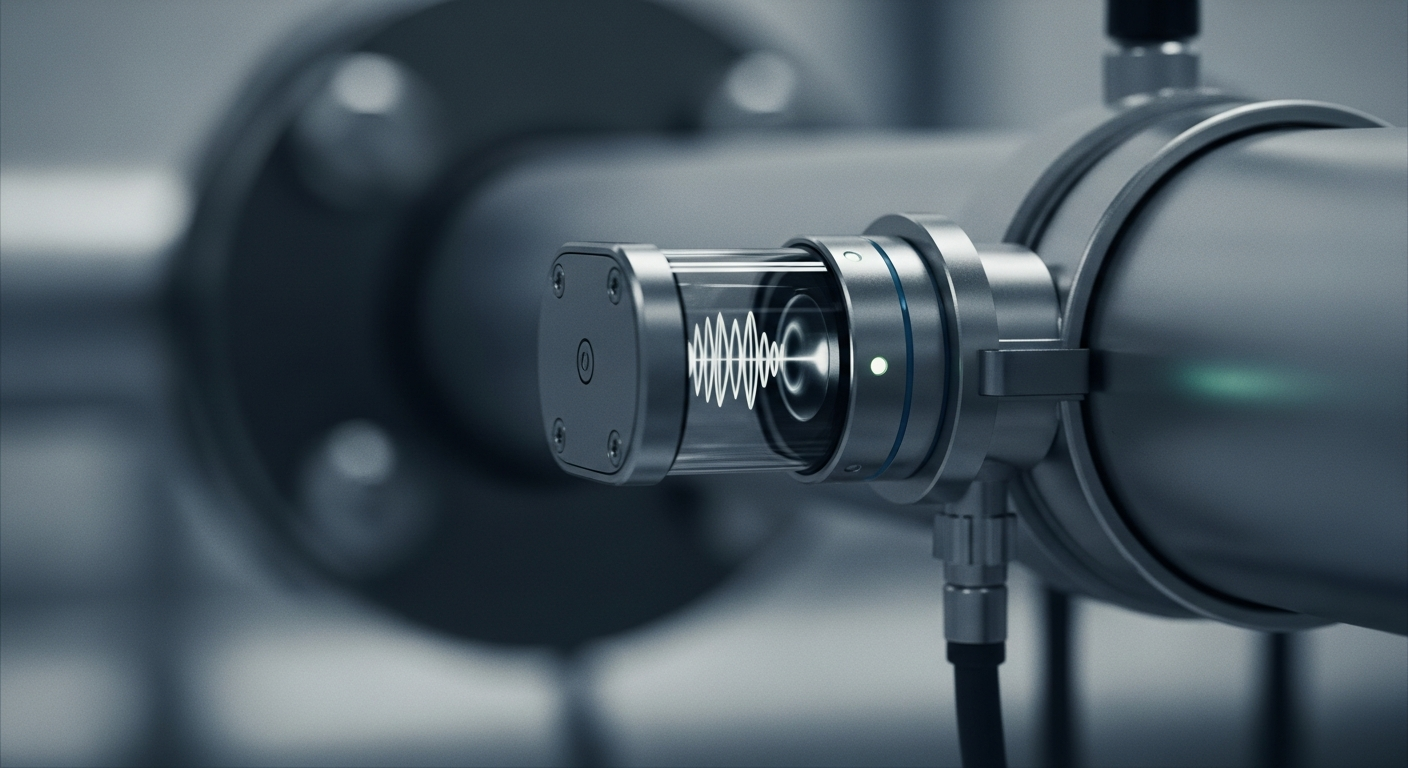
The sensor continuously monitors these resonant frequencies. A slight shift from the baseline indicates the presence of helium, even in minute quantities. This method is exceptionally sensitive because it's not detecting the helium itself through chemical reaction or spectral analysis, but rather its effect on sound waves within a precisely controlled environment. Think of it like a finely tuned musical instrument: even a small change in its physical properties can significantly alter the note it produces. This elegant application of fundamental physics transforms an invisible threat into an audible signal.
Advantages and Applications
The acoustic helium leak sensor presents several compelling advantages over conventional techniques:
-
High Sensitivity and Accuracy: The method is capable of detecting very small leaks, which is crucial in applications where even minor helium loss can be costly or dangerous.
-
Speed and Real-time Monitoring: Unlike batch testing or time-consuming manual inspections, acoustic sensors can provide continuous, real-time feedback, enabling immediate intervention.
-
Cost-Effectiveness: While initial setup may involve investment, the reduced need for expensive consumables, specialized operators, and the prevention of costly helium loss can lead to significant long-term savings.
-
Non-Invasive: The sensor can be integrated into existing systems without disrupting operations, making it suitable for a wide array of industrial settings.
-
Versatility: This technology holds immense promise for industries ranging from medical imaging (MRI machine maintenance), deep-sea exploration (monitoring gas mixtures), and aerospace (propellant systems), to advanced manufacturing facilities (cleanrooms and vacuum systems). Its ability to function reliably in diverse environments positions it as a game-changer.
Beyond Conventional Methods
While techniques like residual gas analyzers (RGAs) and helium mass spectrometers offer high precision, they often come with high operational costs and are not always suitable for distributed, continuous monitoring across vast industrial complexes. Simpler methods, such as pressure decay tests or ultrasonic leak detectors (which often identify turbulent flow rather than specific gas composition), lack the specificity and sensitivity required for critical helium applications. The acoustic sensor bridges this gap, providing a dedicated, robust solution that is both sophisticated and practical for widespread adoption, offering a compelling alternative or complement to existing leak detection portfolios.
The Road Ahead: Impact and Future
The development of this physics-based acoustic sensor marks a significant stride in industrial safety and resource management. By providing a reliable, sensitive, and cost-effective means of detecting helium leaks, it stands to minimize economic losses, enhance operational efficiency, and mitigate potential hazards. As industries continue to innovate and rely on specialized gases, such advancements in detection technology will become increasingly vital. This acoustic solution is poised to become a standard tool, ensuring the integrity of helium-dependent systems globally, from research laboratories in India to manufacturing hubs worldwide.
Public Sentiment
-
"This innovation is precisely what the cryogenics industry needs to reduce downtime and ensure the integrity of our systems. The cost savings alone could be monumental," commented a senior engineer from a major MRI manufacturer.
-
"It's an elegant solution. Applying fundamental acoustic physics to solve such a persistent industrial challenge showcases genuine ingenuity," stated Dr. Ananya Sharma, a physicist specializing in sensor technologies.
-
"For semiconductor fabrication, where clean environments and precise gas management are paramount, a reliable, real-time helium leak detector is invaluable. This could significantly enhance our process control," remarked a operations manager at a Bangalore-based microelectronics firm.
Conclusion
The challenge of detecting colorless, odorless helium leaks has long plagued industries reliant on this crucial element. The advent of a physics-based acoustic sensor, capable of 'hearing' the subtle changes helium introduces to sound waves, represents a pivotal leap forward. This technology promises not only to bolster safety and reduce economic waste but also to empower industries with a more precise, efficient, and continuous monitoring capability, securing the future of helium-dependent operations worldwide.