Key Takeaways:
-
Circuit sculptures blend electronics, art, and craftsmanship into unique physical forms.
-
Tim's innovation lies in applying graph theory to optimize their structural and electrical design.
-
Graph theory offers a rigorous framework for achieving both aesthetic complexity and functional integrity.
-
This approach elevates hobbyist projects to a new level of engineering sophistication.
-
It highlights the profound interdisciplinary potential of seemingly disparate fields.
The Resurgence of Tangible Electronics as Art
Circuit sculptures, defined by their exposed, often intricate wiring and illuminated components, have carved out a significant niche in the maker community. Unlike conventional circuits hidden within opaque enclosures, these creations celebrate the raw beauty of electronic pathways, transforming functional components like LEDs and resistors into deliberate artistic elements. The allure lies in their transparency – a literal and figurative unveiling of the electrical heart, often culminating in dazzling displays of light and form.
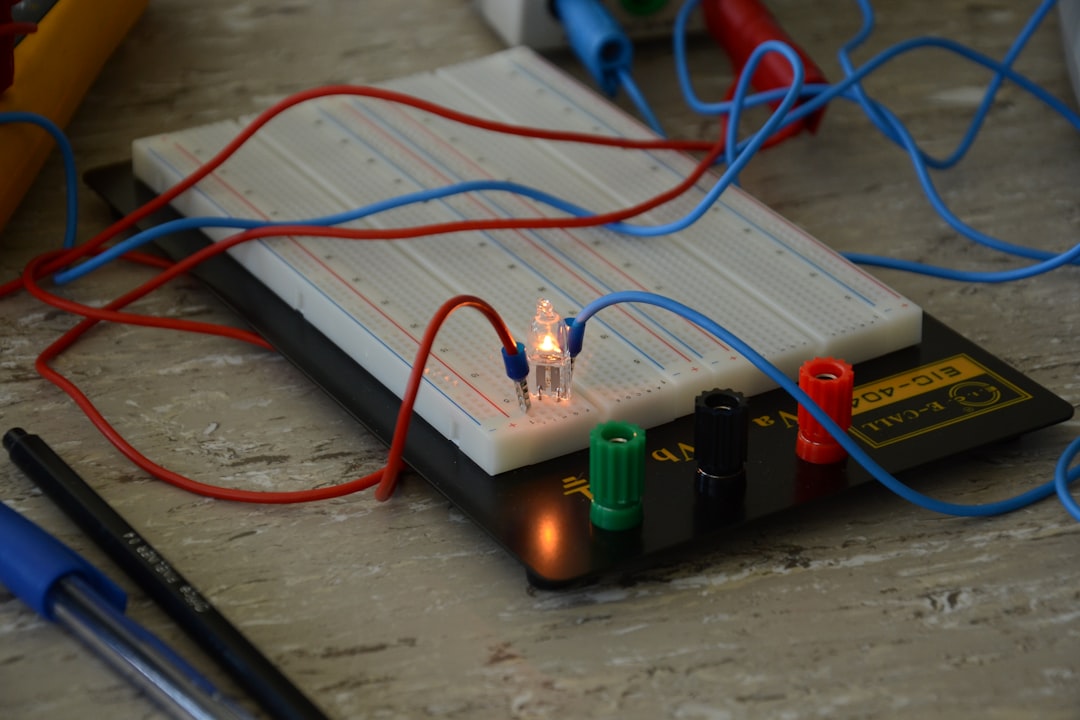
For many enthusiasts, the process is one of iterative design, guided primarily by visual intuition and basic electrical principles. However, the complexity of these sculptures grows exponentially with the number of components and desired geometric forms, often leading to structural challenges and design inefficiencies that can be difficult to resolve without a more systematic approach.
Graph Theory: A Blueprint for Complexity
This is where Tim's methodology introduces a significant paradigm shift. Recognizing the inherent structural and connectivity problems in increasingly complex sculptures, he began applying graph theory – a branch of discrete mathematics concerned with networks of points (vertices or nodes) and lines (edges or links) connecting them. In the context of circuit sculptures, each component or connection point can be considered a node, and the conductive wire segments or structural supports act as edges.
By modeling his designs as graphs, Tim gains several advantages. Graph theory provides formal tools to analyze connectivity, identify optimal paths for wiring (minimizing length or intersections), and ensure structural stability. Concepts like shortest path algorithms can dictate the most efficient electrical routes, while principles of network flow can inform optimal component placement for both balanced aesthetic weight and electrical functionality.
This mathematical framework allows for a systematic approach to design, moving beyond intuitive trial-and-error to a predictive, optimized methodology. The result is sculptures that are not only visually captivating but also structurally sound and electrically efficient, a testament to thoughtful engineering embedded within artistic expression.
Bridging Disciplines: Engineering, Art, and Mathematics
Tim's work exemplifies a compelling synthesis of engineering precision, artistic vision, and mathematical rigor. Traditionally, hobbies like circuit sculpture might be seen as crafts – a blend of technical skill and aesthetic taste. By introducing graph theory, Tim elevates the practice to an applied engineering discipline. This interdisciplinary approach encourages creators to think beyond the immediate visual outcome and consider the underlying structural and functional logic. It challenges the conventional separation of art and science, demonstrating how abstract mathematical concepts can directly inform and enhance tangible artistic creations. The precision offered by graph theory ensures that the aesthetic complexity does not compromise the electrical integrity or physical stability of the sculpture, allowing for the realization of more ambitious and robust designs.
Implications for Innovation and Education
The integration of graph theory into circuit sculpture design carries broader implications. For the broader maker community, it offers a sophisticated toolset for tackling complex projects, potentially inspiring new forms and functionalities that were previously unattainable. For educators, Tim's approach provides a compelling, hands-on example of applied mathematics, demonstrating the real-world utility of abstract concepts like graph theory in a visually engaging context. It can serve as a powerful teaching aid, effectively bridging theoretical math with practical engineering and artistic creation. Furthermore, this method could influence industrial design, rapid prototyping, and even architectural modeling where optimized connectivity and structural efficiency are paramount. Tim's work highlights a robust path for innovation where computational thinking informs and enriches physical fabrication.
Public Sentiment
Initial reactions from online communities and fellow makers suggest a mix of awe and profound inspiration. "It's incredible to see someone bring this level of academic rigor to what many consider a hobbyist pursuit," commented one forum user on a prominent electronics design platform. Another noted, "The true beauty isn't just in the glowing wires, but in the intelligent, underlying design behind it all. It makes you think differently about every connection and component." The sentiment generally reflects widespread admiration for the ingenuity and the successful integration of seemingly disparate fields, with many expressing keen interest in learning more about applying similar systematic approaches to their own projects.
Conclusion
Tim's innovative application of graph theory to circuit sculpture design represents a significant advancement in the realm of tangible electronics and interdisciplinary craftsmanship. By providing a structured, mathematical framework for design, he has not only created visually stunning and robust artworks but has also illuminated a path for others to explore the profound connections between engineering, art, and mathematics. This work stands as a testament to the power of cross-disciplinary thinking, proving that even the most aesthetic creations can benefit immensely from a foundation of rigorous scientific principles. As the complexity of DIY and maker projects continues to grow, systematic approaches like Tim's will undoubtedly become increasingly vital, pushing the boundaries of what is possible in physical computing art.