Rethinking the Rotation: Why Overthinking Simple Tools Unlocks Professional Potential
[FEATURED]
Key Takeaways
-
Professional-grade tools demand professional-grade scrutiny: Even the simplest components of industrial equipment warrant meticulous design and robust execution.
-
Hidden costs accumulate rapidly: Suboptimal tools, though seemingly minor, lead to significant inefficiencies in time, accuracy, and rework for professionals.
-
Innovation through refinement: True innovation often stems not from entirely new inventions, but from the obsessive, iterative improvement of existing solutions.
-
The maker community as an innovation hub: Practical, shared improvements from individual engineers like Borge drive progress for the broader industrial sector.
-
Design for durability and precision: For serious applications, tools must prioritize robustness, repeatable accuracy, and adaptability over barebones functionality.
The Flaw in the Foundation
Anyone who has spent serious time with a 3D scanner — particularly the desktop variety aimed at prosumers and small businesses — can attest to a common, insidious frustration: the rotation table. Often an afterthought in bundled kits, these tables are frequently flimsy, constructed from lightweight plastic, and prone to inconsistent rotation. Their cheap motors introduce jitters, their surfaces lack adequate grip for diverse objects, and worst of all, they rarely offer precise, repeatable indexing. This isn't just an inconvenience; it's a significant bottleneck.
Imagine trying to scan a complex mechanical part or a delicate artifact, only for the table to wobble mid-scan, or to find that your manually indexed rotations are never quite uniform. The result? Distorted point clouds, misaligned meshes, and the soul-crushing necessity of reshooting entire scan sets, or worse, spending hours in post-processing trying to salvage poor data. For a professional operating on tight deadlines and demanding precision, these 'minor' flaws translate directly into wasted hours, material costs, and eroded profit margins. The supposed 'cost-saving' of a basic table quickly becomes an expensive liability.
Borge's Blueprint: Precision in Practice
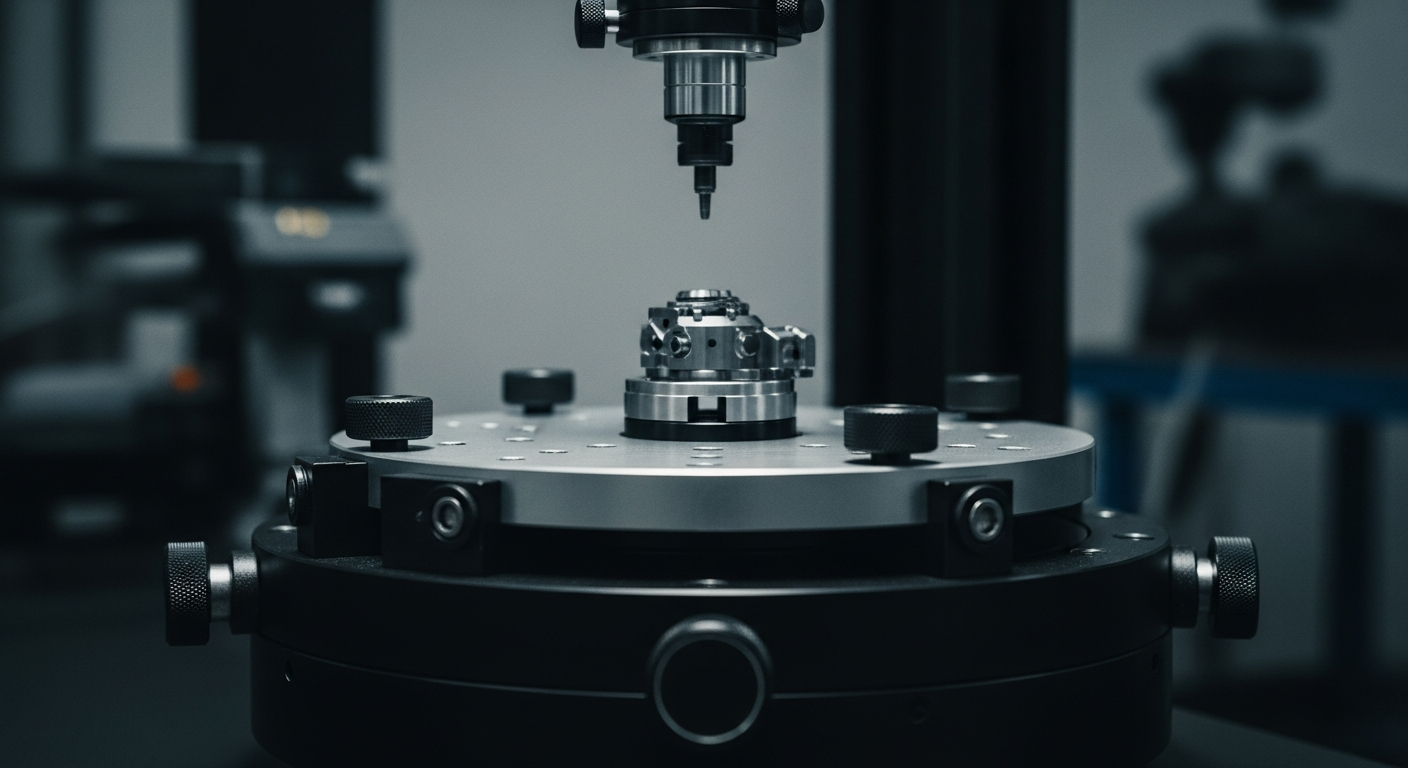
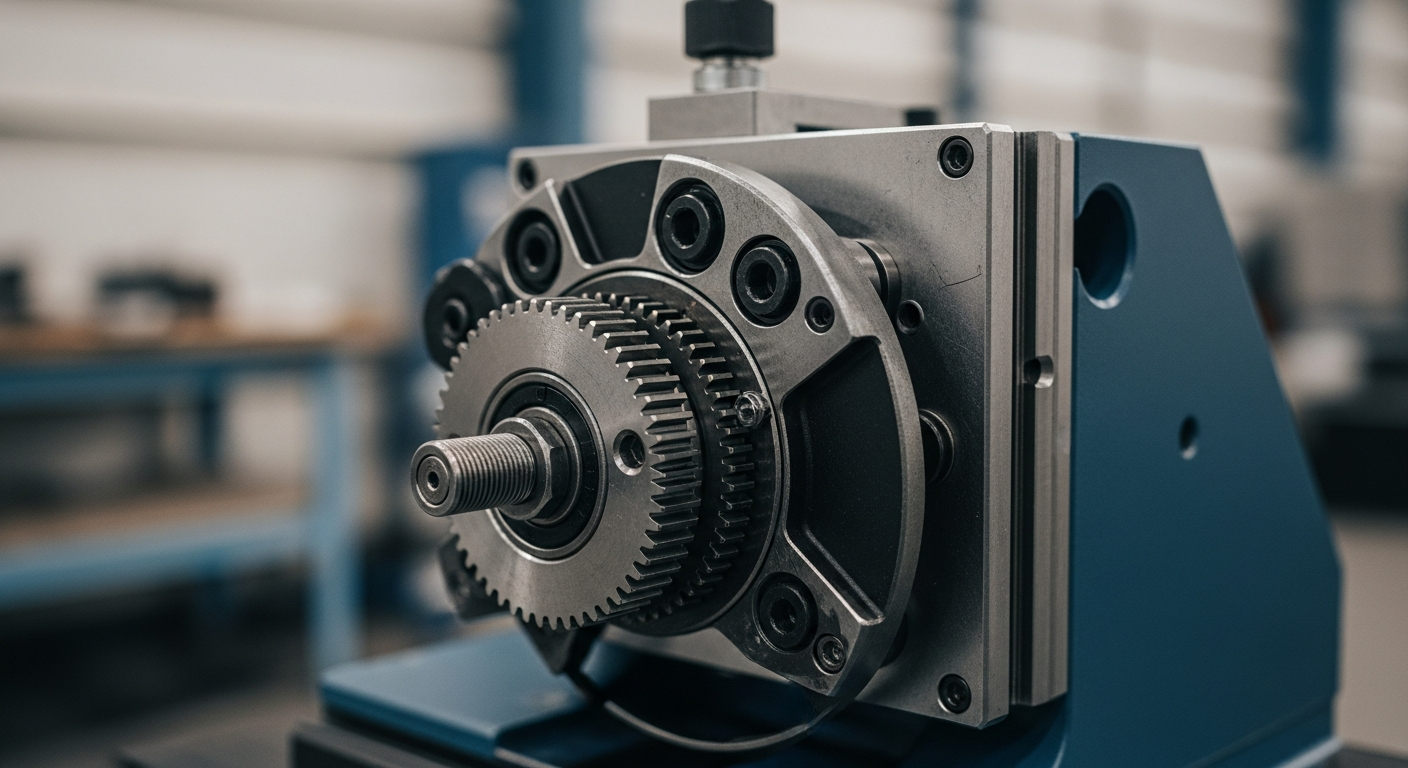
This is precisely the crucible from which Chris Borge’s solution emerged. Recognizing the critical chasm between basic functionality and professional necessity, Borge didn't just tweak; he engineered. His redesign isn't merely an upgrade; it's a paradigm shift for what a rotation table should be. At its core, Borge's table embraces industrial design principles: robust materials like machined aluminum replace flimsy plastics, precision bearings ensure smooth, consistent rotation, and a far more powerful, stable motor eliminates dreaded jitters.
But the true genius lies in its meticulous details. Borge integrated a precise indexing system, allowing for perfectly repeatable angular steps — crucial for capturing complete and accurate datasets without manual guesswork. Surface grip is optimized for various object types, and the entire assembly speaks to a design philosophy where every component is chosen for its durability and performance. It's modular, adaptable, and built to withstand the rigors of continuous professional use. This isn't just about turning an object; it's about turning it with uncompromising, digital-grade accuracy.
The Ripple Effect: Beyond the Turn
To dismiss Borge's work as merely 'overthinking a simple object' is to fundamentally misunderstand the demands of professional workflows. The ripple effect of such a refined tool is profound. For engineers reverse-engineering components, artists digitizing sculptures, or quality control professionals verifying prototypes, Borge's table translates directly into superior data quality. This means fewer scan passes, less post-processing time, and ultimately, a more accurate final digital model.
The cumulative impact on project timelines and budgets is substantial. Time saved on reshoots or data cleanup can be reinvested into more complex tasks, accelerating innovation cycles. The reliability of the output increases confidence in crucial decisions based on scan data. In an industry where 'good enough' is often just the beginning of problems, Borge's commitment to 'exacting' sets a new standard, proving that foundational tools, when perfected, can unlock unprecedented efficiencies upstream in the design and manufacturing process.
The "Overthinking" Imperative
The initial reaction to dedicating such effort to a seemingly mundane tool might be to label it 'overthinking.' Yet, for those steeped in the industrial arts and professional making, this isn't overthinking; it's proper thinking. It's the hallmark of an engineer who understands that a system is only as strong as its weakest link. A truly professional mindset doesn't just accept deficiencies; it identifies them, analyzes their impact, and engineers solutions with uncompromising rigor.
Borge's project serves as a powerful reminder that innovation isn't solely confined to inventing entirely new categories of technology. Often, the most impactful advancements come from the meticulous refinement of existing, overlooked components. It's a call to action for professionals across all fields: scrutinize your tools, question every compromise, and recognize that investing in the perfection of the 'simple' can yield extraordinary returns in complex environments. This dedication to detail is what distinguishes a mere hobbyist from a serious professional, and why the 'overthought' solutions are often the most robust and valuable.
Public Sentiment: A Collective Sigh of Relief
Across online forums and maker communities, the sentiment regarding Borge's rotation table is overwhelmingly positive, often echoing a collective sigh of relief. Comments range from "Finally, someone gets it! I've wasted countless hours with flimsy factory tables" to "This is exactly what the industry needs, not just faster scanners, but better, more reliable accessories that enable true professional work." Many users have highlighted the direct impact on their projects, noting, "Small changes like this make a huge difference in data quality and overall workflow efficiency." The consensus is clear: Borge has tapped into a widely felt frustration and provided a solution that resonates deeply with those who rely on precision every day.
Conclusion
Chris Borge’s improved 3D scanner rotation table stands as a testament to the enduring power of meticulous design and the professional imperative to pursue perfection, even in the smallest details. It's a powerful counter-narrative to the prevailing notion that simpler means better in all cases. For the professional maker, simpler often means compromised, leading to inefficiencies that compound over time. By 'overthinking' the humble rotation table, Borge has not only created a superior product but has also delivered a valuable lesson: true industrial innovation often begins with the unflinching refusal to accept 'good enough' for anything less than optimal.