
Key Takeaways
-
Misunderstanding of Purpose: Wikipedia is a collaborative encyclopedia, not a personal cloud storage service or a digital landfill for private files.
-
Ethical and Practical Concerns: Such use constitutes a severe breach of platform terms, strains volunteer resources, and risks widespread data integrity issues.
-
Hidden Costs Outweigh Perceived Savings: The 'free' aspect is illusory, leading to data loss, account bans, and the significant burden placed on platform administrators and editors.
-
Security and Privacy Nightmare: Storing personal or sensitive data on a public, editable platform is an open invitation for privacy breaches and malicious tampering.
The Illusion of Free Storage
At first glance, the concept of using Wikipedia as a personal data repository might appear to be a stroke of genius in an increasingly data-hungry world. The allure of circumventing traditional storage costs, even for modest personal archives, is undeniable. Hard drives, cloud subscriptions, and backup solutions all carry a price tag. Why pay, when a vast, publicly accessible, and seemingly permanent platform like Wikipedia exists?
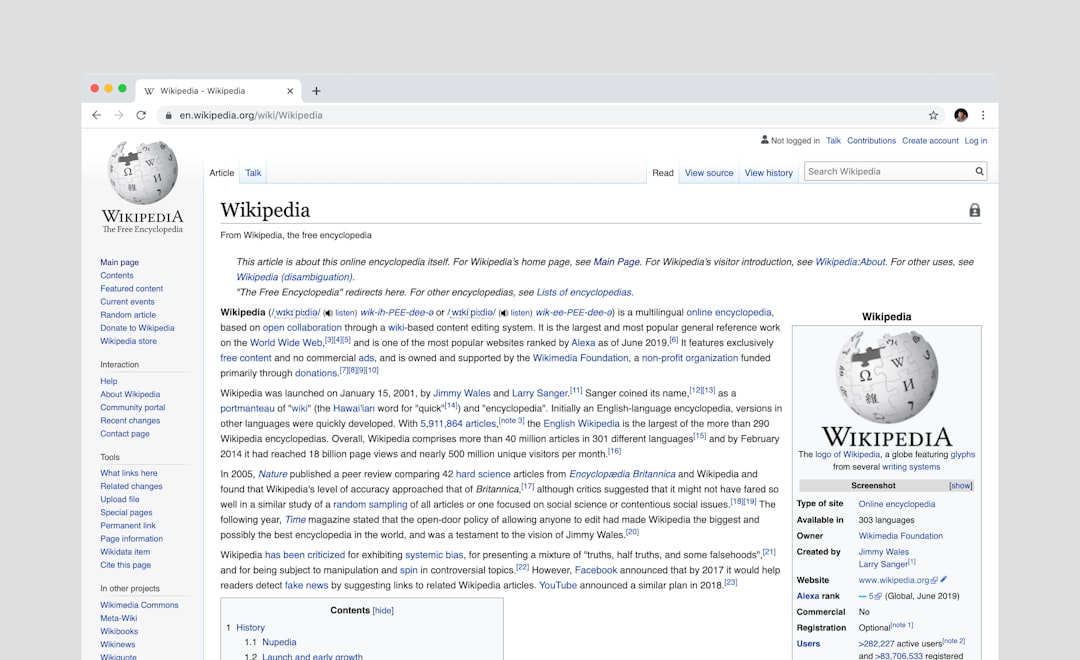
This line of reasoning, however, is not just flawed; it's profoundly naive, demonstrating a fundamental misunderstanding of how such platforms operate and the ethical frameworks that underpin their existence.
Wikipedia is built on the pillars of verifiability, neutrality, and encyclopedic relevance. Its vastness is a testament to global collaboration, maintained by a dedicated community of volunteer editors. To view it as merely 'space' – an empty vessel for personal files – is to strip it of its purpose and disregard the immense human effort sustaining it. This isn't a clever hack; it's an attempt to exploit a shared public good for private convenience, undermining the very principles that make it valuable.
Technical and Ethical Quagmires
The practical implications of attempting to store personal data on Wikipedia are, at best, a logistical nightmare, and at worst, an ethical catastrophe. Firstly, the platform's terms of service strictly prohibit original research, personal essays, or irrelevant content, let alone raw data files disguised as encyclopedic entries. Any such attempt would be swiftly identified and removed by the vigilant community of editors and administrators. Users engaging in such activities face immediate account bans, leading to the irreversible loss of their 'stored' data.
Beyond the inevitable deletion, consider the integrity of the data itself. Wikipedia's content is fluid, subject to edits, revisions, and even vandalism. While this process ensures accuracy for encyclopedic entries, it renders the platform entirely unsuitable for static, personal data storage. Imagine trying to retrieve a critical document from a system where any user can potentially modify or corrupt your 'entry'. The notion borders on the absurd. Furthermore, deliberately uploading non-encyclopedic material consumes server resources, bandwidth, and the invaluable time of volunteer moderators, diverting them from their primary mission. It's a parasitic approach to digital infrastructure.
The Real Cost of 'Convenience'
The perceived 'free' nature of using Wikipedia for storage evaporates upon closer inspection, revealing a multitude of hidden costs. The most immediate is the almost guaranteed loss of your data. The platform is not designed for data archiving; it's designed for knowledge dissemination. Your personal files, embedded within articles or disguised as 'citations', would be purged. This isn't a bug; it's a feature, upholding the integrity of the encyclopedia.
Then there's the significant cost to the community. Every minute spent by a volunteer editor or administrator identifying and removing irrelevant personal data is a minute not spent improving legitimate articles, fighting actual misinformation, or supporting new contributors. This translates to a direct burden on the collective, impacting the quality and efficiency of a global public resource. For the individual, the 'convenience' leads to frustration, wasted effort, and potential penalties. True convenience, and certainly true security, comes from robust, purpose-built storage solutions, not from contorting public platforms into private hard drives.

Public Sentiment
Across digital forums and expert commentary, the sentiment regarding using public platforms like Wikipedia for private storage is overwhelmingly negative and critical. As one Redditor succinctly put it, "It's not clever; it's disrespectful and irresponsible. Wikipedia isn't your personal cloud, it's a shared library." Tech ethicists have warned that such practices underscore a dangerous erosion of digital citizenship, where shared resources are viewed solely through the lens of individual utility, rather than communal responsibility. "This kind of thinking," noted a prominent cybersecurity analyst, "is precisely how public services become degraded and unsustainable. It’s a tragedy of the digital commons waiting to happen." The consensus points to a severe lack of awareness regarding platform purpose and the ethical boundaries of digital interaction.
Conclusion
The allure of 'free' storage is understandable, but the idea of co-opting Wikipedia for personal data archiving is a profoundly flawed and ultimately harmful concept. It represents a critical failure to grasp the platform's mission, its operational realities, and the ethical responsibilities inherent in utilizing shared digital spaces. Rather than seeking to exploit public infrastructure, users should invest in legitimate, secure, and appropriate storage solutions that respect both their data integrity and the integrity of invaluable communal resources. Wikipedia is a global treasure of knowledge; let us not degrade it into a digital junk drawer.