For decades, the standard corporate citadel was a shimmering abstraction: a tower clad in reflective glass and polished chrome, designed to dissolve into the sky, symbolizing fluid capital and technological weightlessness. Yet, as the tectonic plates of global finance and industry continue to shift with unnerving frequency, a striking counter-movement is hardening the skyline. The corporate headquarters, the physical embodiment of the firm's corpus, is rediscovering the unyielding weight of concrete.
Brutalism, rooted in the French béton brut (raw concrete) championed by Le Corbusier and later defined by Alison and Peter Smithson, was a post-war utilitarian response. It celebrated the honest expression of materials and function. It was, architecturally speaking, an assertion of necessity over ornamentation. That this same uncompromising vernacular—often associated in the public mind with municipal parking garages and stern, monolithic academic buildings—is now being embraced by tech giants and industrial conglomerates is one of the most compelling ironies of modern commercial architecture.
The Desire for Material Honesty and Permanence
The primary driver for this shift is a profound yearning for stability. The era of the transparent, 'see-through' organization attempting to project limitless, ephemeral growth has given way to an environment that prizes durability and resilience. When global economics are characterized by volatility and sudden disruption—be it technological obsolescence or pandemic-induced market shocks—the architecture of a major headquarters must signal strength, not fluidity.
Concrete, particularly the high-performance structural variety favoured today, is the ultimate material expression of permanence. It carries undeniable gravitas. A headquarters cast in heavy, board-formed concrete asserts that the organization is not merely surviving the current decade; it intends to anchor the landscape for the next century. This unflinching materiality serves as a powerful psychological signal to shareholders, competitors, and staff alike: we are bedrock.
Contrast this with the ubiquitous curtain wall of the 1990s and 2000s, often perceived today as brittle, easily dated, and reliant on complex, high-maintenance mechanical systems. Brutalism’s contemporary iteration, sometimes termed ‘Refined Brutalism,’ strips away the unnecessary, favouring exposed infrastructure and honest joints. This aligns surprisingly well with the modern industrial demand for transparency, translating a philosophical commitment to visible systems into physical form.
Utilitarian Aesthetic and Corporate Identity
Brutalist structures are fundamentally intellectual; they do not seek to charm but to state. For a certain class of corporation—particularly those focused on engineering, data, or complex industrial processes—the austere elegance of exposed concrete provides an ideal canvas for corporate identity. It rejects the flamboyant display of wealth inherent in neo-Gothic or Post-Modern towers and substitutes it with a more nuanced declaration of intellectual confidence.
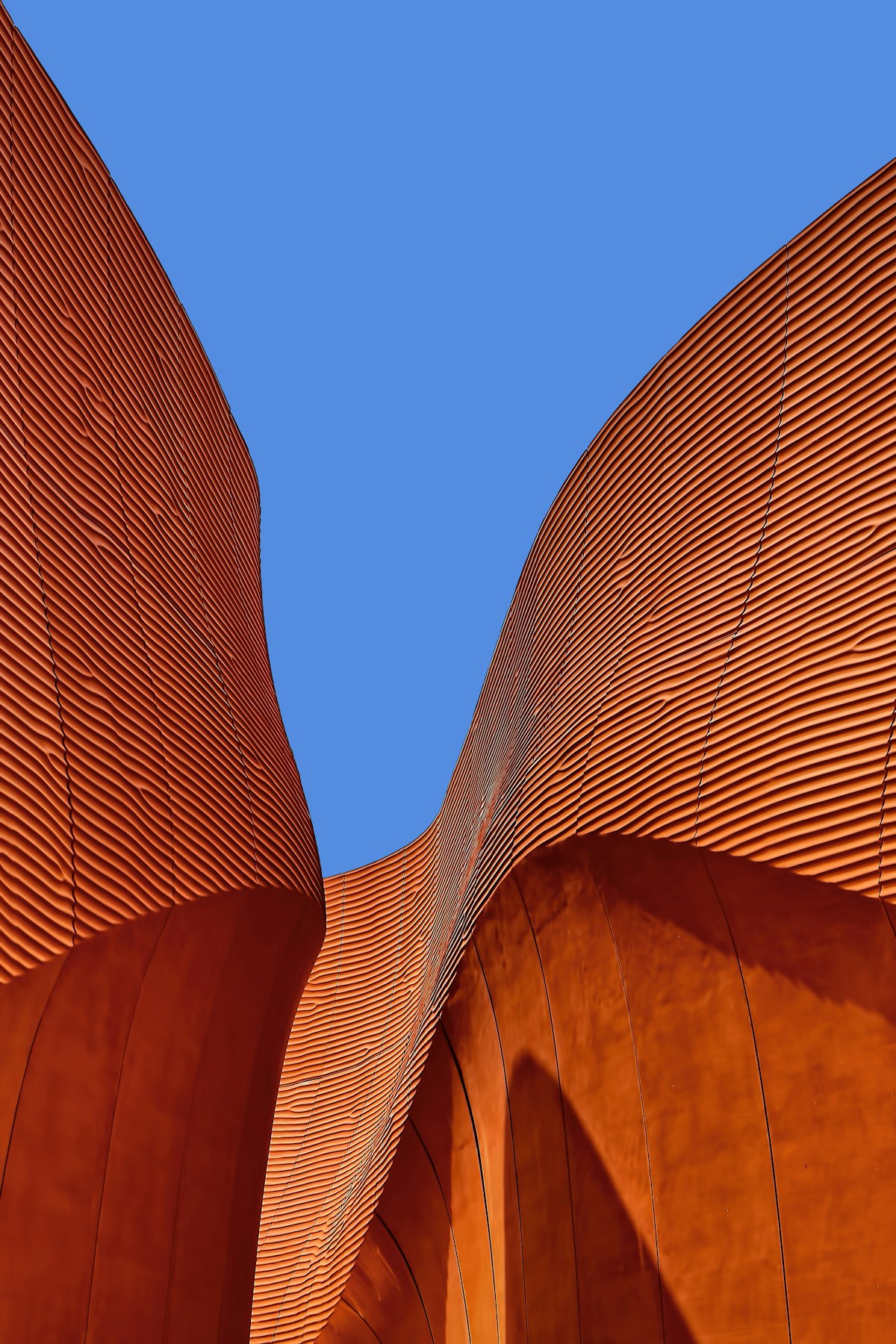
Architecturally, the Brutalist form forces engagement. These buildings are often defined by complex geometries, deep shadow lines, and rhythmic repetition, demanding careful inspection rather than a fleeting glance. For a company seeking to attract high-calibre engineering and development talent, this aesthetic speaks a sophisticated language: one of structure, logic, and rigorous methodology. The building itself becomes a testament to problem-solving.
Furthermore, the style acts as a subtle rebellion. In a homogenized, globalized architectural marketplace dominated by derivatives of the same glass box, choosing Brutalism is an act of defiance. It suggests a non-conformist, foundational approach, appealing strongly to founders and CEOs who view their companies as disruptive forces rather than participants in the conventional order.
The New Efficiency and Sustainability
The revival of heavy architecture is also being driven by pragmatic concerns, notably around operational efficiency and sustainability—concepts that have evolved drastically since the 1970s energy crises.
Modern Brutalism leverages the high thermal mass inherent in thick concrete walls. Unlike lightweight glass envelopes that require massive energy input for heating and cooling, concrete stabilizes internal temperatures by slowly absorbing and releasing thermal energy. In an era where corporate ESG (Environmental, Social, and Governance) commitments are under intense scrutiny, the use of passive design strategies derived from heavy construction offers tangible energy savings and a reduced maintenance profile over the building’s lifespan.
Moreover, the construction methodology itself embraces a sustainable principle: longevity. While the initial carbon footprint of concrete production remains a concern, the intended lifespan of a modern Brutalist HQ dwarfs that of many conventionally clad structures. The building is designed to last a century, amortizing its environmental cost across generations of use, reducing the need for cyclical refurbishment and wholesale replacement.
Brutalist architecture, once criticized for being harsh and unwelcoming, is returning refined, contextualized, and imbued with corporate purpose. It is a calculated pivot away from the superficiality of the digital age, a heavy, tectonic reminder that while markets may fluctuate, the physical infrastructure of capital—when honestly expressed in béton brut—is built to endure.