
The Grand Deception of Complexity: Our Addiction to Opaque Solutions
For decades, the guardians of industrial secrets and the purveyors of diagnostic prowess have thrived on a simple premise: complexity sells. If you wanted to understand the intricate arterial network of a printed circuit board without resorting to destructive delamination – that barbaric act of peeling back layers like an onion – you invested. Heavily. We're talking about sophisticated X-ray spectrophotometers, industrial CT scanners, and an array of acronym-laden machinery designed to peer through opaque materials, revealing the hidden truths of solder joints, traces, and vias. This was the established order, a testament to humanity's relentless pursuit of knowledge, limited only by one's budget and access to a highly specialized technician in a lead-lined room. [FEATURED]
And then, like a monsoon breaking a prolonged drought, came the news: Philip Giacalone, with an audacity bordering on the sacrilegious, suggested that perhaps, just perhaps, all one needed was a camera. A camera. The same ubiquitous device that records your aunt's cat videos and your hastily prepared dinner. The implications, if true, are nothing short of cataclysmic for an industry built on precisely not being able to see through things easily.
Giacalone's Glorious Gambit: From Lens to Labyrinthine Layout
The core of this 'innovation' is so disarmingly simple, it almost feels like a punchline to a very expensive joke. According to early reports, instead of bombarding a PCB with high-energy photons, you simply… photograph it. But not just any photograph. This isn't about snapping a blurry image with your vintage Nokia 3310. The process apparently involves capturing a carefully composed image – perhaps under specific lighting, or with a certain angle – and then, through what one can only assume is a dark art of algorithmic wizardry, transforming that mere visual data into an internal map of the board.
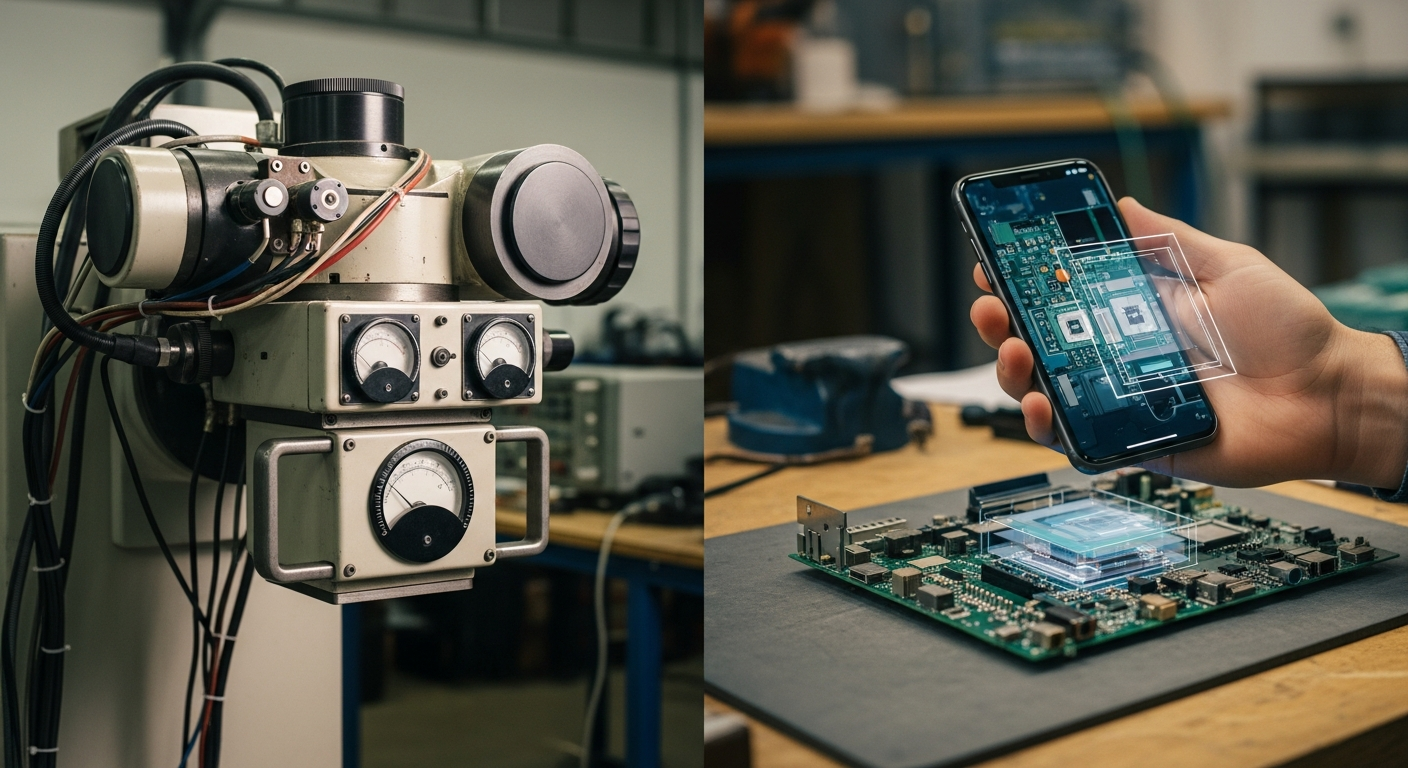
Imagine the scene: a seasoned engineer, spectacles perched precariously on his nose, having spent a lifetime perfecting the art of operating a multi-ton, radioactive behemoth to peer into a tiny microchip. Now, a fresh-faced intern, armed with a smartphone and a cheeky grin, replicates the feat in a matter of seconds, perhaps while simultaneously ordering chai on a delivery app. The sheer indignity of it all! It's less of an engineering breakthrough and more of a cosmic prank on the established order.
Economic Implications and the Jugaad Spirit: When Penny-Pinching Becomes Prophetic
For a nation like India, with its storied tradition of 'jugaad' – that ingenious, often frugal, workaround for complex problems – Giacalone's method resonates deeply. Why spend millions on a machine that requires a climate-controlled environment and a Ph.D. to operate, when a few rupees' worth of processing power and a device you already own can achieve a similar, if not superior, result? The economic ramifications are staggering. Suddenly, the ability to reverse engineer, to diagnose faults, or to simply understand the architecture of a rival's hardware is democratized. Small startups, independent repair shops, and even hobbyists can now perform tasks previously reserved for corporate espionage departments or state-sponsored research labs. The playing field isn't just leveled; it's been bulldozed and resurfaced with a smartphone screen.
This isn't merely about cost reduction; it's about a paradigm shift. It challenges the very business models of companies that manufacture and service these traditional X-ray systems. One can almost hear the frantic board meetings, the bewildered cries of 'But... but it's not a real X-ray!' as market capitalization plummets faster than a faulty drone. The old guard, accustomed to selling solutions draped in impressive specifications and intimidating price tags, now faces a competitor whose primary feature is 'you already own it.'
The Ethical Quagmire of Transparency: A Peek Behind the Digital Curtain
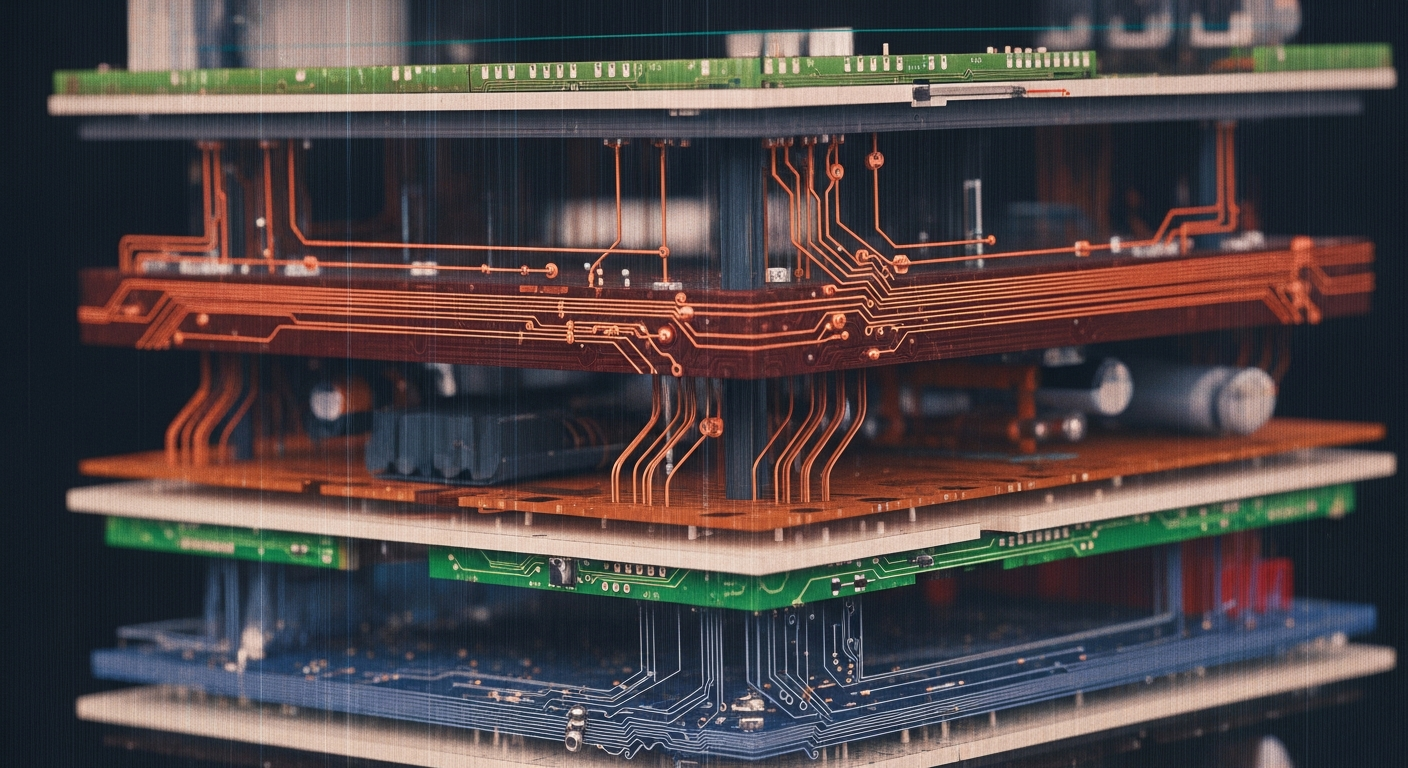
Beyond the immediate disruption, Giacalone's virtual X-ray technique ushers in a new era of transparency – a transparency that might make many intellectual property lawyers reach for the nearest bottle of antacids. If merely taking a photograph can reveal the hidden architecture of a PCB, what then becomes of 'trade secrets'? The entire concept of proprietary hardware, painstakingly designed and shielded from prying eyes, suddenly becomes vulnerable to anyone with a decent camera and the right software. We've always relied on the inherent opacity of physical objects to protect innovation. Now, that opacity is dissolving, pixel by pixel. One might argue it's a boon for progress, fostering open innovation and accelerating development. Or, one might argue it's an open invitation for industrial espionage, rendering patents little more than decorative legal fiction. The philosophical debate over 'what constitutes a secret' just got a whole lot more pixelated.
Public Sentiment: A Cacophony of Awe and Apprehension
-
Ravi, IT Professional: "Unbelievable! I always thought you needed a nuclear reactor to see inside a chip. Now my selfie camera is a scientific instrument? My wife is going to kill me for buying another gadget!"
-
Dr. Anjali Singh, Semiconductor Analyst: "This is either a brilliant simplification or a complete oversimplification. If it truly works, the implications for R&D, patent law, and even national security are... profound. And terrifying."
-
Meera, Startup Founder: "Finally! No more begging for access to expensive labs. We can iterate faster, innovate cheaper. This is a game-changer for the little guy. The big players are just mad they didn't think of it first."
-
Arjun, Traditional X-Ray Technician: "So, my entire career, my specialized training, my certifications... all replaced by an app? I'm going to need to start learning to code, aren't I? Or maybe just become a professional selfie-taker."
Conclusion: The Future is Clear, And It's Taken With A Flash
The 'virtual X-ray' method, if it lives up to its initial hype, is more than just a clever hack; it's a stark reminder that true innovation often lies in challenging entrenched assumptions. It’s a testament to the power of looking at an old problem through new, less expensive, and frankly, less radiation-emitting lenses. As we hurtle into a future where the line between casual photography and advanced diagnostics blurs, one thing is clear: the ability to see through complexity, once a luxury, is rapidly becoming a commodity. And all it cost was a click. The venerable X-ray machine, once a symbol of scientific might, might soon be relegated to the same historical curiosity as the abacus – a perfectly functional tool, but utterly outmanoeuvred by a simpler, more elegant, and infinitely more accessible solution.