Key Takeaways
-
Simple Brilliance: The View-Master leveraged accessible stereoscopy to create an engaging visual experience without complex electronics.
-
Generational Appeal: Its ease of use and diverse content ensured it crossed cultural boundaries and appealed to multiple generations.
-
Tactile Nostalgia: In an increasingly digital world, its physical, interactive nature provides a powerful nostalgic anchor.
-
Precursor to VR: Conceptually, it offered a rudimentary form of virtual reality, demonstrating the human desire for immersive escapism.
-
Enduring Relevance: Its survival highlights the enduring value of unique, tangible media experiences amidst a deluge of screens.
Main Analysis: The Analog Heart in a Digital World
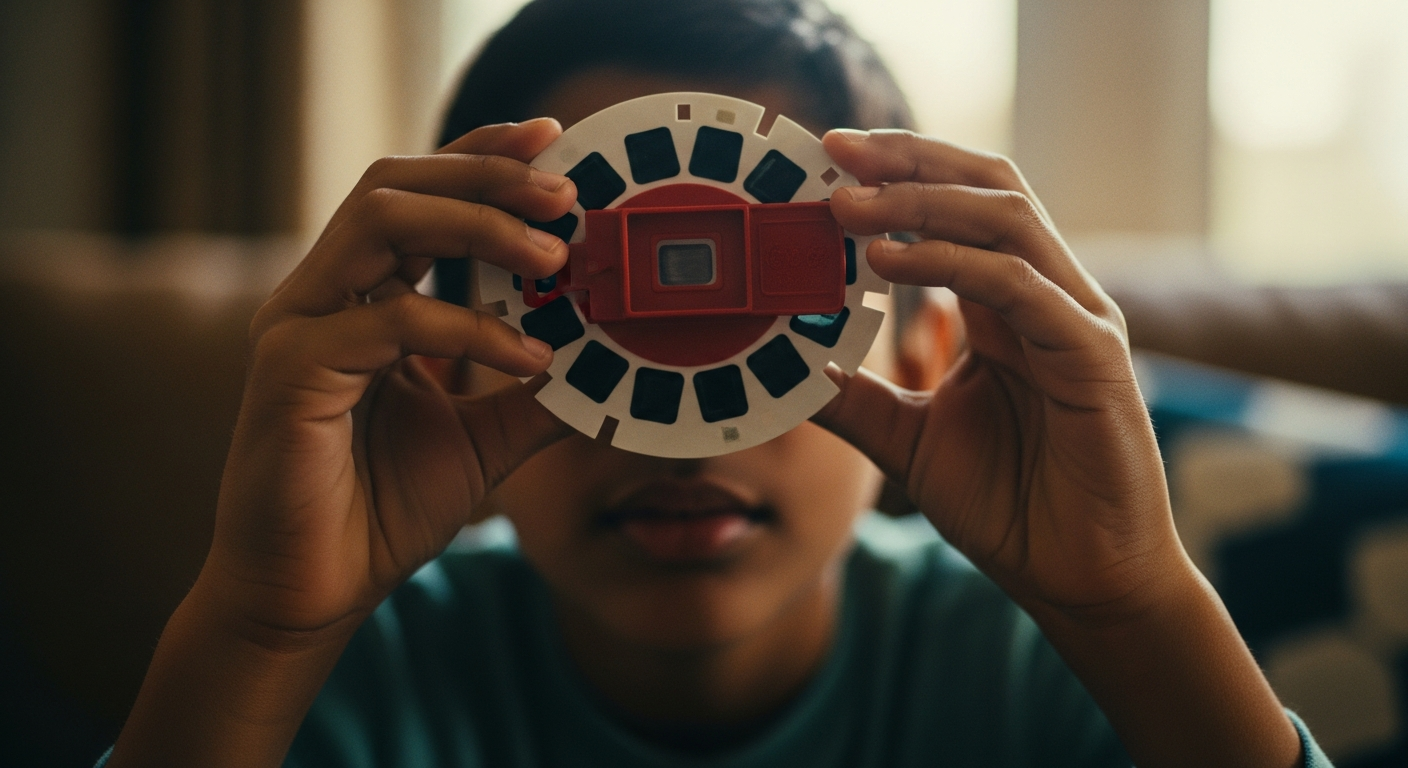
It’s a safe bet that if you’re of a certain age, the iconic red View-Master holds a special place in your memory. That satisfying 'click' as the reel advanced, the gentle pressure against your eyes, and then, suddenly, a vibrant, three-dimensional scene unfolding before you – whether it was a safari, a cartoon character, or a grand canyon vista. This wasn't just a toy; it was a compact portal to other worlds, a low-tech marvel that delivered an astonishing sense of presence long before virtual reality became a buzzword.
The Ingenious Simplicity of Stereoscopy
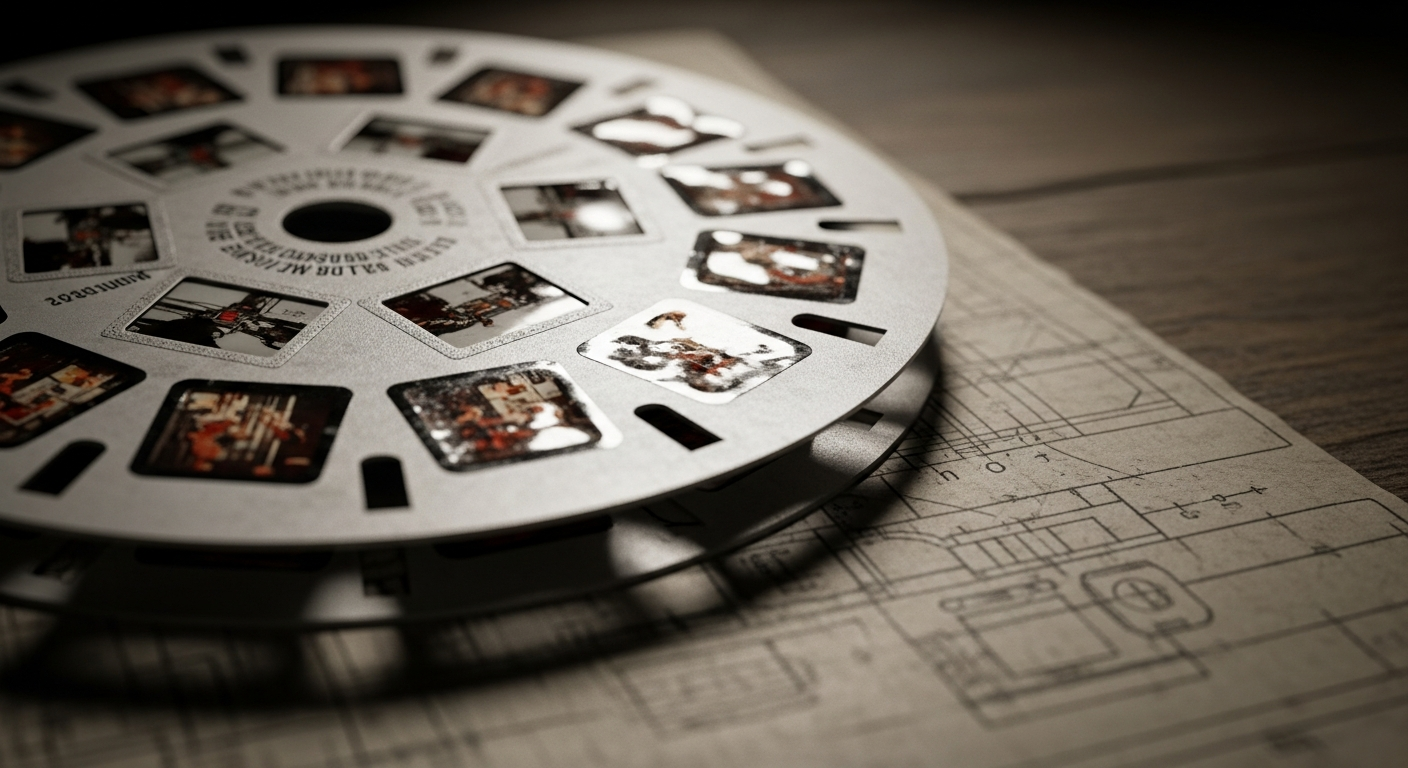
At its core, the View-Master is a sophisticated yet elegantly simple stereoscope. Patented in 1939, it took advantage of binocular vision – the slight difference in perspective between our two eyes – to create the illusion of depth. Each reel contained fourteen tiny photographic pairs, two for each of the seven scenes. When viewed through the device's lenses, each eye received a slightly different image, which the brain then merged into a single, three-dimensional picture. This wasn't some digital trickery; it was pure optical physics, a testament to the power of well-applied scientific principles in creating wonder. The beauty lay in its mechanical purity: no batteries, no software updates, just light, lenses, and precisely aligned film.
A Global Storyteller and Cultural Icon
From travelogues of exotic locales to meticulously crafted dioramas of historical events and, inevitably, licensed characters from Disney and other franchises, the View-Master's content library was vast and culturally impactful. For many, it offered their first 'sightseeing' tours of the Taj Mahal, the Eiffel Tower, or the Grand Canyon, long before such experiences were readily available through digital means. It democratized visual escapism, making travel and fantasy accessible in the comfort of one's home. Its simple, robust design meant it travelled well, enduring countless childhood adventures and becoming a staple in homes across the globe, including countless households in India where it was often a prized possession, an almost magical window to the world outside.
The Digital Age's Unlikely Competitor
In an age dominated by high-resolution screens and interactive digital experiences, the View-Master stands as an almost defiant anachronism. How does a device that literally 'clicks' through seven static images possibly compete with the dynamic, boundless worlds of video games, streaming services, or even modern VR headsets? My opinion? It doesn't compete; it offers an alternative. The View-Master's appeal lies precisely in its limitations and its tangibility. There's an intentionality to choosing a reel, slotting it in, and clicking through the scenes that is profoundly different from mindlessly scrolling or swiping. It demands focus, offers a contained experience, and provides a physical object to hold and cherish.
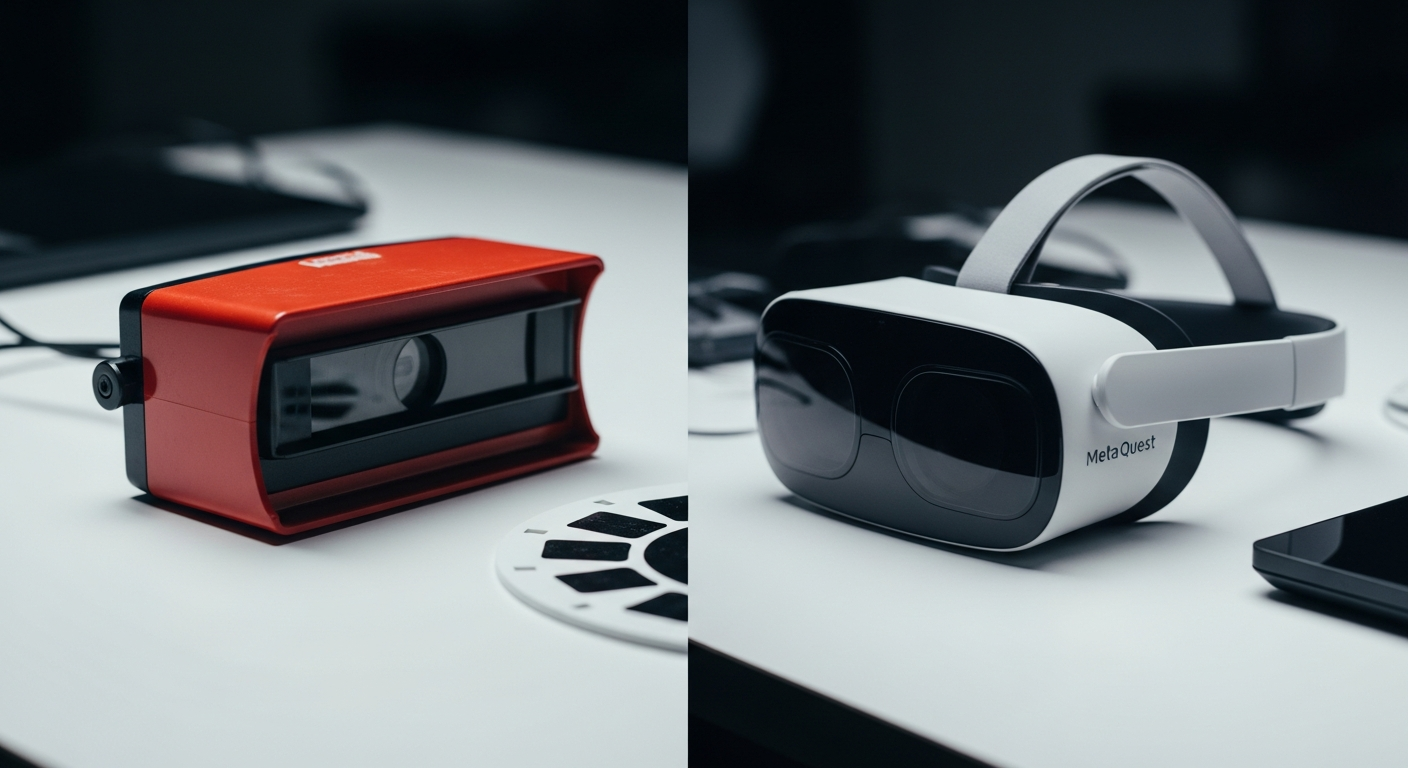
Mattel's brief foray into a View-Master VR headset, a Google Cardboard competitor, was an interesting, if ultimately uninspired, attempt to bridge this gap. While conceptually sound – linking the View-Master name to immersive tech – it lacked the distinctive charm and tactile satisfaction of the original. It proved that sometimes, the magic isn't in upgrading the technology, but in preserving the unique experience.
Public Sentiment: Echoes of a Simpler Time
Conversations around the View-Master invariably trigger a cascade of warm memories. "It was my first passport to the world," one enthusiast remarked online. Another shared, "My grandparents had one, and I spent hours looking at travel reels. It felt so real, like being there." Many praise its enduring educational value: "It taught me about history and geography in a way books couldn't." There's also a strong undercurrent of appreciation for its analog nature. "In a world of constant digital noise, the View-Master is a quiet, meditative escape," someone commented, perfectly encapsulating its niche appeal. The consensus points to a longing for simpler, more focused forms of entertainment.
Conclusion: A Masterclass in Enduring Design
The View-Master's journey from a niche optical device to a beloved global toy is a masterclass in enduring design. It reminds us that innovation isn't solely about pushing technological boundaries; it's also about understanding fundamental human desires – for wonder, for escape, for connection to stories and places. In an increasingly abstract digital landscape, the View-Master remains a beautifully concrete, deeply personal experience. It's not just a window to the past; it's a quiet testament to the power of tangible media, proving that sometimes, the most profound experiences come not from the most advanced tech, but from the simple, deliberate act of looking through a lens and clicking to the next scene. Long live the click, long live the View-Master. Its glimmer, I believe, will continue to captivate for generations to come.