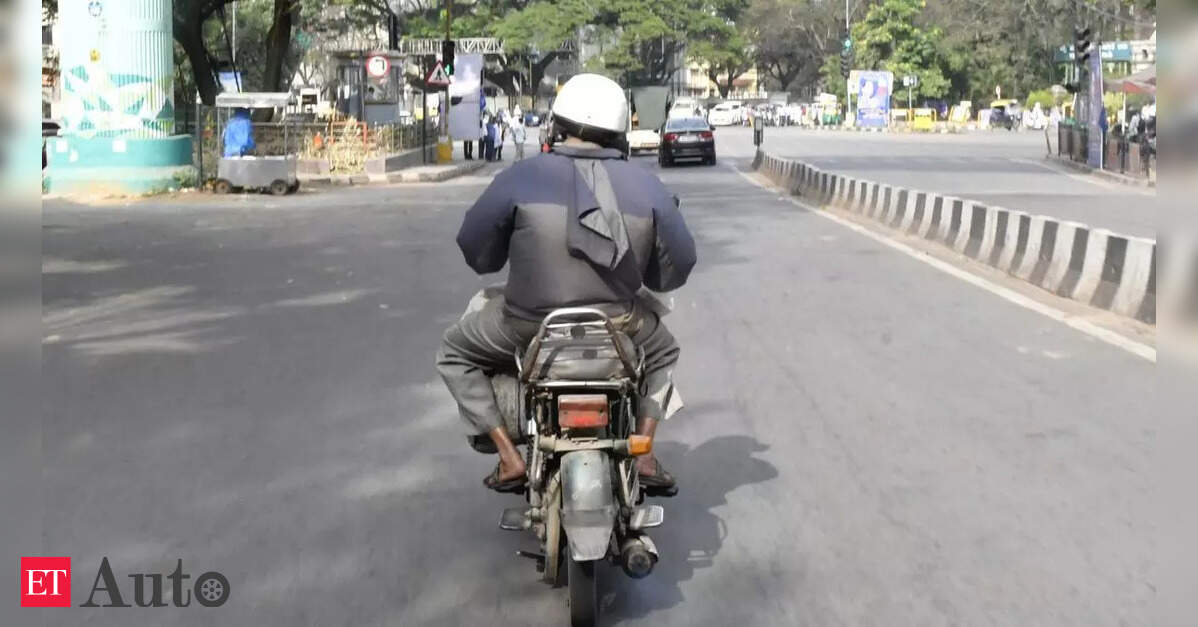
The sacred city of Varanasi, a crucible of faith and culture, often grapples with a unique set of urban challenges. From the cacophony of modified two-wheelers to the inherent risks on its bustling riverine transport, civic discipline has long been a point of contention. However, a recent, robust crackdown orchestrated by Varanasi police commissioner Mohit Agrawal’s directive indicates a decisive pivot towards stringent enforcement, tackling critical issues on both land and water.
Key Takeaways:
-
Dual Enforcement: Varanasi police conducted simultaneous campaigns against road violations (modified silencers, defective number plates) and river safety lapses (boat capacity, life jackets, pollution).
-
Significant Penalties: Hundreds of challans issued, substantial fines levied, and multiple vehicles and boats seized across both operations.
-
Focus on Public Nuisance & Safety: The drive targeted noise pollution and risks to road users, alongside critical passenger safety and environmental concerns on the Ganga.
-
Shopkeeper Accountability: Enforcement extended to shops facilitating illegal vehicle modifications, signalling a broader approach to the problem.
-
Sustained Effort: The scope and depth of these operations suggest a long-term commitment to restoring civic order and ensuring public well-being.
The Roar and the Renegade Plates: Tackling Road Anarchy
The roar of an illegally modified silencer piercing through the relative calm of Varanasi's lanes is a familiar, unwelcome sound. Coupled with the prevalence of vehicles sporting defective or absent number plates, these issues have not only contributed to significant noise pollution but have also posed substantial challenges to law enforcement and public safety. The police campaign, initiated on Thursday, meticulously targeted these very infractions.
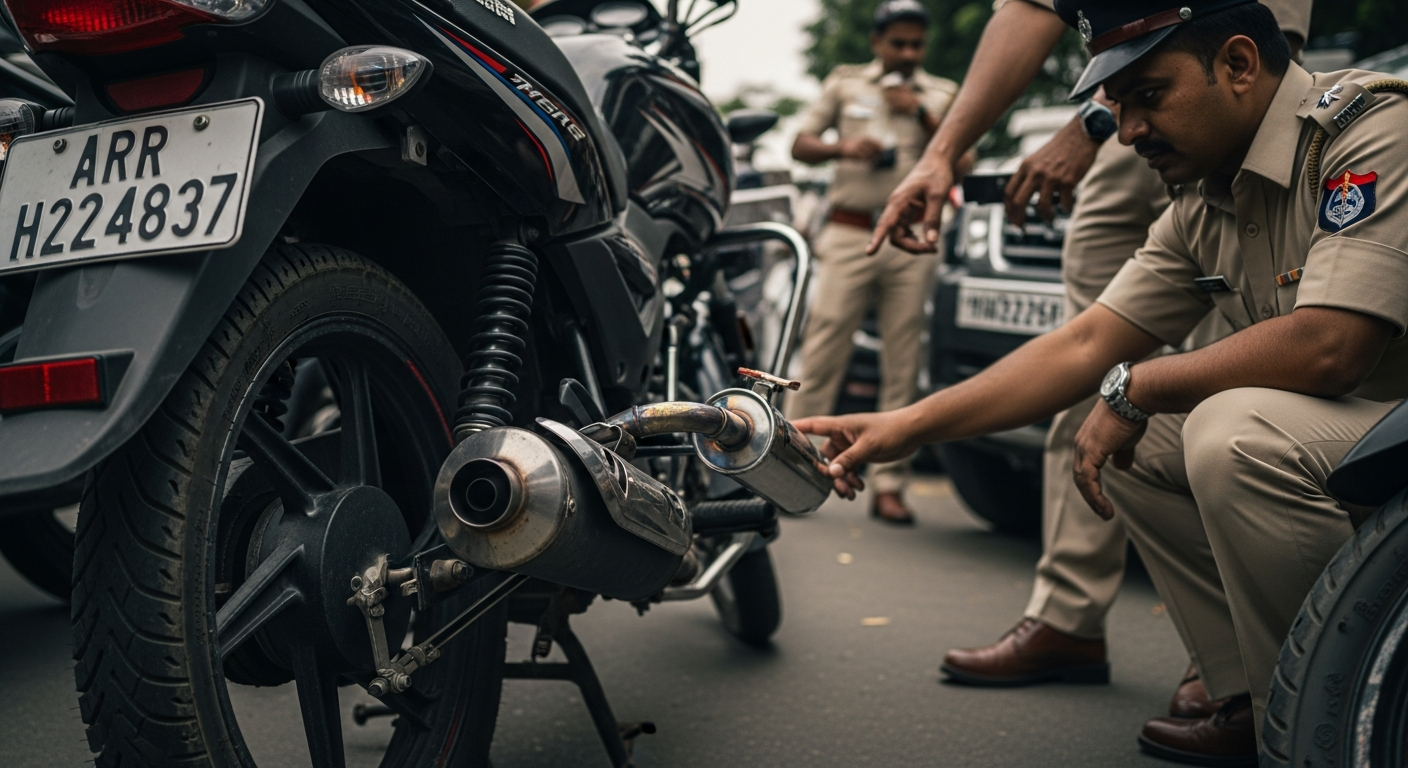
Chetganj police, for instance, inspected six workshops, seizing a significant haul of 10 excessively noisy modified silencers. This action, crucially, wasn't limited to vehicle owners alone; cases were registered against the shopkeepers, underscoring a vital shift towards holding facilitators of such modifications accountable. Cantt police mirrored this effort, seizing another 10 silencers from a single shop and booking the proprietors. This two-pronged attack—on both users and suppliers—is a commendable strategy that promises a more effective deterrent than merely penalizing vehicle owners post-factum.
On the roads, the numbers speak volumes. A total of 44 challans were issued, and a formidable fine of ₹1,03,500 was imposed on 50 vehicles for modified silencers, with six vehicles seized. The problem of defective or missing number plates, however, proved even more pervasive, drawing 264 challans, a hefty fine of ₹8,34,700, and the seizure of 15 vehicles. These figures are not mere statistics; they represent a significant public nuisance, a disregard for traffic regulations, and a direct impediment to identifying vehicles involved in accidents or crimes. The enforcement drive sends an unequivocal message: such flouting of rules will no longer be tolerated.
Navigating the Sacred Waters: Ganga Safety Under Scrutiny
Beyond the asphalt, the police extended their vigilance to the Ganges, the lifeblood of Varanasi. A seven-hour operation meticulously inspected 173 boats, traditionally ferrying pilgrims and tourists across the sacred river. This maritime sweep focused on critical safety parameters: passenger capacity, the provision of life jackets, and adherence to pollution standards. The findings were sobering. Thirteen boats were immediately seized for flagrant violations, while a concerning 15 boats were found either completely devoid of life jacket arrangements or possessing an insufficient number for their passenger load. The risks inherent in such negligence, especially on a river frequented by diverse crowds, are profound and potentially catastrophic.
Additional CP (law and order), Shivhari Meena, articulated the rationale behind these riverine operations, stressing the imperative for passenger safety, accident prevention, and the broader cleanliness of the Ganga. The verification of boat operators' identity cards and age further reinforces the commitment to professional and responsible service. In a city where boat rides are an integral part of the spiritual and tourist experience, ensuring these services meet robust safety standards is not merely a regulatory duty but a moral obligation. This initiative addresses a long-standing vulnerability, safeguarding the lives of countless devotees and tourists who partake in the quintessential Ganga experience.
Beyond Enforcement: A Broader Call for Responsibility
The dual crackdowns by Varanasi police highlight a fundamental truth: civic order and public safety are not solely the purview of law enforcement. They are a collective responsibility. While the police have demonstrated commendable resolve in enforcing existing regulations, the long-term success of such initiatives hinges on public awareness and sustained behavioural change. The targeting of shopkeepers involved in illegal modifications is a crucial step towards dismantling the ecosystem that enables these violations. Similarly, boat operators must internalize the sanctity of human life and the environmental sensitivity of the Ganga.
These operations are more than just punitive measures; they are a stark reminder that convenience cannot supersede safety, and individual expression (like a loud silencer) cannot infringe upon collective peace and public health. For Varanasi, a city that embodies both ancient tradition and modern aspirations, finding this balance is paramount. The police's latest efforts represent a significant push in the right direction, demanding attention from every stakeholder—from the individual commuter to the shop owner, and from the boatman to the tourist.
Public Sentiment
Public sentiment regarding such crackdowns is predictably mixed. While a significant portion of residents expresses relief at the prospect of reduced noise pollution and safer river journeys, many also voice frustration over the immediate inconvenience and financial burden of fines. There is a general consensus that such enforcement is necessary but must be consistent and transparent. Many hope these are not isolated events but part of a sustained campaign, ensuring that the initial impact is not merely a temporary blip but a catalyst for lasting change. The public largely appreciates the intent behind improved safety, but the implementation’s fairness and reach are key to broad acceptance.
Conclusion
The comprehensive enforcement drive by Varanasi police marks a pivotal moment in the city's ongoing efforts to enhance public safety and uphold civic standards. By simultaneously addressing critical issues on both its roads and its sacred river, the authorities have demonstrated a proactive and holistic approach. This multi-front battle against noise pollution, traffic rule violations, and lax river safety standards is not merely about issuing challans; it is about cultivating a culture of responsibility, safeguarding lives, and preserving the tranquility and sanctity of one of India's most revered cities. The challenge now lies in sustaining this momentum and ensuring these vital operations translate into enduring positive change for all.