
The global discourse has long been dominated by metrics of economic prowess, military might, or innovation. But what if the true measure of a nation lay in its commitment to responsibility? This is the audacious question posed by the newly launched Responsible Nations' Index (RNI), a first-of-its-kind global framework that dares to evaluate countries not on what they can do, but on how responsibly they exercise their power.
Launched by none other than former President Ram Nath Kovind, the RNI places Singapore at the zenith of responsible nationhood, with Switzerland and Denmark close behind. India, a rising global power, finds itself at a respectable 16th among 154 nations. While this may not be a podium finish, it’s a position that warrants deep analytical scrutiny, especially when placed against neighbours like China (68th) and Pakistan (90th), and even the United States (66th).
Key Takeaways:
-
A Paradigm Shift: The RNI redefines national evaluation, moving from power-centric to responsibility-centric assessments. It asks: "How responsibly does a nation exercise its power?"
-
India's Standing: Ranked 16th globally, ahead of many major global powers, but behind nations renowned for high governance standards. This indicates significant strengths but also areas for improvement.
-
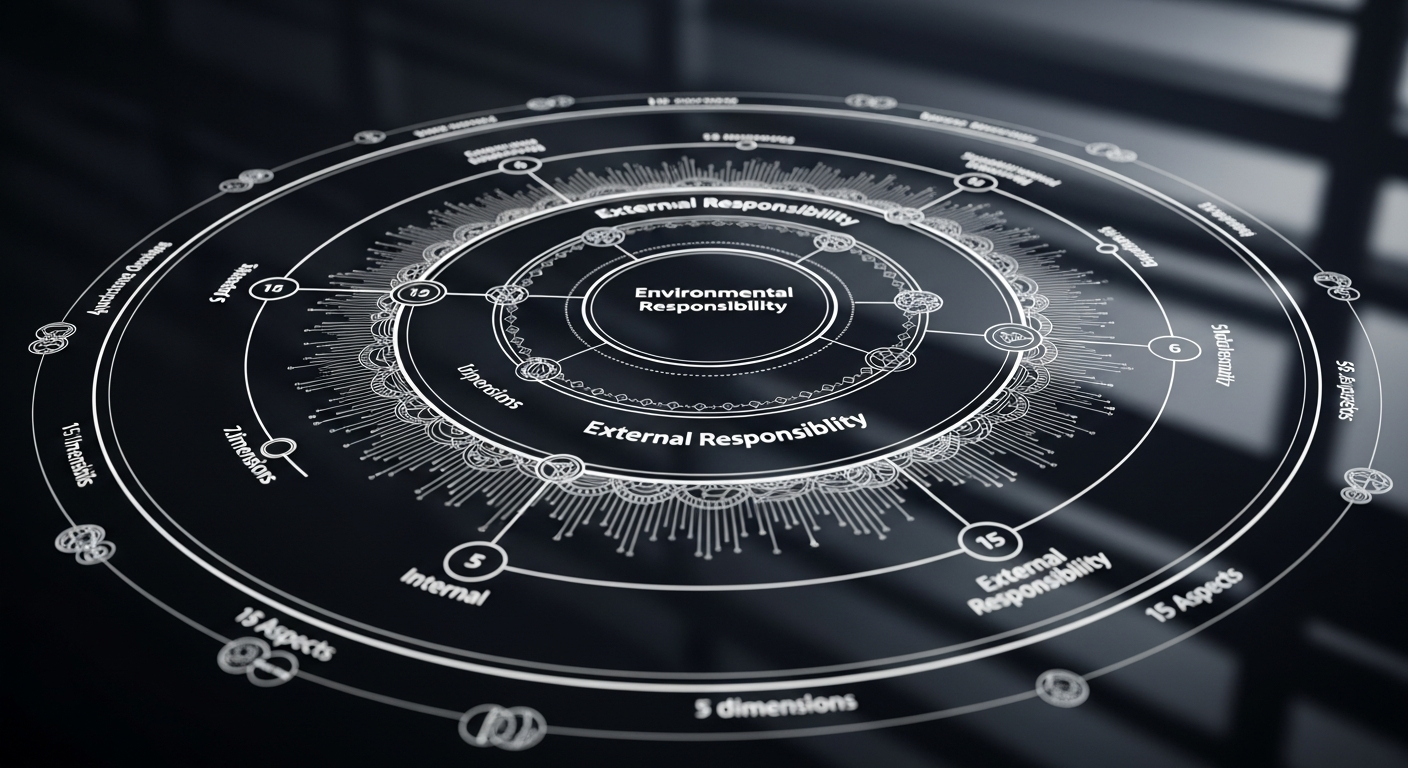
The Three Pillars: The index is anchored in internal, environmental, and external responsibility, operationalised through 7 dimensions, 15 aspects, and 58 indicators.
-
More Than a Scoreboard: Former President Kovind emphasized the RNI as a "mirror of morality and responsibility," intended for introspection rather than competition.
-
Indian Intellectual Roots: Developed by the World Intellectual Foundation (WIF) with academic collaboration from JNU and methodological validation by IIM Mumbai, giving it significant gravitas within India and beyond.
A New Lens for Global Accountability
Developed by the think tank World Intellectual Foundation (WIF) in collaboration with Jawaharlal Nehru University (JNU) and validated by IIM, Mumbai, the RNI represents a formidable Indian intellectual contribution to global governance discourse. Sudhanshu Mittal, Founder and Secretary, WIF, articulated the core philosophy: “Prosperity without responsibility is unsustainable.” This statement resonates deeply in a world grappling with climate change, social inequality, and geopolitical tensions. The RNI, by focusing on ethical governance, humane development, and global stewardship, provides a much-needed framework for self-assessment and improvement.
India at 16: A Reality Check or a Call to Action?
India's 16th position is a mixed bag, offering both reasons for cautious optimism and a stark reminder of the work that remains. On one hand, outranking economic behemoths like China and the US signals that India's efforts in certain areas of responsible governance are recognized. Our democratic institutions, commitment to international cooperation (as seen in initiatives like the International Solar Alliance), and burgeoning environmental consciousness likely contribute significantly to this standing. This validates our aspirations to be a 'Vishwaguru' – a global teacher.
However, being outside the top tier, especially when benchmarked against nations like Singapore (a paragon of efficiency and long-term planning), Switzerland (stability and neutrality), and Denmark (social welfare and sustainability), suggests critical areas for enhancement. This is where the "mirror of morality" comes into sharp focus. What are the gaps in our internal responsibility – perhaps in equitable resource distribution, or swift justice delivery? How robust are our environmental safeguards, beyond policy pronouncements? And in our external responsibility, are we consistently embodying the values of peace and cooperation, or are there instances where national interest eclipses global good?
The Pillars of Responsibility: Internal, Environmental, External
The RNI's three core dimensions provide a comprehensive blueprint for national responsibility:
-
Internal Responsibility: This pillar likely examines how a nation governs its own people – encompassing human rights, social justice, economic equality, public services, and the rule of law. For India, this would involve scrutinizing our progress on poverty alleviation, healthcare access, education quality, and democratic freedoms.
-
Environmental Responsibility: This assesses a nation's stewardship of the planet, including climate action, biodiversity conservation, sustainable resource management, and pollution control. India's ambitious renewable energy targets and efforts in conservation would be key factors here.
-
External Responsibility: This dimension evaluates a nation's conduct on the global stage – its contributions to international peace and security, humanitarian aid, adherence to international law, and engagement in multilateral institutions. India's historical role in non-alignment and its growing influence in forums like the G20 are pertinent.
For India to climb higher, a concerted, multi-sectoral effort across these dimensions is imperative. It’s about building upon existing strengths while rigorously addressing systemic weaknesses.
Beyond the Scoreboard: The WIF's Vision
Former President Kovind's assertion that the index is "not a scoreboard which increases competition, but a mirror of morality and responsibility" is fundamental. This isn't about shaming nations but empowering them with data and insight to foster better governance. It's a testament to the idea that true national strength lies not just in what you accumulate, but in how you act. The RNI encourages a shift in focus for policymakers and citizens alike, from 'how much power do we have?' to 'how responsibly are we using it?'
Public Sentiment
The RNI’s launch has sparked a lively debate across India:
-
"Finally, an index that truly matters! It's not just about GDP, but about how ethically a nation behaves. 16th for India is decent, but we can definitely aim for the top 5," commented Dr. Priya Singh, a political analyst.
-
"It's a welcome introspection. As an ordinary citizen, I hope this encourages our leaders to focus more on internal responsibility – better infrastructure, cleaner cities, and faster justice for all," shared Rajesh Kumar, a small business owner from Delhi.
-
"While it's good to be ahead of China and the US in this particular index, we must acknowledge the journey ahead. Singapore's efficiency and environmental consciousness are benchmarks we need to study closely," observed Professor Anand Varma, an expert in international relations.
Conclusion
The Responsible Nations' Index offers India a unique opportunity for strategic introspection. Our 16th place is a powerful statement about our current trajectory and potential. It signals to the world that India is not just a rising economic force but a nation increasingly conscious of its ethical and moral obligations. However, the path to becoming a truly responsible global leader – a Vishwaguru in the truest sense – demands continuous, honest self-assessment, transparent governance, and an unwavering commitment to the well-being of our citizens, the health of our planet, and the harmony of the global community. This mirror reflects both our achievements and the challenging, yet inspiring, journey that lies ahead.