A Blueprint for Growth: Balancing Discipline with Ambition
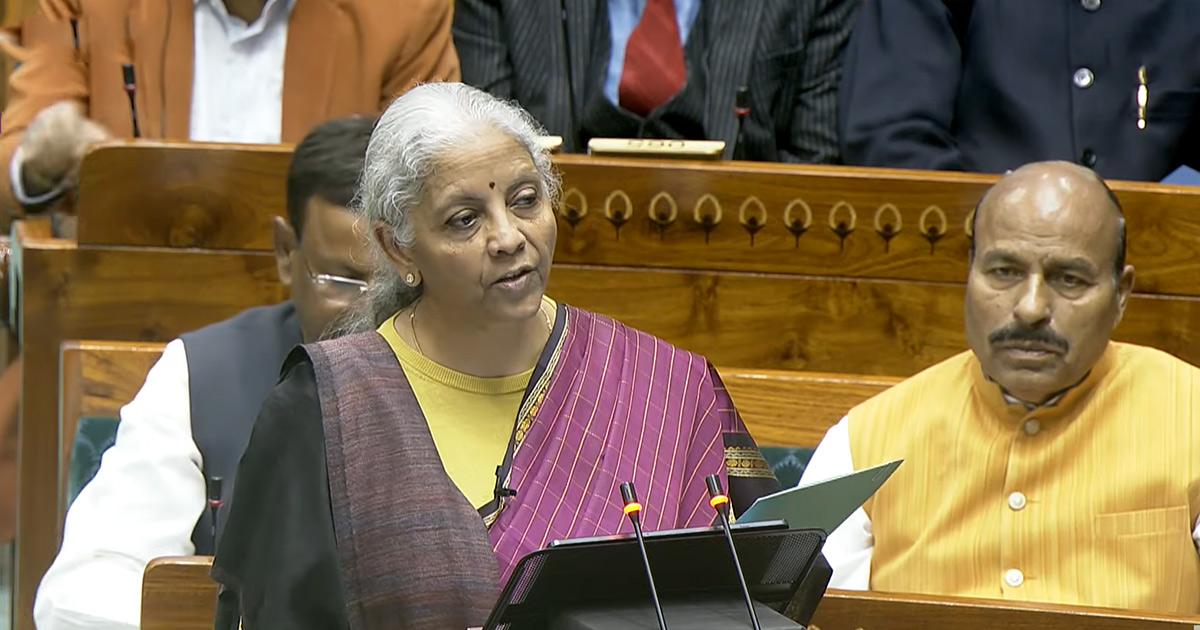
The Union Budget 2026, presented by Finance Minister Nirmala Sitharaman, emerges as a pivotal document, laying down a robust framework for India’s economic trajectory over the coming years. Amidst a complex global economic landscape marked by geopolitical tensions, volatile commodity prices, and uneven monetary easing, the Budget emphatically prioritizes fiscal discipline. Despite five key state elections on the horizon, including West Bengal and Tamil Nadu, the government has largely shunned populist measures, opting instead for a long-term vision rooted in sustainable growth and structural reforms. This strategic choice underscores a commitment to fortifying India’s economic fundamentals, a move that aligns with the nation's broader aspiration for 'Viksit Bharat' by 2047.
Key Takeaways:
-
Fiscal discipline maintained despite impending state elections.
-
Record capital expenditure (Capex) outlay hiked to Rs 12.2 lakh crore.
-
New transaction tax on derivatives trading rattles stock markets.
-
Significant boost for manufacturing across seven key sectors.
-
20-year tax holiday for global data centres to attract investment.
-
Introduction of a dedicated Rs 10,000 crore SME Growth Fund.
-
New Income Tax Act, 2025, to be implemented from April 1, promising simpler rules.

Market Volatility and Targeted Support
While the Budget’s overarching theme is growth, its immediate reception in the stock markets highlights an intriguing divergence. The announcement of a higher transaction tax on derivatives trading (0.05% on futures from 0.02%, and 0.15% on options from 0.01%) acted as a dampener, rattling investor sentiment. This move, potentially aimed at revenue generation or discouraging speculative trading, sparked a debate on its impact on market liquidity and participation. Concurrently, the Budget unveiled a slew of targeted measures designed to bolster specific sectors. A record capital expenditure outlay, hiked to Rs 12.2 lakh crore from Rs 11.2 lakh crore, signals an unwavering focus on infrastructure-led growth. This includes the development of seven high-speed rail corridors, new Dedicated Freight Corridors, and the operationalization of 20 new National Waterways, all envisioned as 'growth connectors' to spur economic activity and create employment.
Propelling Manufacturing and Digital Infrastructure
At the heart of Budget 2026 lies a concerted effort to scale up India’s manufacturing capabilities and solidify its position as a global digital hub. Seven critical sectors—pharmaceuticals, semiconductors, rare-earth magnets, chemicals, capital goods, textiles, and sports goods—are slated for a significant manufacturing boost. The government further announced a Rs 10,000 crore investment over five years to develop India as a biopharma manufacturing hub, alongside a Rs 40,000 crore outlay for electronics component manufacturing and the second edition of the semiconductor mission. This thrust is complemented by a bold initiative to attract global digital investments: a 20-year tax holiday for overseas firms providing global data centre services from India, coupled with a 15% safe harbour on costs for related-entity cloud services. These measures are designed to capitalise on India’s fast-growing digital infrastructure sector, drawing in cloud majors who have already committed substantial investments.
Fiscal Consolidation and Global Integration
The Budget also reinforces India's commitment to fiscal consolidation and deeper global integration. Finance Minister Sitharaman articulated a clear path towards reducing the debt-to-GDP ratio to 55.6% from 56.1% and the fiscal deficit to 4.3% from 4.4% in the current year. This disciplined approach is crucial for maintaining macroeconomic stability and attracting stable long-term investments. The emphasis on 'exporting more and attracting stable long-term investment' reflects a strategic recognition of India's role as a growing economy within a dynamic global trade environment. Efforts like simplifying the customs regime, rationalizing exemptions, and easing baggage rules further streamline trade and compliance, supporting India’s ambition to become a global manufacturing and services hub.
Public Sentiment and Expert Views
Prime Minister Narendra Modi lauded Budget 2026-27 as "historic," describing it as a "highway of opportunities" and the "foundation for our journey towards a Viksit Bharat by 2047." He stressed that it would inject "new energy and new momentum" into India's reform express, propelling the nation towards becoming the world's third-largest economy. Christian de Guzman, Senior Vice President, Moody's Ratings, offered a more measured, analytical perspective, acknowledging the Budget's tactical support for the economy amidst external uncertainties. However, he also highlighted concerns that ongoing support measures and GST rationalization might lead to "an ongoing erosion of tax revenue as a share of GDP," potentially worsening debt affordability, even if the broader assessment of India's fiscal strength remains intact.
Conclusion
Budget 2026 is a statement of intent, a strategic document that prioritizes long-term structural transformation over short-term political gains. By championing fiscal discipline, significantly boosting capital expenditure, and strategically investing in manufacturing and digital infrastructure, the government has laid a clear roadmap for sustained growth. While the market's initial reaction to the derivatives tax warrants careful observation, the Budget's underlying philosophy points towards a resilient, globally integrated, and technologically advanced India. The coming fiscal year will be a test of implementation, but the ambition to balance growth with inclusion and navigate a complex global environment is undeniably bold.