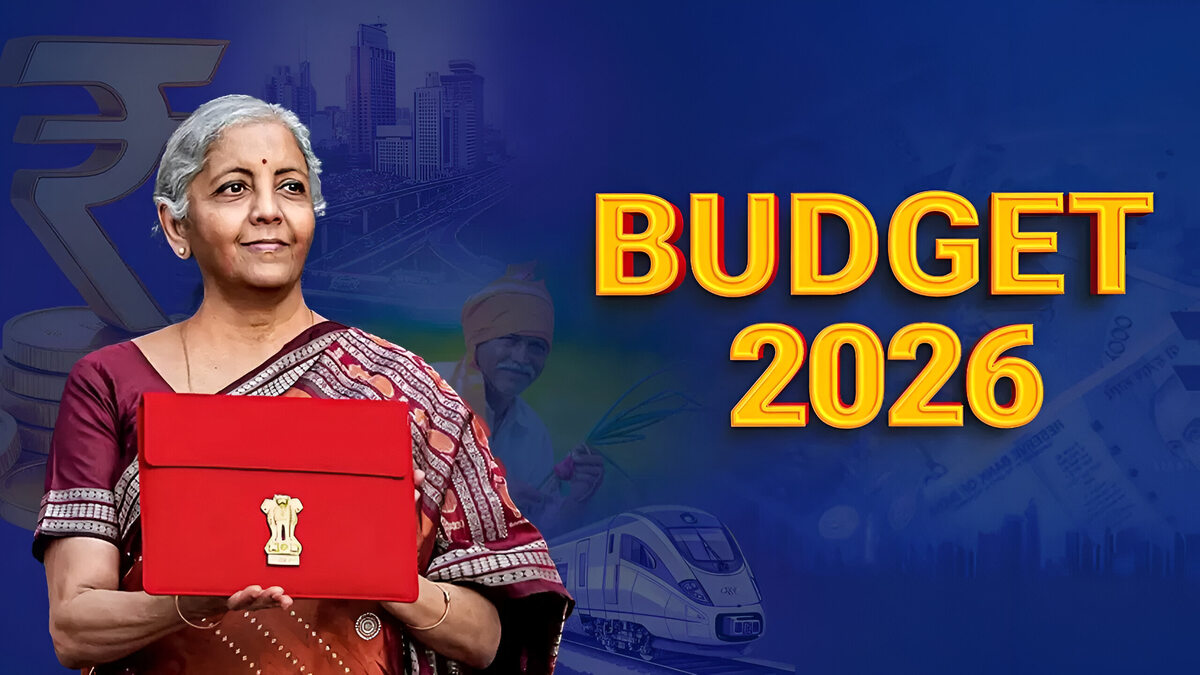
Finance Minister Nirmala Sitharaman's 9th Consecutive Budget
Presented on February 1, 2026 | FY 2026-27
Executive Summary
Finance Minister Nirmala Sitharaman presented India's Union Budget 2026-27 on Magh Purnima and the birth anniversary of Guru Ravidas, marking her record 9th consecutive budget presentation. This budget comes at a critical juncture as India navigates global trade tensions, particularly Trump's tariff offensive, while maintaining its commitment to becoming a Viksit Bharat (Developed India) by 2047.
🎯 Three Kartavyas (Core Duties)
The budget is built on three fundamental responsibilities:
| Kartavya | Focus Area | Objective |
|---|---|---|
| 1️⃣ Economic Growth | Productivity & Competitiveness | Accelerate and sustain growth while building resilience to global volatility |
| 2️⃣ People's Aspirations | Capacity Building | Fulfill aspirations and make citizens strong partners in prosperity |
| 3️⃣ Inclusive Access | Sabka Saath, Sabka Vikas | Ensure every family, community, region, and sector has access to resources |
📊 Budget at a Glance
┌─────────────────────────────────────────────────────────────┐
│                    KEY FISCAL METRICS                        │
├─────────────────────────────────────────────────────────────┤
│  Fiscal Deficit (FY26 RE):           4.4% of GDP ✓          │
│  Fiscal Deficit Target (FY27):       4.3% of GDP            │
│  Capital Expenditure (FY27):         ₹12.2 lakh crore       │
│  Gross Market Borrowing:             ₹17.2 lakh crore       │
│  GDP Growth Projection:              6.8% - 7.2%            │
└─────────────────────────────────────────────────────────────┘
Fiscal Framework
💰 Deficit Trajectory
The government has successfully met its commitment made in 2021-22 to reduce the fiscal deficit below 4.5% of GDP by FY 2025-26.
| Financial Year | Fiscal Deficit | Status |
|---|---|---|
| FY 2025-26 (RE) | 4.4% of GDP | ✅ Target Met |
| FY 2026-27 (BE) | 4.3% of GDP | 📉 Continued Consolidation |
Achievement Unlocked: Government fulfills its FY 2025-26 fiscal deficit commitment
💵 Expenditure Breakdown
Total Expenditure (RE FY 2025-26): ₹49.6 lakh crore
├─ Capital Expenditure: ₹11 lakh crore (22%)
└─ Revenue Expenditure: ₹38.6 lakh crore (78%)

Capital Expenditure Growth Trajectory:
2014-15:  ₹2.0 lakh crore
2025-26:  ₹11.2 lakh crore  (5.6x increase)
2026-27:  ₹12.2 lakh crore  (6.1x increase)
🏦 Borrowing Strategy
| Component | Amount |
|---|---|
| Gross Market Borrowing | ₹17.2 lakh crore |
| Dated Securities | ₹11.7 lakh crore |
| Small Savings & Others | Balance amount |
Focus: Infrastructure development in Tier II & Tier III cities with population over 5 lakh
Taxation Reforms
📝 Income Tax Act 2025
🎉 Historic Reform: Complete overhaul of the 1961 Act
-
Implementation Date: April 1, 2026
-
Announcement: July 2024 (Review initiated)
-
Completion Time: Record time
-
Impact: Simplified compliance for ordinary citizens
"The forms have been redesigned such that ordinary citizens can comply without difficulty." — FM Sitharaman
📅 Filing Deadlines Extended
| Return Type | Old Deadline | New Deadline | Change |
|---|---|---|---|
| Revised Returns | December 31 | March 31 | +3 months |
| ITR-1 & ITR-2 | July 31 | July 31 | No change |
| Non-Audit Business/Trusts | July 31 | August 31 | +1 month |
💡 Benefit: More time for compliance with nominal fee for revised returns
💳 TCS Rate Reductions
Major Relief for International Transactions
| Category | Previous Rate | New Rate | Savings |
|---|---|---|---|
| Overseas Tour Packages | 5% / 20% | 2% | 60-90% ↓ |
| Education Abroad (LRS) | 5% | 2% | 60% ↓ |
| Medical Treatment (LRS) | 5% | 2% | 60% ↓ |
Conditions: No minimum amount threshold for tour packages
🌍 Foreign Asset Compliance
Immunity from Prosecution
-
Threshold: Non-immovable foreign assets < ₹20 lakh
-
Effective Date: Retrospective from October 1, 2024
-
Benefit: Eases compliance burden for small asset holders
🏢 Corporate Tax Improvements
Advanced Pricing Agreements (APA)
Timeline Reduction:
Current Process: 3-4 years
New Fast-Track: 2 years (+ possible 6-month extension)

Additional Benefits:
✓ Modified returns available for associated entities
✓ Streamlined approval process
🏠 NRI Tax Simplifications
Property Sale TDS Reform
-
Current: Complex TAN requirement
-
New: Buyer uses own PAN for TDS deduction
-
Benefit: Simplified compliance, no separate TAN needed
TDS on Manpower Services
-
Clarification: Clearly falls under contractor payments
-
Rate: 1% or 2%
-
Impact: Reduced confusion, lower tax friction
🤖 Automation for Small Taxpayers
-
Launch: FY 2027
-
Feature: Rule-based automated processing
-
Benefit: Faster refunds, reduced compliance burden
⚖️ Penalty Interest Relief
No interest liability on penalty amounts during appeal period before first appellate authority (regardless of outcome)
Manufacturing & Industry
🔬 Semiconductor Mission 2.0 (ISM 2.0)
Massive Scale-Up of India's Chip Ambitions
| Parameter | Details |
|---|---|
| Total Outlay | ₹40,000 crore |
| Focus Areas | Equipment & materials production, Full-stack Indian IP, Supply chain fortification |
| Infrastructure | Industry-led research & training centers |
| Workforce | Technology development & skilled workforce programs |
ISM 1.0 Success:
-
Expanded India's semiconductor capabilities
-
Created foundation for manufacturing ecosystem
ISM 2.0 Objectives:
1. Equipment Production → Reduce import dependency

2. Material Manufacturing → Build domestic supply chain

3. Indian IP Development → Full-stack design capabilities

4. Supply Chain Security → Strategic self-reliance

5. R&D Centers → Technology & talent development
📱 Electronics Manufacturing
Electronics Components Manufacturing Scheme
-
Launch Date: April 2025
-
Outlay: ₹22,999 crore
-
Achievement: Investment commitments at 2x targets already
Stock Market Impact: CG Power, Tata Elxsi jumped up to 5% post-announcement
⛏️ Rare Earth Corridors
Strategic Mineral Independence
| State | Focus |
|---|---|
| Odisha | Mining & processing infrastructure |
| Kerala | Research & development facilities |
| Andhra Pradesh | Manufacturing clusters |
| Tamil Nadu | Integrated value chain |
Components:
-
✅ Mining operations
-
✅ Processing facilities
-
✅ Research institutions
-
✅ Manufacturing units
Previous Initiative: Rare Earth Permanent Magnets Scheme (November 2025)
🧪 Chemical Parks
Self-Reliance in Chemical Production
📍 Number of Parks: 3
🏗️ Selection Method: Challenge Route
🎯 Model: Cluster-based, Plug-and-Play
💡 Objective: Reduce import dependency
🔧 Capital Goods & Tool Rooms
High-Precision Manufacturing Capability
High-Tech Tool Rooms:
-
Number: 2 locations
-
Operator: Central Public Sector Enterprises (CPSEs)
-
Technology: Digitally enabled automation
-
Service: Bureau model for local design, test & manufacture
-
Output: High-precision components at scale and lower cost
Construction & Infrastructure Equipment Scheme:
Equipment Range:
├─ Multi-storey lifts
├─ Firefighting equipment for multiplexes
├─ Tunnel boring equipment (metro & high-altitude roads)
├─ Advanced construction machinery
└─ Technologically advanced infrastructure tools
💼 SME Growth Fund
Dedicated Support for Future Job Creation
-
Fund Size: ₹10,000 crore
-
Purpose: Incentivizing enterprise growth
-
Selection: Criteria-based approach
-
Focus: Future job creation & scalability
Healthcare & BioPharma
💊 BioPharma Shakti Initiative
India as Global BioPharma Manufacturing Hub
| Component | Details |
|---|---|
| Full Name | BioPharma Strategy for Health Advancement through Knowledge, Technology and Innovation |
| Outlay | ₹10,000 crore over 5 years |
| Target Diseases | Diabetes, Cancer, Autoimmune disorders |
| Focus | Biologics & Biosimilars |
Disease Burden Shift:
Traditional Communicable Diseases
            ↓
Non-Communicable Diseases (NCDs)
├─ Diabetes
├─ Cancer
└─ Autoimmune disorders

Solution: Biologic medicines for longevity & quality of life
🏥 Infrastructure Development
National Institute of Pharmaceutical Education & Research (NIPERs)
| Category | Count | Action |
|---|---|---|
| New NIPERs | 3 | Establishment |
| Existing NIPERs | 7 | Upgradation |
| Total Network | 10 | BioPharma-focused |
Clinical Trials Network:
-
Scale: 1,000 accredited sites
-
Purpose: India-based clinical research
-
Impact: Faster drug development & approval
🏛️ Regulatory Strengthening
Central Drug Standard Control Organisation (CDSCO)
Upgrades:
✓ Meet global standards
✓ Improve approval timeframes
✓ Dedicated scientific review
✓ Specialist staff augmentation
🧠 Mental Health
NIMHANS 2.0
-
Location: North India
-
Model: Premier mental health institute
-
Purpose: Expand mental health & trauma care access
Coverage:
-
Mental health services
-
Trauma care
-
Research & training
-
Empowering vulnerable populations
🌿 Traditional Medicine
Ayurveda & Yoga Global Push
Initiatives:
├─ Evidence-based research
├─ Professional training programs
├─ Public awareness campaigns
└─ Global interest capitalization
🐄 Veterinary Services Scale-Up
20,000+ Veterinary Professionals
Mechanism: Loan-linked capital subsidy scheme
Facilities Covered:
-
Private veterinary colleges
-
Para-veterinary colleges
-
Veterinary hospitals
-
Diagnostic laboratories
-
Breeding facilities
International Collaboration:
-
Partnerships with foreign institutions
-
Knowledge transfer in animal husbandry
Education & Skill Development
🎓 Higher Education Infrastructure
5 University Townships
Location Strategy:
📍 Near major industrial corridors
📍 Near logistics corridors

Components:
├─ Multiple universities
├─ Colleges
├─ Research institutions
├─ Skill development centers
└─ Residential facilities
Purpose: Create integrated academic-industry ecosystems
👩🎓 Women in STEM
Girls' Hostels Initiative
-
Coverage: One girls' hostel per district
-
Focus: STEM education support
-
Rationale: Address challenges of prolonged study hours & lab work
🎨 Creative Economy Education
Indian Institute of Creative Technologies, Mumbai
ABGC Content Creator Labs:
-
Schools: 15,000 secondary schools
-
Colleges: 500 colleges
-
Sector: Animation, Broadcasting, Gaming, Comics
-
Target: 2 million ABGC professionals by 2030
🎨 Design Education
New National Institute of Design
-
Location: Eastern India
-
Selection: Challenge route
-
Purpose: Meet growing design industry demand
🏨 Hospitality & Tourism Education
National Institute of Hospitality
Current Institution: National Council for Hotel Management & Catering Technology
Upgradation Plan:
Transformation to National Institute
↓
Collaboration Framework:
├─ Academia partnerships
├─ Industry integration
└─ Government coordination
Guide Training Program:
-
Trainees: 10,000 guides
-
Sites: 20 iconic tourist destinations
-
Duration: 12-week course
-
Mode: Hybrid learning
-
Partner: Indian Institute of Management (IIM)
🐾 Veterinary Education
Scale-Up Targets:
-
Professionals: 20,000+
-
Funding: Loan-linked capital subsidy
-
Institutions: Private colleges, hospitals, labs
-
Collaboration: Indian & foreign institutions
💼 Services Sector Skilling
Education-to-Employment-Enterprises (E2E) Standing Committee
Mandate:
High-Powered Committee Focus:

1. Services sector as core Viksit Bharat driver

2. High-potential growth areas identification

3. Employment generation strategies

4. Export opportunity maximization

5. AI impact on jobs & skills assessment

6. Future skill requirement planning

Target: 10% global services share by 2047
Infrastructure & Connectivity
🚄 High-Speed Rail Corridors
7 Major Growth Connectors
graph LR
    A[Mumbai] --> B[Pune]
    B --> C[Hyderabad]
    C --> D[Bengaluru]
    C --> E[Chennai]
    E --> D
    F[Delhi] --> G[Varanasi]
    G --> H[Siliguri]
| Route | Connection | Impact |
|---|---|---|
| 1. Mumbai–Pune | Financial hub to industrial city | Western corridor strengthening |
| 2. Pune–Hyderabad | Industrial to IT hub | Deccan plateau connectivity |
| 3. Hyderabad–Bengaluru | IT to tech capital | South India tech corridor |
| 4. Hyderabad–Chennai | IT to automotive hub | East-west south connectivity |
| 5. Chennai–Bengaluru | Automotive to tech | Tamil Nadu-Karnataka link |
| 6. Delhi–Varanasi | Capital to spiritual center | North India corridor |
| 7. Varanasi–Siliguri | UP to West Bengal | Eastern connectivity |
Benefits:
-
✈️ Reduced travel time
-
🌱 Lower carbon emissions
-
📈 Regional economic development
-
🚆 Environmentally sustainable transport
🚂 Railways Modernization
Investment & Upgradation
| Component | Amount/Target |
|---|---|
| Government Spending | ~₹2.5 lakh crore |
| Private Sector Investment | ₹20-25,000 crore (expected) |
| Focus | Tracks, trains, stations |
| Trains | Vande Bharat upgrades |
| Goal | Higher speeds, reduced congestion |
Private Sector Opportunities:
-
Freight corridors
-
Passenger terminals
-
Station modernization
-
Railway infrastructure projects
🚢 Freight & Waterways
Freight Corridor:
-
Route: Dangkuni (East) to Surat (West)
-
Type: Dedicated corridor
-
Impact: Pan-India freight connectivity
National Waterways:
-
Number: 20 new waterways
-
Timeline: Next 5 years
-
Purpose: Environmentally sustainable cargo movement
🏙️ City Economic Regions (CERs)
Urban Growth Accelerators
-
Allocation: ₹5,000 crore
-
Duration: Over 5 years
-
Focus: Cities with 5+ lakh population (Tier II & III)
Infrastructure Investment Tools:
-
Infrastructure Investment Trusts (IIT)
-
Real Estate Investment Trusts (REIT)
Energy & Environment
⚛️ Nuclear Power
Extended Support & Expansion
| Measure | Details |
|---|---|
| Customs Duty Exemption | Extended till 2030-35 |
| Coverage | ALL nuclear plants (capacity-agnostic) |
| Scope | Nuclear power project imports |
Critical Minerals:
-
Exemption: Capital goods for processing
-
Purpose: Support domestic critical mineral processing
🔋 Battery & Energy Storage
Lithium-Ion & Storage Systems
Customs Duty Exemptions:
├─ Manufacturing lithium-ion cells (existing)
├─ Battery Energy Storage Systems (NEW)
└─ Capital goods for battery manufacturing

Impact: Boost domestic battery production ecosystem
☀️ Solar Energy
Solar Glass Production
-
Material: Sodium antimonate import
-
Duty: Basic customs exemption
-
Use: Solar glass manufacturing
-
Impact: Support clean energy infrastructure
🌿 Clean Fuel Support
Biogas Blended CNG
Tax Structure:
Central Excise Duty Calculation:
Entire biogas value EXCLUDED
↓
Lower effective duty rate
↓
Promotes biogas adoption
☁️ Data Center Tax Holiday
Attracting Global Cloud Investment
| Parameter | Specification |
|---|---|
| Tax Holiday | Until 2047 |
| Eligible Entities | Foreign cloud service companies |
| Condition 1 | Use Indian data center services |
| Condition 2 | Serve Indian customers via Indian reseller |
| Purpose | Critical infrastructure + domestic participation |
Agriculture & Allied Sectors
🌴 High-Value Agriculture Programs
Dedicated Crop Initiatives
🥥 Cashew & Cocoa
Vision: Transform into premium global brands by 2030
Objectives:
├─ Self-reliance in raw cashew production
├─ Enhanced processing capabilities
├─ Core competitiveness building
├─ Premium branding & marketing
└─ Global market penetration
🌳 Sandalwood Revival
Cultural & Economic Heritage
-
Partnership: State governments collaboration
-
Focus Areas:
- Focused cultivation programs
- Post-harvest processing
- Ecosystem restoration
- Value chain development
Significance: Linked to India's social & cultural heritage
🥜 Nuts & Orchards
Walnut, Almond, Pine Nut Program
Strategies:

1. Rejuvenate old, low-yielding orchards

2. Expand high-density cultivation

3. Enhance farmer incomes

4. Engage rural youth

5. Value addition opportunities
🥥 Coconut Development
Coastal Area Focus
-
Diversify farm outputs
-
Increase productivity
-
Enhance farmer income
-
Create employment opportunities
🐟 Fisheries Value Chain
500 Reservoir Integration
Components:
Development Areas:
├─ 500 reservoirs + additional waterbodies
├─ Strengthen coastal fisheries value chain
├─ Market linkages creation
│   ├─ Startups integration
│   ├─ Women-led groups
│   └─ Fish Farmer Producer Organizations (FPOs)
└─ Sustainable fishing practices
🐄 Animal Husbandry
Rural & Peri-Urban Employment
Credit-Linked Subsidy Program:
| Focus Area | Objective |
|---|---|
| Livestock Enterprises | Scale-up & modernization |
| Integrated Value Chains | Livestock, dairy, poultry |
| FPOs | Livestock farmer organizations |
| Quality Employment | Rural & peri-urban jobs |
Professional Development:
-
20,000+ veterinary professionals
-
Private sector participation
-
Advanced diagnostic facilities
👩🌾 Women Empowerment
Lakpati Didi Program Expansion
Evolution Path:
Credit-Linked Livelihoods
        ↓
Enterprise Ownership
        ↓
Self-Help Entrepreneur Marts
(Community-owned retail outlets)
        ↓
Cluster-Level Federations

Financing: Enhanced & innovative
Tourism & Culture
🏨 Tourism as Employment Engine
Sector Potential:
-
Large-scale employment generation
-
Foreign exchange earnings
-
Local economy expansion
-
Youth job creation
🎓 Hospitality Education
National Institute of Hospitality
Upgrade: National Council for Hotel Management → National Institute
Collaboration Framework:
Partners:
├─ Academia (universities & colleges)
├─ Industry (hotel chains, restaurants)
└─ Government (standards & regulation)

Focus: Training & hospitality standards improvement
🗺️ Guide Training Initiative
Pilot Scheme Details:
| Metric | Specification |
|---|---|
| Trainees | 10,000 guides |
| Sites | 20 iconic tourist destinations |
| Duration | 12-week course |
| Mode | Hybrid (online + offline) |
| Partner | Indian Institute of Management |
| Quality | Standardized, high-quality training |
📚 Digital Tourism Documentation
National Destination Digital Knowledge Grid
Scope:
Documentation Coverage:
├─ Cultural significance sites
├─ Spiritual heritage locations
├─ Historical monuments
├─ Heritage properties
└─ All places of national importance

Job Creation:
├─ Local researchers
├─ Historians
├─ Content creators
├─ Technology partners
└─ Digital archivists
🏔️ Eco-Tourism & Adventure
Sustainable Mountain Trails
Himalayan Region:
-
States: Himachal Pradesh, Uttarakhand, Jammu & Kashmir
-
Activity: World-class trekking & hiking experiences
Ghats Region:
-
Eastern Ghats: Araku Valley
-
Western Ghats: Pudigai Malai
Features:
-
Sustainable development
-
Environmental conservation
-
Local employment
-
Tourism infrastructure
🐢 Wildlife Tourism Trails
Specialized Nature Tourism
Turtle Nesting Trails:
-
States: Odisha, Karnataka, Kerala
-
Season: Nesting periods
-
Experience: Turtle conservation tourism
Bird-Watching Trails:
-
Location: Pulicat Lake
-
Species: Migratory & resident birds
-
Infrastructure: Viewing platforms, guides
Textiles & Handicrafts
🧵 Integrated Textile Program
5 Comprehensive Components
1️⃣ National Fibre Scheme
Self-Reliance Strategy
Natural Fibres:
├─ Silk
├─ Wool
└─ Jute

Man-Made & Industrial Fibres:
├─ Synthetic fibres
└─ New industrial-age materials

Goal: Complete supply chain independence
2️⃣ Textile Expansion & Employment Scheme
Cluster Modernization
| Support Type | Provision |
|---|---|
| Capital Support | Machinery purchase |
| Technology | Upgradation programs |
| Testing Centers | Common facilities |
| Certification | Quality standards |
| Focus | Traditional clusters |
3️⃣ National Handloom & Handicraft Programme (NHHP)
Weaver & Artisan Support
Integration Strategy:
Existing schemes consolidation
        ↓
Targeted support delivery
        ↓
Weaver welfare programs
        ↓
Artisan skill development
        ↓
Market access facilitation
4️⃣ Mahatma Gandhi Gram Swaraj Initiative
Khadi, Handloom & Handicraft Revival
Components:
-
🌍 Global market linkages
-
🏆 Branding support
-
🎓 Training & skilling
-
✨ Quality improvement
-
🎯 One District One Product (ODOP) integration
-
👥 Rural youth employment
Beneficiaries:
Direct Impact:
├─ Weavers
├─ Village industries
├─ ODOP participants
└─ Rural youth

Indirect Impact:
├─ Local economies
├─ Cultural preservation
└─ Traditional skills sustainability
5️⃣ Additional Textile Measures
Comprehensive Sector Support
-
Export promotion schemes
-
Technology adoption incentives
-
Sustainability initiatives
Financial Sector Reforms
🏦 Banking Reforms
Committee on Banking for Viksit Bharat
Current Sector Status:
✅ Strong balance sheets
✅ Record profitability
✅ Improved asset quality (98%+ coverage)
✅ Controlled NPAs
Committee Mandate:
Review Areas:

1. Entire banking system evaluation

2. Next growth phase roadmap

3. Reform-led growth strategies

4. Financial stability mechanisms

5. Financial inclusion expansion

6. Consumer protection strengthening
🏢 NBFC Restructuring
Vision & Strategy
Goals:
-
Clear credit expansion targets
-
Enhanced technology adoption
-
Digital transformation
Public Sector NBFC Consolidation:
Current State:
Multiple smaller NBFCs
        ↓
Restructuring
        ↓
Larger, Stronger Entities

Example: Power Finance Corporation + Rural Electrification Corporation
Benefits:
-
Improved operational efficiency
-
Better resource utilization
-
Enhanced lending capacity
-
Stronger risk management
💹 Bond Market Development
Corporate Bond Market Strengthening
| Initiative | Details |
|---|---|
| Market-Making Framework | Fund access & support |
| Derivatives | Corporate bond indices |
| Total Return Swaps | Corporate bonds |
| Purpose | Deeper, more liquid market |
Municipal Bond Market
High-Value Issuance Incentive:
Eligibility: Large cities
Bond Size: Single issuance > ₹1,000 crore
Incentive: ₹100 crore reward
Scheme: Building on Amrit scheme
🌐 Foreign Investment Reforms
FEMA Rule Modernization
Review Scope:
-
Non-debt investment regulations
-
Alignment with economic priorities
-
User-friendly framework
-
Modern compliance structure
Overseas Residents:
-
Individual investment limit doubled to 10%
-
Enhanced investment opportunities
Trade & Customs
🛃 Strategic Trade Response
Trump Tariff Counter-Measures
Personal Import Relief:
Previous Rate: 20%
        ↓
New Rate: 10%
        ↓
Impact: 50% reduction
Benefits:
-
Easier imports for individuals
-
Encourages personal imports
-
Cost reduction for consumers
-
Strategic trade positioning
✈️ Aviation Sector Exemptions
Civil Aviation:
-
Coverage: Components & parts for civilian aircraft manufacturing
-
Scope: Training aircraft included
-
Duty: Basic customs exemption
Defence Aviation:
-
Coverage: Raw materials for aircraft parts
-
Use: Maintenance, Repair, Overhaul (MRO)
-
Operators: Defence units
-
Goal: Self-reliance in defence aviation
📊 Tariff Structure Simplification
FM Sitharaman's Statement:
"My proposals for Customs and Central Excise aim to further simplify the tariff structure, support domestic manufacturing, promote export competitiveness and correct inversion in duty."
Actions:
1. Remove exemptions on domestic products
   └─ Items manufactured in India
   └─ Negligible import items

2. Incorporate effective rates
   └─ Customs notifications → Tariff schedule
   └─ Easier duty determination
   └─ Reduced compliance complexity

3. Correct duty inversion
   └─ Raw materials vs finished goods
   └─ Support domestic value addition
Digital Infrastructure
☁️ Cloud Services & Data Centers
Tax Holiday for Global Cloud Companies
Eligibility Criteria:
Required Conditions:

1. Foreign cloud service company ✓

2. Global service provision ✓

3. Use Indian data center services ✓

4. Serve Indian customers ✓

5. Through Indian reseller entity ✓

Tax Benefit: Holiday until 2047
Objectives:
-
Attract global business
-
Strengthen critical infrastructure
-
Promote domestic participation
-
Technology transfer
-
Job creation
Dual Benefits:
-
International investment → Infrastructure development
-
Indian resellers → Domestic capability building
Economic Projections
📈 GDP Growth Trajectory
Current & Projected Growth
| Period | Growth Rate | Key Drivers |
|---|---|---|
| FY 2025-26 (ending Mar 31) | 7.4% | Infrastructure spending, tax cuts, consumer demand |
| FY 2026-27 (Economic Survey) | 6.8% - 7.2% | Services-led growth, manufacturing expansion |
| Medium-Term Potential | ~7.0% | Raised from 6.5% (reforms & investment) |
Growth Drivers:
Infrastructure Investment
        +
Income Tax Cuts
        +
Consumption Tax Relief
        ↓
Elevated Consumer Demand
        ↓
Sustained Economic Growth
💹 Nominal Growth
Projection: 9.5% - 10.5%
Significance:
-
Critical for government revenue growth
-
Determines corporate revenue expansion
-
Indicates pricing power & volume growth
📊 Inflation Outlook
Target: Around RBI's 4% benchmark
Policy Framework:
-
Monetary stability maintained
-
Fiscal prudence continued
-
Growth-inflation balance
🌍 Global Context
External Challenges:
⚠️ Trade & multilateralism under threat
⚠️ Access to resources disrupted
⚠️ Supply chain vulnerabilities
⚠️ Trump tariff offensive
⚠️ Volatile global dynamics
India's Resilience:
-
Strong domestic demand
-
Government infrastructure spending
-
Policy support measures
-
Diversified growth strategy
FM Sitharaman's Vision:
"New technologies are transforming production systems while sharply increasing demand on water, energy and critical minerals. India will continue to take confident steps towards Vikasit Bharat by balancing ambition with inclusion."
Regional Focus
🗺️ State-Specific Initiatives
West Bengal (Poll-Bound State)
Infrastructure Projects:
1. Freight Corridor:
   Route: Dangkuni (East) → Surat (West)
   Impact: Pan-India connectivity

2. National Waterways:
   Number: 20 new waterways (pan-India)
   Timeline: Next 5 years
North India
NIMHANS 2.0:
-
Premier mental health institute
-
Fills regional healthcare gap
-
Research & treatment facility
Eastern India
National Institute of Design:
-
Challenge route selection
-
Design education hub
-
Industry-academia collaboration
Mineral-Rich States
Rare Earth Corridors:
| State | Strengths | Development Focus |
|---|---|---|
| Odisha | Rich mineral deposits | Mining infrastructure |
| Kerala | R&D ecosystem | Research facilities |
| Andhra Pradesh | Industrial base | Manufacturing clusters |
| Tamil Nadu | Tech capabilities | Integrated value chain |
Himalayan States
Tourism Infrastructure:
-
Himachal Pradesh: Mountain trails
-
Uttarakhand: Trekking routes
-
Jammu & Kashmir: Adventure tourism
Coastal States
Agriculture & Fisheries:
-
Odisha, Karnataka, Kerala: Turtle trails
-
Coastal regions: Cashew & cocoa programs
-
All coastal states: 500 reservoir integration
North-East Region
Development Acceleration:
-
Special focus on backward regions
-
Employment generation
-
Infrastructure development
-
Cultural preservation
Older/Poorer States
Inclusive Growth:
-
Accelerated development programs
-
Resource access
-
Employment opportunities
-
Regional equity
Sectoral Budget Allocations
💰 Major Sectoral Outlays
| Sector | Allocation | Duration |
|---|---|---|
| Capital Expenditure | ₹12.2 lakh crore | FY 2026-27 |
| Semiconductor Mission 2.0 | ₹40,000 crore | Multi-year |
| BioPharma Shakti | ₹10,000 crore | 5 years |
| SME Growth Fund | ₹10,000 crore | - |
| City Economic Regions | ₹5,000 crore | 5 years |
| Railways | ~₹2.5 lakh crore | Multi-year |
📊 Sector-wise Priority
HIGH PRIORITY (₹10,000+ crore):
├─ Infrastructure & Connectivity
├─ Semiconductors & Electronics
├─ Healthcare & BioPharma
└─ SME Development

MEDIUM PRIORITY (₹1,000-10,000 crore):
├─ City Economic Regions
├─ Tourism & Culture
├─ Education & Skills
└─ Agriculture Programs

STRATEGIC FOCUS (Policy-driven):
├─ Taxation reforms
├─ Financial sector
├─ Trade & customs
└─ Digital infrastructure
Key Takeaways & Impact Analysis
✅ Major Achievements
Fiscal Discipline:
-
✓ Met 4.5% deficit commitment
-
✓ On track for 4.3% in FY27
-
✓ Maintained growth with consolidation
Economic Growth:
-
✓ 7.4% growth despite global headwinds
-
✓ Resilient to Trump tariffs
-
✓ Services-led expansion
Reform Momentum:
-
✓ Income Tax Act 2025 (historic)
-
✓ Simplified compliance
-
✓ Digital transformation
🎯 Strategic Priorities
Six-Step Process for Global Leadership:
-
Manufacturing Scale-Up: Strategic & frontier sectors
-
Legacy Industrial Rejuvenation: Traditional sectors modernization
-
Champion MSMEs: SME growth fund & support
-
Infrastructure Push: ₹12.2 lakh crore capex
-
Long-term Security: Energy, minerals, technology
-
City Economic Regions: Urban growth accelerators
📈 Growth Enablers
| Enabler | Mechanism | Impact |
|---|---|---|
| Tax Relief | TCS reductions, extended deadlines | Higher disposable income |
| Capex | ₹12.2 lakh crore investment | Multiplier effect on GDP |
| Manufacturing | ISM 2.0, rare earth, chemicals | Import substitution, exports |
| Services | E2E committee, 10% global share target | High-value jobs |
| Innovation | BioPharma, semiconductors, R&D | Technology leadership |
🌟 Transformational Initiatives
Game-Changers:
1. Income Tax Act 2025
   └─ Simplest compliance in decades

2. Semiconductor Mission 2.0
   └─ Chip self-reliance

3. BioPharma Shakti
   └─ NCD treatment affordability

4. High-Speed Rail
   └─ Urban connectivity revolution

5. E2E Committee
   └─ Services superpower roadmap
⚠️ Challenges & Considerations
External Risks:
-
Global trade tensions
-
Supply chain disruptions
-
Commodity price volatility
-
Geopolitical uncertainties
Domestic Challenges:
-
Job creation at scale (millions annually)
-
Skill gap bridging
-
Regional disparities
-
Implementation capacity
Mitigation Strategies:
-
Diversified growth approach
-
Strategic self-reliance
-
Technology adoption
-
Policy agility
Market Reaction
📉 Immediate Impact (Feb 1, 2026)
Stock Market Response:
Sensex: ↓ 1,000 points
Nifty: Below 25,000
Silver: ↓ 33% in 2 days (₹1.35 lakh)
Gold: ↓ 18%
Sectoral Winners:
✅ Infrastructure stocks: ↑ up to 4%
   ├─ L&T
   └─ Adani Ports

✅ Semiconductor stocks: ↑ up to 5%
   ├─ CG Power
   └─ Tata Elxsi
Comparative Analysis
📊 Budget Metrics Comparison
| Metric | FY 2025-26 (RE) | FY 2026-27 (BE) | Change |
|---|---|---|---|
| Fiscal Deficit | 4.4% of GDP | 4.3% of GDP | ↓ 0.1% |
| Capex | ₹11.2 lakh cr | ₹12.2 lakh cr | ↑ 8.9% |
| GDP Growth | 7.4% | 6.8-7.2% | Moderation |
| Borrowing | - | ₹17.2 lakh cr | New |
🔄 Decade of Transformation (2014-2026)
Capital Expenditure Growth:
2014-15: ₹2.0 lakh crore
2026-27: ₹12.2 lakh crore

Increase: 6.1x in 12 years
CAGR: ~16.5%
Looking Ahead: Viksit Bharat 2047
🎯 Long-term Vision
FM Sitharaman's Roadmap:
Three Kartavyas (Duties)
        ↓
Six-Step Process
        ↓
Services Sector (10% global share by 2047)
        ↓
Manufacturing Self-Reliance
        ↓
Infrastructure Excellence
        ↓
VIKSIT BHARAT 2047
🌟 Key Milestones
| Timeline | Target |
|---|---|
| 2026 | Income Tax Act 2025 implementation |
| 2027 | Tax holiday for data centers begins |
| 2030 | Cashew & Cocoa premium brands |
| 2030 | 2 million ABGC professionals |
| 2047 | 10% global services share |
| 2047 | Viksit Bharat realization |
Conclusion
Union Budget 2026-27 represents a balanced approach to India's economic development, navigating global uncertainties while maintaining fiscal discipline and growth momentum. With strategic investments in manufacturing, infrastructure, healthcare, education, and services, the budget lays a foundation for Viksit Bharat 2047.
🌟 Budget Philosophy
FM Sitharaman's approach embodies:
-
Fiscal Responsibility: Meeting deficit targets
-
Growth Focus: ₹12.2 lakh crore capex
-
Reform Agenda: Simplified taxation, new IT Act
-
Strategic Self-Reliance: Semiconductors, rare earths, pharma
-
Inclusive Development: Youth, women, farmers, MSMEs
-
Long-term Vision: 2047 developed nation target
💬 Closing Statement
"Since we assumed office 12 years ago, India's economic trajectory has been marked by stability, fiscal discipline, sustained growth and moderate inflation. Today, we face an external environment in which trade and multilateralism are imperiled. India will continue to take confident steps towards Viksit Bharat by balancing ambition with inclusion."
— Finance Minister Nirmala Sitharaman
Quick Reference Data
📞 Budget at a Glance
| Parameter | Value |
|---|---|
| Budget Date | February 1, 2026 |
| FM's Budget Count | 9th consecutive |
| Fiscal Deficit (FY27) | 4.3% of GDP |
| Capex (FY27) | ₹12.2 lakh crore |
| GDP Growth | 6.8-7.2% |
| Inflation Target | ~4% |
| Market Borrowing | ₹17.2 lakh crore |
🏆 Record & Milestones
-
Longest Budget Speech: 2 hrs 42 min (2020) - FM Sitharaman
-
Most Words: 18,650 (1991) - Manmohan Singh
-
Shortest Speech: 800 words (1977) - Morarji Desai
-
Most Budgets: 10 (Morarji Desai)
-
Current Record: 9th consecutive (Nirmala Sitharaman)
Document Information
Compiled by: Economic Times Analysis
Source: Union Budget 2026-27 Documents, Finance Ministry
Presented by: Nirmala Sitharaman, Finance Minister of India
Date: February 1, 2026 (Magh Purnima & Guru Ravidas Jayanti)
Version: Complete Analysis v1.0
This document provides a comprehensive analysis of Union Budget 2026-27. For official budget documents, please visit https://www.indiabudget.gov.in
Disclaimer: Budget provisions subject to parliamentary approval. Implementation timelines and amounts may vary based on government notifications.
Appendix: Useful Links & Resources
📚 Official Resources
-
Budget Documents: https://www.indiabudget.gov.in
-
Economic Survey 2025-26: Ministry of Finance
-
Press Information Bureau: https://pib.gov.in
🎥 Budget Coverage
-
Live Budget Speech: Sansad TV
-
Budget Mobile App: Union Budget (Official)
📊 Data Sources
-
Ministry of Finance
-
Chief Economic Adviser Office
-
Central Board of Direct Taxes (CBDT)
-
Economic Survey 2025-26
#UnionBudget2026 #ViksitBharat #Budget2026 #IndiaGrowth #NirmalaSitharaman