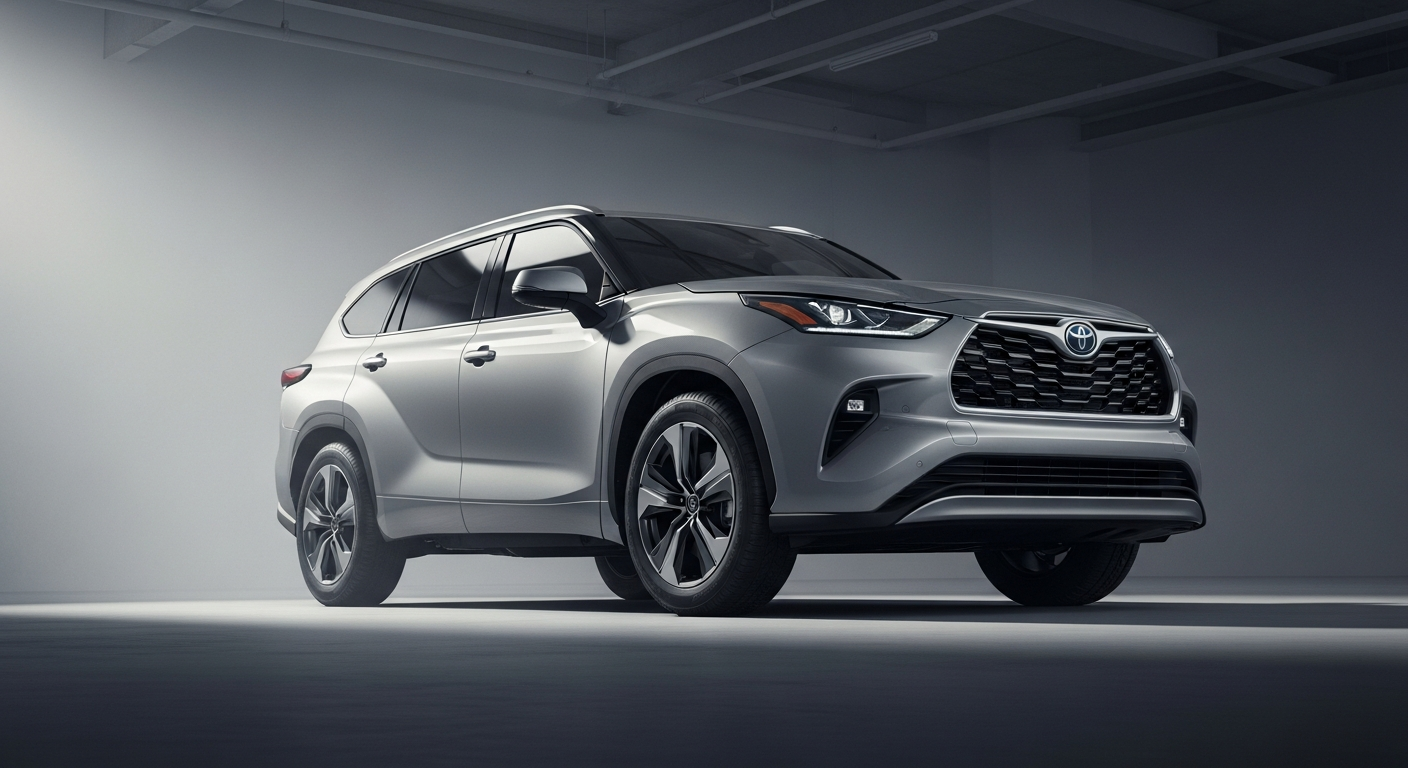
For over two decades, the Toyota Highlander has been a cornerstone of the midsize SUV market, synonymous with reliability and family utility. Now, Toyota is leveraging this venerable nameplate to launch its most ambitious all-electric vehicle to date: the 2027 Highlander. This fully redesigned model is not merely an update; it's a complete reimagining, discarding its internal combustion engine roots for an all-electric powertrain, an estimated 320 miles of range, and a critical three-row configuration. This move positions Toyota squarely in one of the automotive industry's most contested battlegrounds: the family-oriented electric SUV.
Key Takeaways:
-
The 2027 Highlander is Toyota's first three-row electric vehicle for the US market.
-
It is the first Toyota EV to be assembled in America.
-
Offers an estimated 320 miles of range, targeting a highly popular midsize SUV segment.
-
Represents a critical test for Toyota's evolving EV strategy amidst its long-standing emphasis on hybrid technology.
Main Analysis
A Familiar Name, An Electric Future
The introduction of an all-electric Highlander signals a notable evolution in Toyota's approach to electrification. Historically, the automaker has championed a "multi-pathway" strategy, heavily emphasizing hybrid and plug-in hybrid vehicles while cautiously approaching pure battery-electric vehicles (BEVs). This cautious stance has drawn scrutiny from some analysts and environmental advocates, who argued Toyota was lagging behind competitors in the BEV race. The 2027 Highlander, however, appears to be a direct response to these critiques, representing a clear commitment to a segment where demand for BEVs is rapidly accelerating. It is not just another EV; it is Toyota's first three-row electric vehicle for the US market and, significantly, the first Toyota EV to be assembled on American soil. This latter point could offer strategic advantages, potentially qualifying the vehicle for federal incentives and bolstering local manufacturing.
Shifting Gears in Toyota's EV Strategy
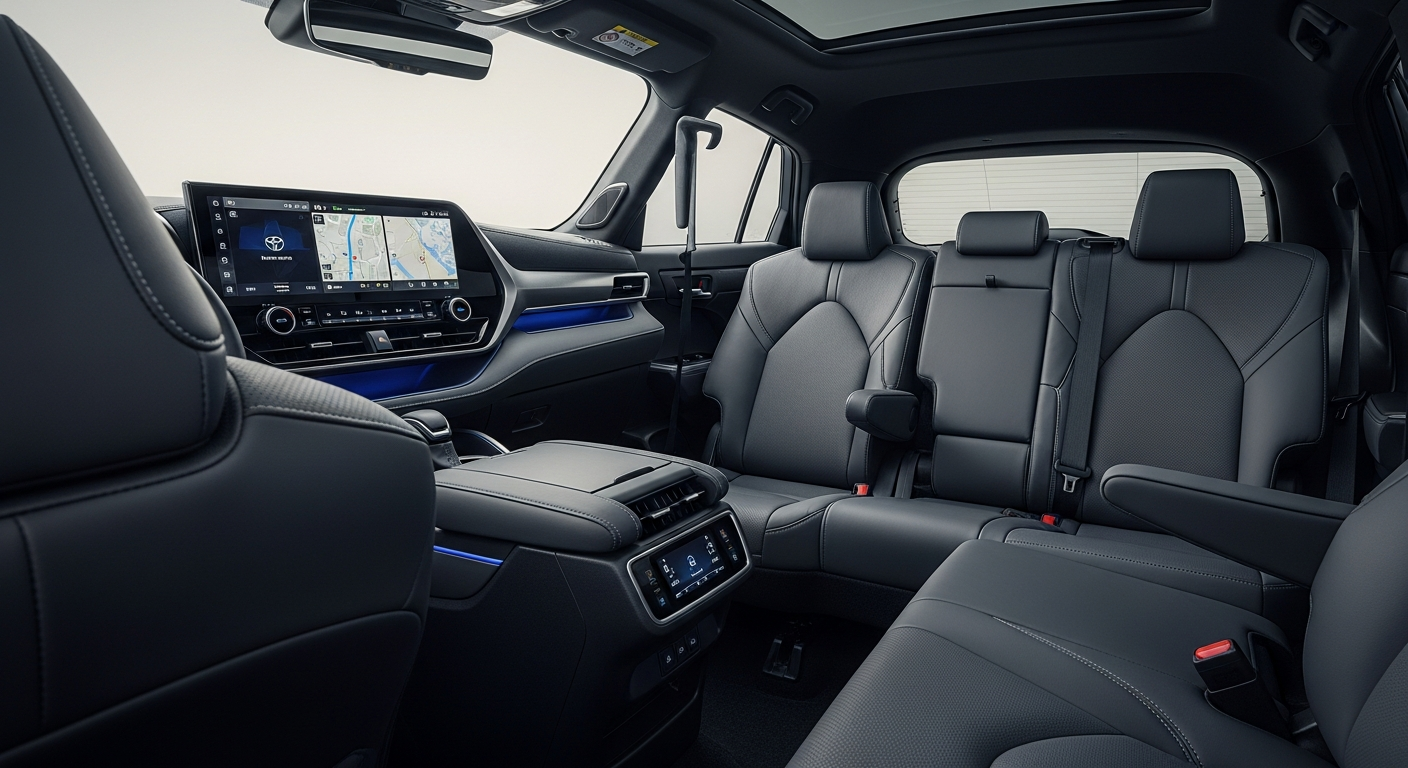
The midsize, three-row SUV segment is a financial bedrock for many automakers, appealing to families seeking versatility, space, and a commanding road presence. By entering this segment with the Highlander EV, Toyota is challenging established players and newcomers alike who have already carved out niches in the electric SUV space. The 320-mile range projection is competitive, aiming to alleviate range anxiety, a primary concern for many potential EV buyers. The familiarity of the Highlander name, coupled with Toyota's reputation for quality and resale value, could provide a significant advantage as it seeks to capture market share. This move underscores Toyota's understanding that to truly accelerate EV adoption, they must offer compelling, practical options in the segments that matter most to mainstream consumers.
Industrial Implications and Competitive Landscape
The decision to assemble the Highlander EV in the US carries substantial industrial implications. It suggests a deepening of Toyota's manufacturing footprint in North America and a commitment to regional supply chains for EV components. This strategy can mitigate geopolitical risks, reduce logistics costs, and potentially accelerate delivery times for the US market. From a competitive standpoint, the Highlander EV will face a crowded field including vehicles like the Kia EV9, Hyundai Ioniq 7 (expected), Rivian R1S, and potentially future electric offerings from traditional rivals like Chevrolet, Ford, and Honda. Toyota's late entry into this specific segment means it must differentiate not only on brand recognition but also on technology, value proposition, and ownership experience. The success of the Highlander EV will be a critical barometer for Toyota's ability to effectively pivot its global manufacturing and sales operations towards a fully electric future.
Public Sentiment
Initial reactions from industry observers and potential consumers are a mixture of cautious optimism and keen interest. "Toyota has an immense loyal customer base, and bringing an electric Highlander to market is a smart play to transition those buyers into EVs without alienating them," noted automotive analyst Dr. Lena Hansen. "The 'Made in America' aspect is also a significant political and economic advantage." However, some retain a watchful stance. "The true test will be its pricing strategy and how it competes on charging infrastructure and software experience, areas where Toyota hasn't always led," commented tech influencer Marcus Chen. The general consensus points to a high anticipation for Toyota's performance in a segment it has long dominated with its internal combustion counterparts.
Conclusion
The 2027 Toyota Highlander Electric SUV represents more than just a new model; it embodies a strategic declaration from a global automotive giant. After years of incremental steps, Toyota is now making a bold leap into the core of the electric vehicle market with a vehicle that leverages its most recognizable strengths – reliability, family utility, and manufacturing prowess – reimagined for an electrified era. Its success will not only shape Toyota's future but also significantly influence the pace and direction of EV adoption across the globe. As the industry watches closely, the Highlander EV stands as Toyota's critical gambit in the race for electric dominance.