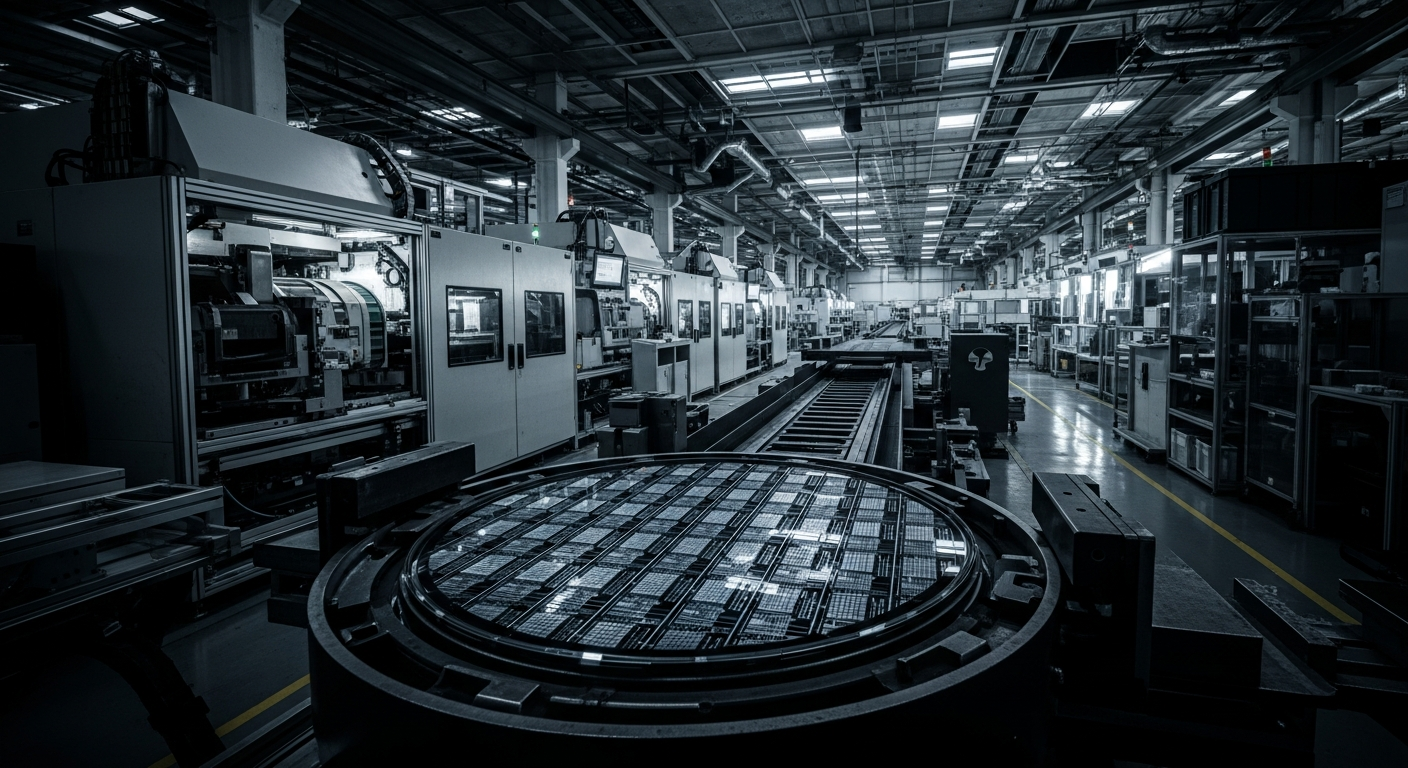
The U.S. semiconductor industry, long touted as a cornerstone of national security and economic prowess, entered 2025 with high expectations. Billions had been earmarked for domestic manufacturing, and a renewed strategic focus was promised. Yet, as the year concluded, the landscape was less one of triumph and more one of trepidation, marked by a perplexing blend of internal leadership disarray and an export policy that, by many accounts, was more self-sabotage than strategic foresight.
Key Takeaways:
-
Leadership shifts at major semiconductor firms often signaled stagnation rather than revitalization, perpetuating a status quo.
-
Export control policies were characterized by inconsistency and opacity, actively undermining industry planning and global competitiveness.
-
Domestic manufacturing initiatives, though well-funded, struggled against the broader backdrop of global supply chain realities and policy uncertainty.
-
The U.S. risks ceding its technological leadership due to indecision, bureaucratic paralysis, and a confusing approach to international trade.
Main Analysis
A Leadership Labyrinth, Not a Leap
2025 saw a notable churn at the helm of several legacy semiconductor companies. While touted as fresh starts or strategic pivots, these leadership changes often felt like a reshuffling of deck chairs on a ship struggling to find its course. Instead of ushering in a new era of aggressive innovation or market expansion, many industry observers noted a continuation of cautious, risk-averse strategies that seemed ill-suited to the fiercely competitive global environment. New CEOs, inheriting complex, entrenched bureaucracies, often struggled to articulate a vision that transcended incremental improvements or merely reacting to geopolitical shifts.
The impact was palpable: rather than providing the decisive leadership needed to navigate a complex global market, the constant rotation and lack of bold, unified vision contributed to a sense of internal inertia. This stagnation within some of America’s most venerable tech giants compounded the external pressures, making the U.S. industry appear reactive rather than proactive.

The Quicksand of Export Policy
Perhaps the most damning aspect of 2025 was the "wishy-washy policy around chip exports." Washington's approach to controlling the flow of critical semiconductor technology became a source of profound frustration and strategic paralysis for American businesses. Ostensibly aimed at safeguarding national security and preventing rivals from gaining technological parity, the execution was anything but clear.
One month, a particular component or market segment would face stringent new restrictions; the next, those rules would be vaguely reinterpreted or partially rolled back, leaving boardrooms in a perpetual state of strategic paralysis. Companies found it nearly impossible to make long-term investment decisions, plan supply chains, or engage reliably with international partners. This erraticism not only hampered U.S. companies' ability to compete but also eroded trust among allies who rely on a predictable, rules-based trading environment. The perception grew that U.S. policy was less about clear strategic objectives and more about reactive, often contradictory, short-term political maneuvering.
Domestic Ambition, Global Disconnect
The irony of 2025 was the juxtaposition of massive domestic investment with crippling export policy. Billions flowed into initiatives aimed at reshoring semiconductor manufacturing, creating state-of-the-art fabs and thousands of jobs. Yet, these laudable goals were frequently undermined by the very policies intended to secure the industry's future. How can domestic production flourish if the market for those sophisticated chips is constricted by unpredictable export controls, alienating international buyers and forcing U.S. companies to operate with one hand tied behind their back?
The global semiconductor industry is inherently interconnected. Disrupting established supply chains and penalizing international collaboration without offering clear, viable alternatives risks isolating American producers rather than empowering them. The disconnect between robust domestic investment and a confused global trade strategy created an untenable economic equation for many firms, raising questions about the long-term viability of an isolated U.S. chip ecosystem.

Public Sentiment
The mood across the industry, from Silicon Valley startups to legacy manufacturers, was one of palpable frustration. A prominent industry analyst, speaking off the record, lamented, "It's like building a supercar and then putting a governor on it that changes speed limits every other week. How do you win a race like that?" Executives often voiced their concerns privately, fearing repercussions from Washington, but the sentiment was clear: the lack of clarity was more damaging than any specific restriction.
One manufacturing CEO, speaking at a rare public forum, put it bluntly: "Our competitors aren't waiting for us to make up our minds. Every day of uncertainty is a day they gain ground. Clarity, not convolution, is what we desperately need from our government partners."
Conclusion
2025 will be remembered not as the year America cemented its lead in semiconductors, but as a period of perplexing strategic drift. The combination of leadership changes that often failed to inject fresh dynamism, coupled with an export policy that prioritized obfuscation over consistency, left the U.S. semiconductor industry in a precarious position. The noble aims of national security and economic independence risk being undermined by an inability to execute a coherent, predictable strategy.
Moving into 2026, the imperative is clear: the U.S. must articulate a consistent, long-term vision for its semiconductor industry that reconciles domestic ambition with global realities. Without it, the vast investments and immense talent within American chipmaking will continue to operate in a shadow of uncertainty, allowing rivals to seize the initiative and potentially cede America's hard-won technological edge.