The seismic shift towards artificial intelligence is undeniably reshaping corporate strategies and investor expectations. In this high-stakes environment, two behemoths – Elon Musk's Tesla and Mark Zuckerberg's Meta Platforms – have staked their long-term fortunes on AI. While divergent in their primary revenue streams, both companies present compelling, albeit vastly different, AI-centric growth narratives. The question for discerning investors remains: which AI growth stock is truly the better buy for 2026?
The AI Imperative: A Fork in the Road for Tech Giants
Just a few years ago, the investment thesis for Tesla revolved around electric vehicles and Meta's on social media dominance. Today, AI isn't just a component; it's the central nervous system of their future ambitions. Tesla is pinning its hopes on the widespread adoption of its AI-powered Robotaxi service and full self-driving software. Meta, conversely, is pouring billions into AI infrastructure to fortify its advertising empire and chase the grand vision of personal superintelligence. This fundamental pivot underscores a shared belief in AI's transformative power, yet their approaches and current stages of AI integration couldn't be more distinct.
Tesla's Robotaxi Bet: High Stakes, Higher Risk
Tesla’s narrative is one of audacious ambition. The company envisions a future where its vast fleet of electric vehicles, already equipped with the necessary hardware, will transform into a revenue-generating autonomous ride-hailing network – the Robotaxi. Management confidently states that 'hardware-related profits' will eventually be 'accompanied by an acceleration of AI, software and fleet-based profits.' This sounds revolutionary, a true 'generational paradigm shift,' as Zuckerberg might say.
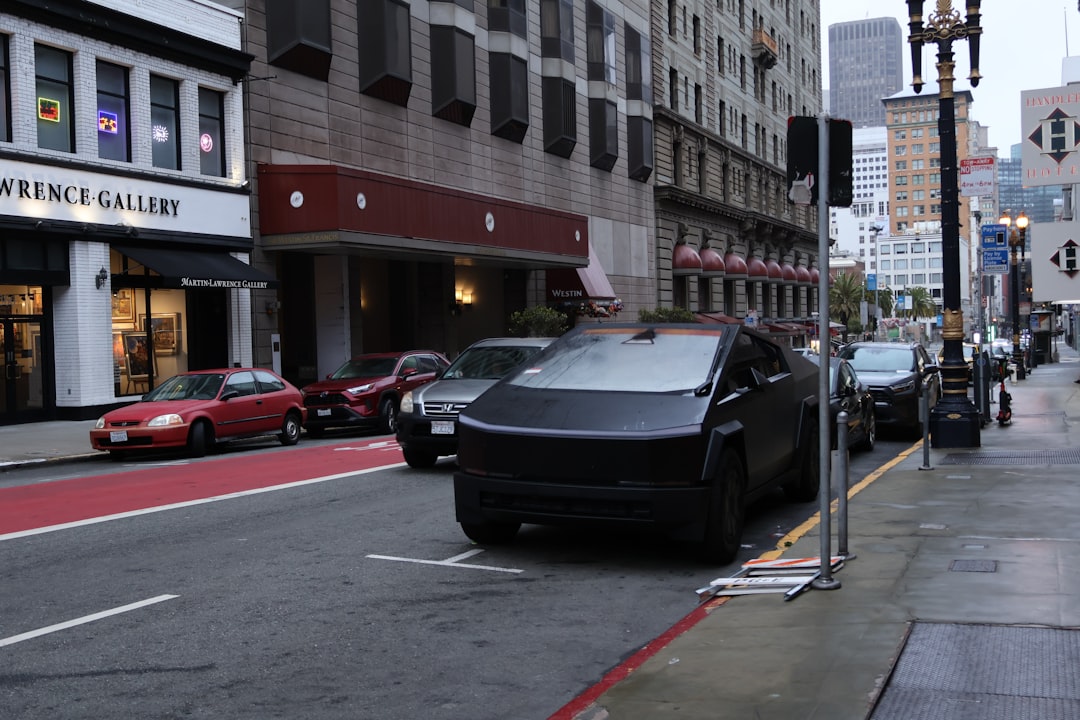
However, the path to this AI-powered utopia is fraught with peril. Tesla’s financials currently reflect significant headwinds. Its most recent quarter saw net income plummet by 37% year over year, and deliveries experienced a sharp decline. This dependency on Robotaxi's eventual, successful scaling is alarming, particularly when current operations are struggling. The market's valuation of Tesla, with a price-to-earnings (P/E) ratio soaring over 300, suggests an expectation of near-perfect execution on these highly speculative AI ventures. There is little to no room for error, making Tesla's stock a high-wire act for investors.
Meta's AI Advantage: Present Gains, Future Vision
Meta Platforms, on the other hand, presents a far more immediate and, dare we say, lower-risk AI narrative. Its business is not just growing; it's thriving. Third-quarter revenue surged an impressive 26% year over year. While net income technically fell due to a one-time non-cash charge, adjusting for this anomaly reveals a healthy 19% year-over-year increase. Crucially, Meta attributes much of this success directly to AI, noting that 'improvements in its AI ranking systems are serving as a key catalyst for its ads business.'
This is a critical distinction: Meta's AI investments are already yielding tangible returns. They don't need to wait for a hypothetical future; AI is enhancing their core business today. Yet, Meta's AI ambitions are not modest. The company is facing soaring capital expenditures, projected to comfortably exceed $100 billion in 2026, primarily for AI-capable computing power. This signifies a monumental commitment to AI infrastructure, positioning Meta for even greater AI leverage. A noteworthy point of confidence, highlighted by CEO Mark Zuckerberg, is Meta's contingency plan: if the expected AI opportunities don't materialise as rapidly as hoped, the company can simply scale back infrastructure build-out, growing into what it already possesses. This 'worst-case' scenario demonstrates a strategic prudence conspicuously absent in Tesla's all-or-nothing Robotaxi gamble.
The Valuation Verdict: A Sobering Reality
When we move beyond the narratives and examine the cold, hard numbers, the picture becomes even clearer. Meta's P/E ratio hovers around 30 – a reasonable multiple for a company demonstrating strong, profitable growth. This valuation, in essence, 'prices in nothing extraordinary – just more of the same,' which for Meta, means robust financial performance. Tesla’s P/E ratio, at over 300, is a stark contrast, demanding extraordinary success from its unproven Robotaxi strategy. This disparity in valuation alone 'seals the deal' for many analysts, flagging Tesla as significantly riskier.
While Tesla's Robotaxi opportunity is undeniably immense, its current valuation demands perfection, leaving virtually no margin for error or delays. Meta's valuation, combined with its demonstrable AI returns and strategic contingency plans, positions it as a much more stable and compelling AI growth stock.
Strategic Contingencies: Meta's Safety Net
One often-overlooked aspect is strategic flexibility. Tesla's reliance on Robotaxi's 'full self-driving' becoming commercially viable and widely adopted is a singular point of failure. Meta, however, builds its AI capabilities with multi-pronged applications. If the 'superintelligence' revolution doesn't arrive as swiftly, their existing AI infrastructure continues to bolster advertising, content delivery, and research – providing immediate value and a clear fallback. This inherent redundancy and diversified application of AI compute power offer a crucial safety net that Tesla's focused bet lacks.
Public Sentiment
"Tesla's AI bet is exhilarating, but the market's pricing feels like gambling on a lottery ticket," remarked a veteran analyst from Mumbai. "The vision is grand, but the current financials and valuation demand a leap of faith many aren't comfortable with." Another market observer added, "Meta's approach is more grounded. They're showing us AI is working, improving their bottom line today, while still building for tomorrow's moonshot. That balance is what sophisticated investors seek." A retail investor from Delhi commented, "I'm excited about Robotaxi, but that P/E ratio on Tesla? It's too high for my portfolio. Meta looks like a steadier ship in the AI storm."
Conclusion
In the high-stakes game of AI dominance, our verdict leans decisively towards Meta Platforms for 2026. Its business is already reaping the benefits of AI integration, demonstrating accelerated revenue growth and a robust financial foundation. The company’s colossal investment in AI infrastructure is ambitious yet tempered by strategic flexibility and contingency planning. Tesla's Robotaxi opportunity, while potentially transformative, carries an inordinate amount of risk, exacerbated by struggling financials and a speculative valuation that leaves little room for imperfection. For investors seeking a more secure and immediately rewarding play in the AI growth sector, Meta Platforms presents a compellingly stronger and less volatile proposition than its electric vehicle counterpart. While Tesla holds the promise of future glory, Meta delivers on the promise of AI today.