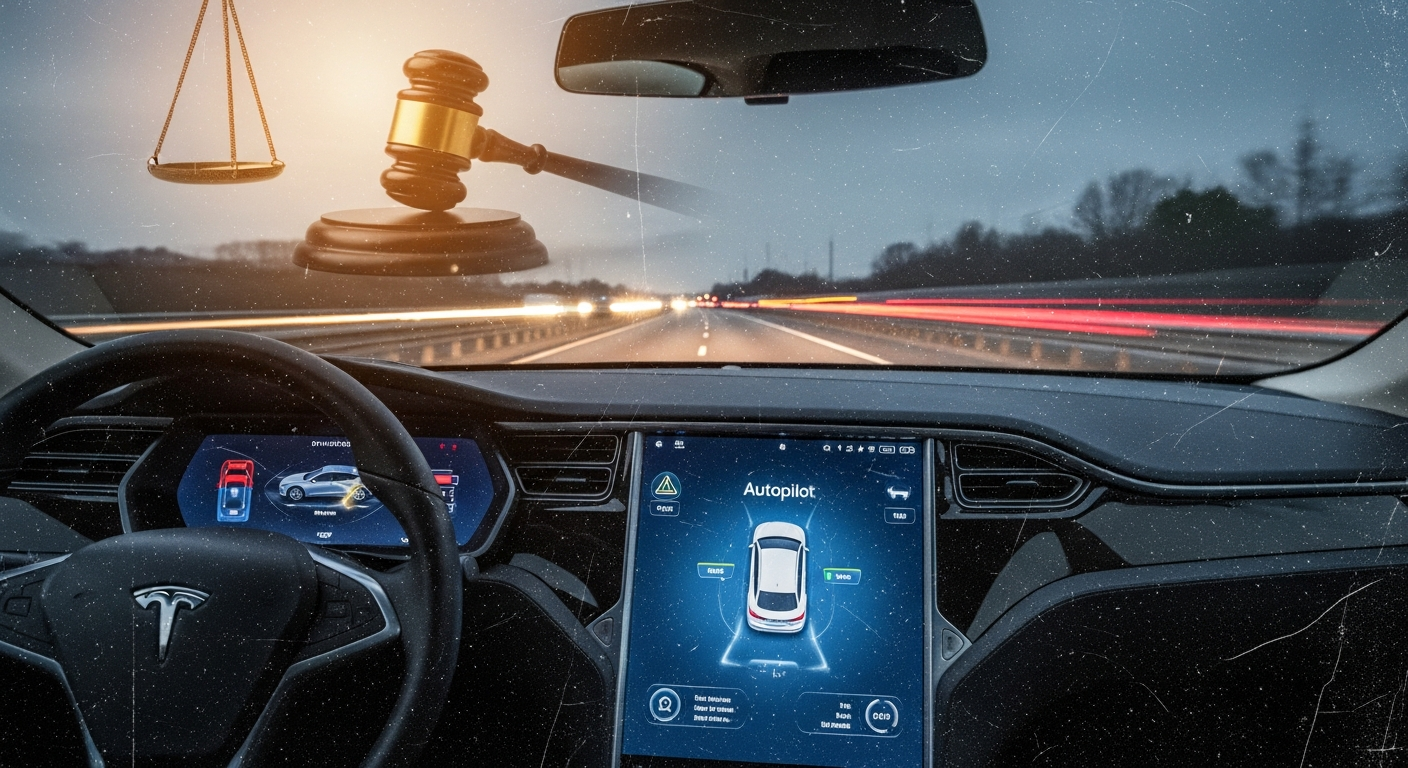
The digital asphalt beneath Tesla's self-driving ambitions continues to crack, as a California court has decisively rejected the automaker's attempt to overturn a colossal $243 million verdict related to its Autopilot system. The judicial reaffirmation, coming after Tesla's legal team presented arguments described as “virtually the same” as those aired during the original trial, paints a picture of a company struggling to adapt its narrative to the increasingly stringent realities of legal and public scrutiny. This isn't merely a financial penalty; it's a profound indictment of Tesla's legal strategy, its technological claims, and perhaps, its very approach to safety.
Key Takeaways
-
Verdict Upheld: A California court has affirmed the $243 million verdict against Tesla in an Autopilot-related case, rejecting the company's appeal for a new trial.
-
Strategic Misstep: Tesla's appeal was reportedly based on arguments nearly identical to those already rejected during the initial trial, indicating a potential flaw in its legal approach.
-
Increased Scrutiny: The ruling intensifies the legal and regulatory pressure on Tesla's Autopilot and 'Full Self-Driving' (FSD) systems.
-
Precedent Setting: This significant judgment could set a precedent for future litigation involving advanced driver-assistance systems (ADAS) across the automotive industry.
-
Reputational Damage: The repeated legal defeats and substantial penalties erode public trust in Tesla's technology and its safety claims.
The Echo of the Verdict: A Legal Strategy Under Fire
The original $243 million judgment stemmed from an incident involving Tesla's Autopilot system, where the court found the company liable. Tesla's subsequent bid to overturn this verdict or secure a new trial has now been summarily dismissed. What makes this rejection particularly telling, and frankly, concerning, is the court's observation that Tesla's grounds for relief were “virtually the same” as those previously put forth.
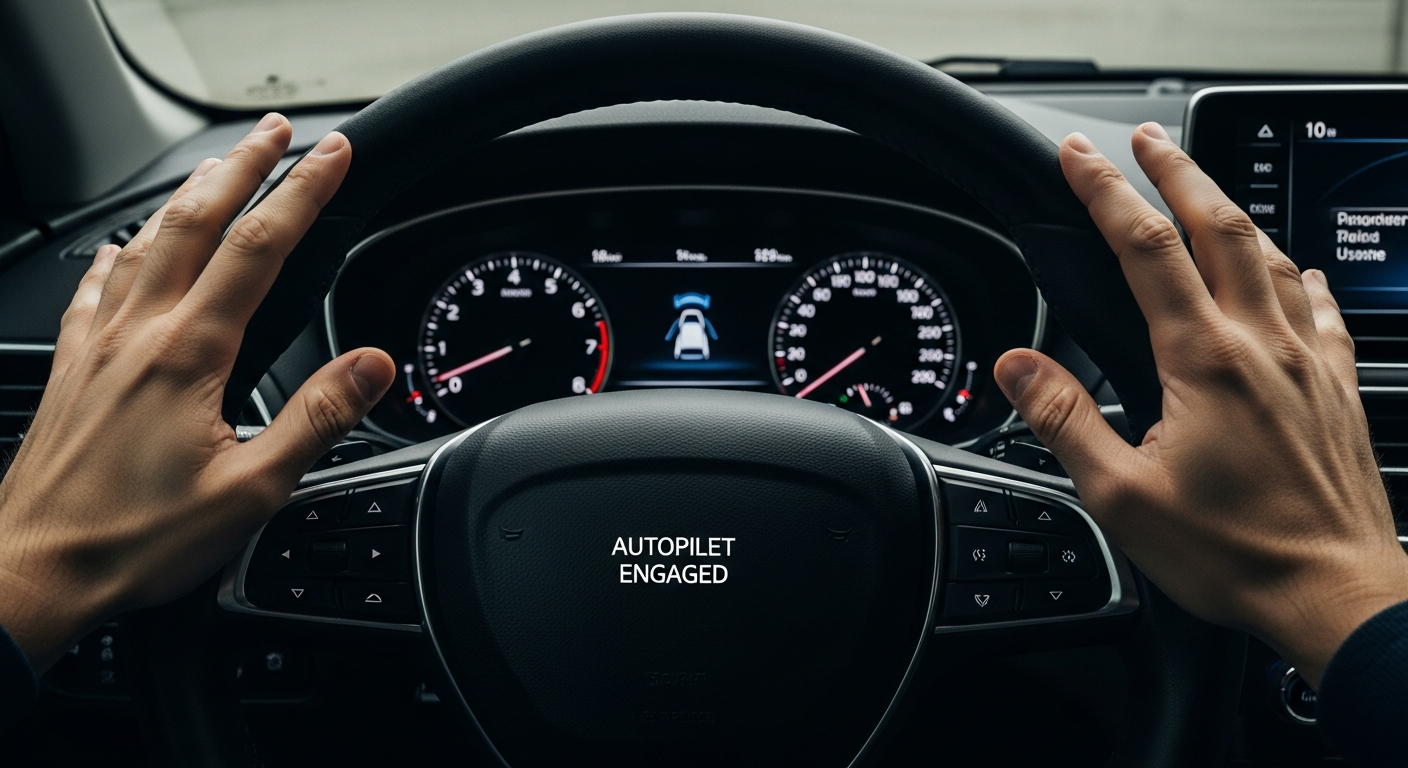
This isn't merely a loss; it's a strategic cul-de-sac. It suggests either an inexplicable overconfidence in previously debunked arguments or a troubling dearth of new, compelling evidence to challenge the initial findings.
For a company that prides itself on innovation and disruption, this legal stagnation is a glaring weakness. It begs the question: does Tesla genuinely believe its existing defenses are robust enough to withstand judicial examination, or is there an unwillingness to acknowledge the deeper systemic issues that these verdicts continue to highlight? The industrial precision expected from a tech titan like Tesla appears to falter when confronted with the complex, human-centric realities of legal liability and product safety.
Autopilot's Unsettled Legacy: Marketing Versus Reality
Tesla's Autopilot and 'Full Self-Driving' (FSD) beta systems have long been subjects of intense debate, often lauded by enthusiasts and critically scrutinized by safety advocates and regulators. The company's marketing, spearheaded by CEO Elon Musk, has frequently pushed the boundaries of what the technology can reliably deliver, often implying capabilities far exceeding their current operational limits. This latest verdict serves as another stark reminder of the dangerous chasm between aspirational marketing and the concrete responsibilities that come with deploying powerful, yet imperfect, automated systems on public roads.
The ongoing regulatory inquiries, accident investigations, and now, significant court judgments, collectively paint a picture of a technology that, while revolutionary in parts, remains deeply controversial in its implementation and oversight. The core issue often revolves around driver expectation, system limitations, and Tesla's explicit instructions (or lack thereof) regarding driver engagement. When a system is named 'Autopilot,' the implied autonomy can easily mislead users into ceding too much control, often with tragic consequences that courts are increasingly holding Tesla accountable for.
Financial and Reputational Fallout: Beyond the Balance Sheet
A $243 million verdict is a substantial sum, even for a company of Tesla's valuation. While unlikely to cripple its overall financial health, it represents a tangible cost that directly impacts the company's profitability and, by extension, its investors. More importantly, however, is the escalating cost to Tesla's reputation and brand integrity. Each verdict of this magnitude, each failed appeal, chips away at the public's trust in a brand built on promises of futuristic safety and technological superiority.
In the fiercely competitive electric vehicle and autonomous driving sectors, trust is a currency far more valuable than quarterly earnings. Competitors are rapidly advancing their own ADAS solutions, often with more cautious marketing and clearer safety protocols. As Tesla grapples with these self-inflicted legal wounds, it risks losing its perceived leadership in a domain it once dominated purely on ambition.
The narrative is shifting from innovation to liability, from groundbreaking to ground-down by legal challenges.
Public Sentiment: A Call for Accountability
Public sentiment, often a lagging indicator, is demonstrably moving towards greater skepticism regarding autonomous vehicle claims. Drivers and consumers, increasingly aware of the limitations and risks, express a growing demand for transparency and accountability from manufacturers. Online forums, social media, and traditional news outlets reflect a frustration with perceived corporate obfuscation and a call for stronger regulatory oversight. There’s a widespread feeling that companies, particularly those pushing cutting-edge technologies, must prioritize safety and realistic communication over marketing hype.
Experts within the automotive safety and legal communities are also questioning whether existing frameworks are sufficient to manage the rapid evolution of ADAS. This verdict, therefore, isn't just about Tesla; it's about setting a critical precedent for an entire industry that is racing towards a future where human input might be optional. The message is clear: the responsibility for ensuring safety and truthfully communicating capabilities ultimately rests with the manufacturer.
Conclusion: A Pivotal Moment for Tesla and Autonomous Driving
The upheld $243 million verdict is more than just a legal defeat for Tesla; it is a pivotal moment that should compel a fundamental reassessment of its Autopilot strategy, legal approach, and public messaging. The repeated presentation of the same arguments, coupled with the court's steadfast rejection, underscores a concerning lack of adaptable legal defense and perhaps, an unwavering but ultimately unconvincing belief in its own narrative. For the broader automotive industry, this ruling serves as a powerful reminder that the journey towards full autonomy is fraught with significant legal and ethical challenges. The pursuit of innovation must always be tempered by an unwavering commitment to safety and unequivocal accountability, a lesson Tesla is learning at a very steep price.