Key Takeaways
-
Democratisation of Advanced Manufacturing: Affordable fiber lasers are bringing metal 3D printing out of industrial labs and into smaller workshops.
-
Enabler for SMEs: This shift empowers Indian SMEs and startups to innovate, prototype, and produce complex metal parts locally.
-
Economic Impact: Potential for reducing import reliance, boosting 'Make in India' initiatives, and creating new economic avenues.
-
Challenges Remain: Safety, material expertise, and precision calibration are critical hurdles that need addressing.
-
Future Outlook: While nascent, the DIY metal 3D printing movement holds immense promise for India's technological self-reliance.
The Laser Revolution Arrives
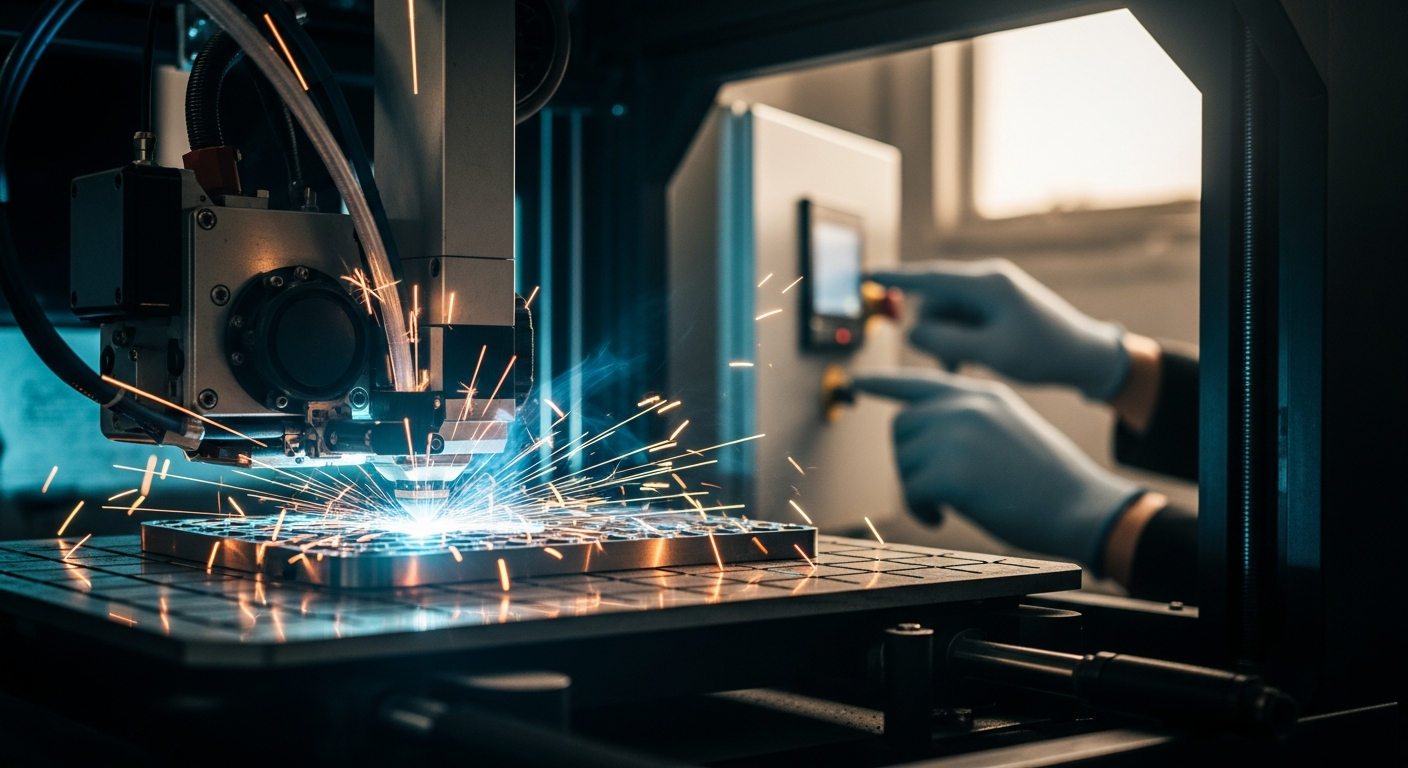
The allure of powerful lasers has always captivated innovators, and the advent of cheaper, more robust fiber lasers has truly ignited a new spark. What was once the preserve of multi-million dollar industrial complexes, locked behind layers of proprietary software and prohibitive costs, is now trickling down to the ambitious ‘hacker’ – the curious engineer, the inventive entrepreneur, and the academic pushing boundaries in university labs. This isn't just about cutting or engraving; it's about adding, about building, about fabricating solid metal from powder or wire, layer by atomic layer.
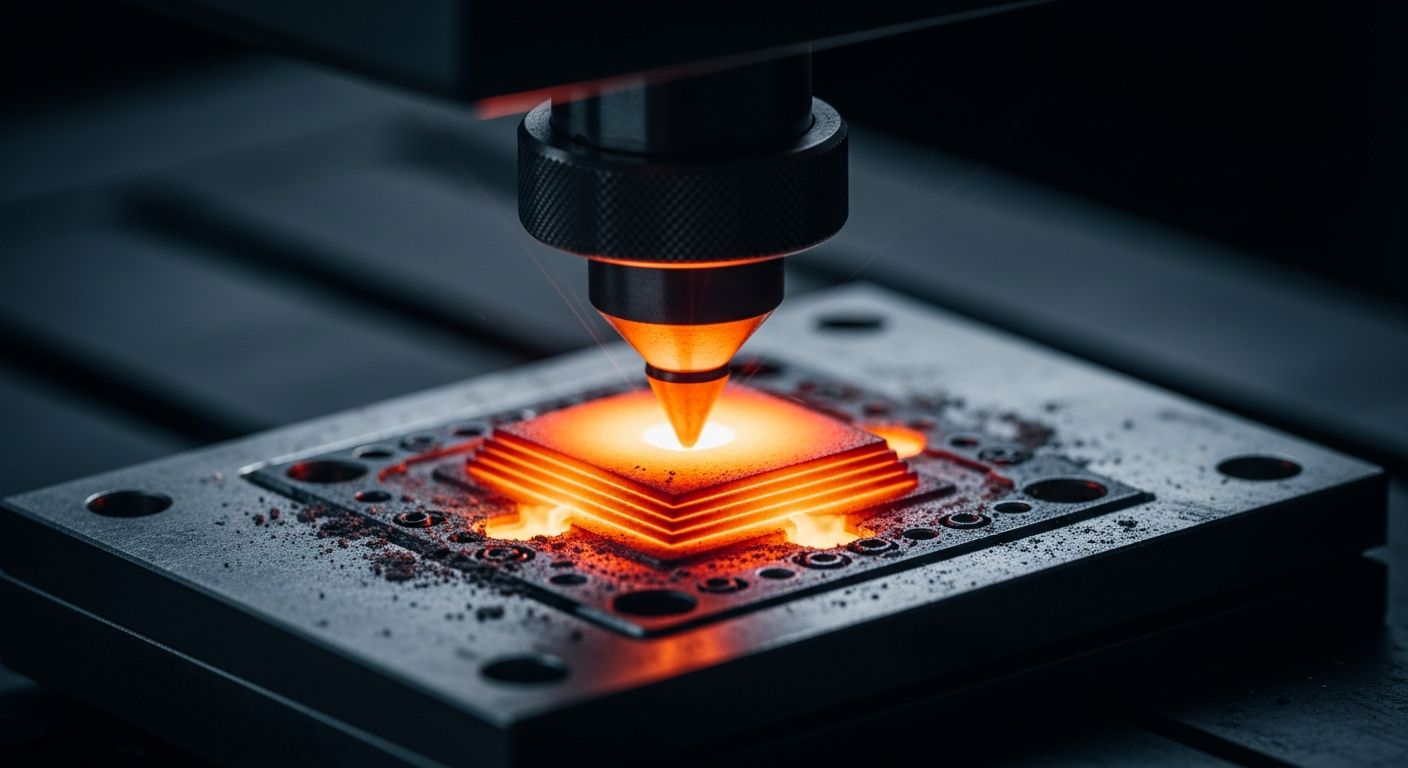
The transformative power lies in their precision, intensity, and now, their accessibility. Companies that once charged fortunes for laser welders are now facing competition from more affordable units, making them viable for conversion into nascent metal 3D printers. For a nation like India, constantly striving for technological leapfrogging, this development is not merely interesting; it's potentially revolutionary.
Beyond Plastic: Metal's New Frontier
For years, consumer-grade 3D printing has been synonymous with plastics – PLA, ABS, PETG. While invaluable for rapid prototyping and educational purposes, plastic parts often lack the strength, durability, and thermal resistance required for industrial applications. Metal, however, is a different beast entirely. Imagine printing custom aerospace components, bespoke medical implants, or high-strength automotive parts on demand, locally. This is where the marriage of fiber lasers and 3D printing enters its stride. By precisely melting and fusing successive layers of metal powder or wire feedstock, these DIY setups can create objects with geometries previously impossible or prohibitively expensive through traditional machining. The laser welder, with its focused heat and controlled beam, becomes the crucible for additive manufacturing, turning digital designs into tangible, robust metal realities.
India's Manufacturing Renaissance
The implications for India are profound. Our manufacturing sector, a cornerstone of economic growth, stands to benefit immensely from this democratisation of advanced technology. Small and Medium Enterprises (SMEs), which form the backbone of Indian industry, can now dream bigger. No longer do they need to outsource complex metal component fabrication or rely on lengthy import cycles. A local entrepreneur in Pune could rapidly prototype and produce specialized tooling for an automotive client, or a startup in Bengaluru could develop custom medical devices with unparalleled agility. This fosters true 'Make in India' spirit, empowering indigenous innovation and reducing our reliance on global supply chains for critical components. Furthermore, it opens avenues for niche industries, custom production, and rapid iteration, giving Indian businesses a significant competitive edge in a global market that values speed and customisation. The defense sector, too, could see benefits in on-demand spare part fabrication for older equipment or rapid prototyping of new designs.
The Double-Edged Beam: Challenges and Caveats
However, it would be disingenuous to paint an entirely rosy picture. High-power lasers are not toys. Safety is paramount, requiring strict adherence to protocols, proper enclosures, and personal protective equipment. The materials science aspect is also complex; achieving optimal mechanical properties in laser-melted metal parts requires deep understanding of metallurgy, process parameters, and post-processing techniques. Precision is another challenge; industrial metal 3D printers offer micron-level accuracy, a benchmark that DIY setups will struggle to match initially. Calibration, inert gas environments, and powder handling are critical details that differentiate a functional part from a piece of slag. While the entry barrier for equipment cost has lowered, the knowledge and skill barrier remains significant. India must invest in training and R&D to truly harness this potential, ensuring that the 'hackers' are also equipped with the scientific rigour needed to push boundaries safely and effectively.
Public Sentiment
The buzz among India's tech community is palpable. “This is a game-changer for my small engineering firm,” remarked Rahul M., an SME owner in Chennai. “We can finally bring complex part manufacturing in-house.” A Bengaluru-based hardware hacker, Priya S., echoed the enthusiasm: “The possibilities are limitless. We're not just buying tools; we're building our own factories, literally.” Yet, there's a healthy dose of caution too. “Safety cannot be an afterthought,” advised Dr. Vikram C., a materials science professor. “We need robust guidelines and education alongside this innovation.” The sentiment is clear: excitement tempered with an understanding of the responsibilities that come with such powerful technology.
Conclusion
The transformation of cheap fiber welders into rudimentary metal 3D printers is more than a technical curiosity; it's a testament to human ingenuity and the relentless march towards democratising technology. For India, a nation poised for industrial ascendancy, this trend offers a potent cocktail of opportunity and challenge. By embracing this DIY spirit, investing in skill development, and establishing robust safety frameworks, we can ensure that the searing edge of laser technology carves a path not just for a few large corporations, but for a whole generation of Indian innovators, building a truly self-reliant and technologically advanced future. It's time to equip our garages and workshops, not just our large factories, for the next industrial revolution.