Key Takeaways
-
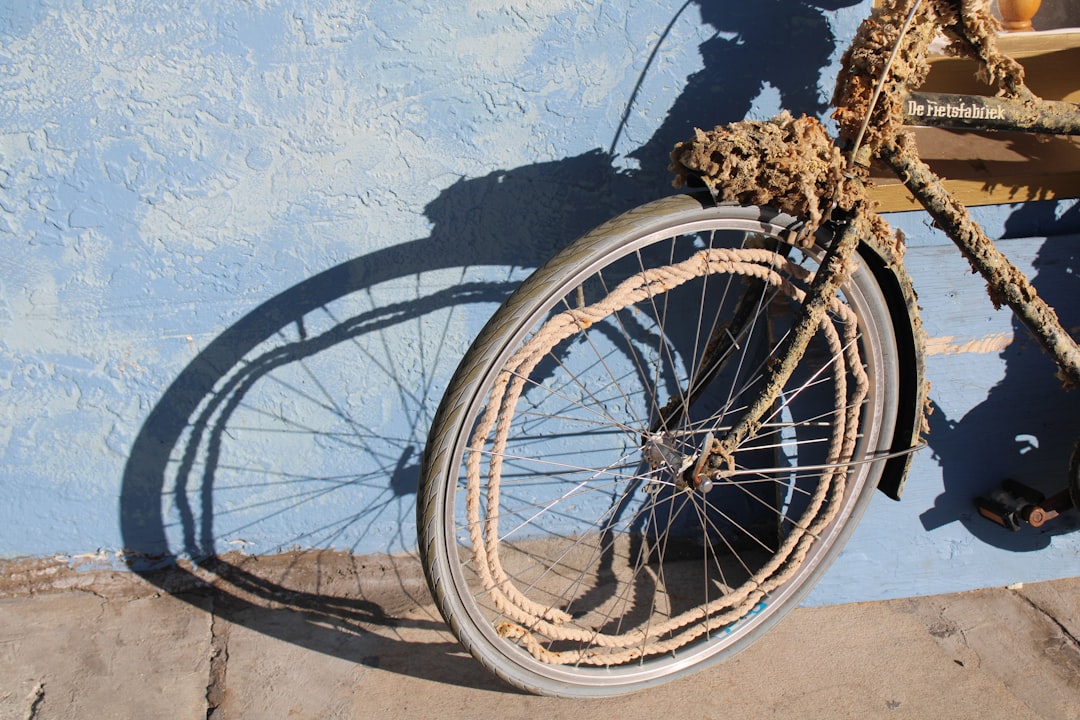
Novelty vs. Practicality: Rope spokes, while visually distinctive, face significant hurdles in durability and performance compared to traditional materials.
-
Safety Concerns: The dynamic stresses on bicycle spokes make material reliability paramount; rope introduces complex failure modes.
-
Market Resistance: Despite being several years old, the concept's lack of widespread adoption signals industry skepticism regarding its real-world application.
-
The Burden of True Innovation: Revolutionary designs must not only be clever but also rigorously safe, cost-effective, and demonstrably superior in performance.
The Allure of the Unconventional: A Glimmer of Genius?
In an industry perpetually seeking marginal gains and disruptive breakthroughs, the initial appearance of bicycle spokes fashioned from high-strength rope was, undoubtedly, intriguing. The immediate appeal lies in the potential for weight reduction, vibration damping, and a seemingly simpler manufacturing process. The designer, identified only as Ali in earlier reports, tapped into a primal desire to reimagine fundamental components. On paper, substituting rigid metal with flexible, robust cordage offers a compelling narrative of lightness and resilience.
It conjures images of ultra-lightweight racing machines and bespoke urban cruisers, a paradigm shift from the utilitarian rigidity of steel or carbon fiber. For a moment, the cycling community entertained the possibility: could this be the next big thing?
Engineering Reality vs. Conceptual Design: A Test of Strength and Stamina
However, the romance of the concept quickly collides with the unforgiving physics of bicycle engineering. Spokes are not merely static support structures; they are dynamic elements subjected to immense cyclical tension, compression, and shear forces with every rotation, pedal stroke, and road imperfection. Traditional metal spokes are designed to handle these stresses with predictable failure points and immense fatigue resistance. Rope, even advanced synthetic varieties, behaves differently. Its strength, while high in pure tension, can be compromised by knots, bends, and abrasion points. More critically, rope inherently stretches and creeps under constant load—a characteristic utterly detrimental to maintaining wheel true and tension. A wheel built with spokes that gradually elongate would swiftly become unrideable, compromising handling and risking catastrophic failure.
Furthermore, environmental factors like moisture, UV exposure, and grit, which barely register on a steel spoke, could accelerate the degradation of even the most advanced rope materials. The promise of simplicity gives way to a complex web of material science challenges that, several years on, remain largely unanswered in a practical, commercial context.
The Silence of Adoption: Where Are the Rope-Spoked Bikes?
Perhaps the most damning critique of the rope spoke concept isn't an engineering report, but the deafening silence from the market. If this innovation genuinely offered a superior alternative, one would expect to see it trickle down from high-end custom builds to mainstream manufacturers. Yet, save for a few isolated prototypes and experimental projects, rope-spoked wheels are conspicuously absent from professional racing, serious amateur cycling, or even the burgeoning commuter segment. This isn't for lack of publicity; the idea has been periodically discussed and debated. The absence points to a stark reality: the challenges of implementation, durability, and most crucially, safety, have proven insurmountable for mass adoption.
Manufacturers and consumers alike prioritize reliability. A broken spoke on a traditional wheel is an inconvenience; a catastrophic failure of multiple rope spokes due to fatigue, stretch, or environmental factors could lead to serious injury. The economic incentive to adopt a novel material, even one that promises weight savings, evaporates when weighed against potential warranty claims, product recalls, and reputational damage.
Public Sentiment: Skepticism Tempered by Curiosity
Across online forums and industry discussions, public sentiment concerning rope spokes synthesizes into a familiar pattern: initial intrigue followed by pragmatic skepticism. "It looks cool, but I wouldn't trust it on a descent," commented one forum user. Another noted, "Unless they've figured out how to stop creep and abrasion, it's just a novelty." Engineers often point to the fundamental principles of wheel building, emphasizing the delicate balance of tension and rigidity that rope simply cannot consistently provide over time. While some laud the innovative spirit behind the concept, the prevailing consensus leans heavily towards the belief that some things are traditional for very good reasons.
Conclusion: A Concept That Couldn't Bear the Weight
The rope spoke concept, while an engaging thought experiment, serves as a poignant reminder that innovation, particularly in critical safety components, must extend far beyond mere novelty. The journey from a compelling idea to a market-ready product is fraught with tests of durability, practicality, and, above all, unwavering safety. The fact that Ali's rope spokes remain an obscure curiosity, years after their initial unveiling, speaks volumes. It underscores the immense challenge of reinventing the wheel's most fundamental structural elements without compromising the rider's safety and the bicycle's long-term reliability. Sometimes, the 'new' isn't necessarily 'better,' and the traditional path, forged by decades of engineering rigor, remains the most prudent choice.
The cycling world awaits innovations that truly advance performance and safety, not merely challenge convention for its own sake.