Remote-Controlled Lawnmowers: A Pragmatic Advance in Automation, Not Sci-Fi Utopia
[FEATURED]
Decades of science fiction, from Star Trek's enterprise to The Jetsons' automated home, promised a future brimming with ubiquitous, general-purpose robot assistants. While the elusive 'Rosie the Robot' remains largely in the realm of fiction, a quiet, more pragmatic revolution is taking root. The advent of remote-controlled lawnmowers serves as a compelling case study, illustrating how highly specialized, task-oriented automation is not only achievable but actively enhancing daily life, bridging the gap between grand futuristic visions and tangible, immediate benefits.
Key Takeaways
-
Specialized Automation Ascendant: The development of highly focused, task-specific automation and remote-control technologies is progressing at a faster pace than generalized artificial intelligence.
-
Convenience and Safety Redefined: RC-enabled tools offer significant advantages in terms of operational safety, reduced physical exertion, and greater accessibility for a diverse range of users.
-
Expanding Market for Smart Solutions: The market for smart outdoor maintenance and home automation is experiencing robust growth, propelled by innovations that address specific, everyday challenges.
-
Pragmatic Robotic Evolution: This trend underscores a practical shift in robotic development, emphasizing incremental improvements in defined niches over the pursuit of broad, human-like cognitive abilities.
Main Analysis
The Enduring Allure of the Generalist Robot vs. Specialized Reality
The collective imagination has long been captivated by the idea of an all-encompassing domestic robot capable of everything from cooking dinner to solving complex problems. Shows like Lost in Space further cemented this vision of sentient, versatile machines. Yet, the reality of building truly general-purpose artificial intelligence remains an monumental challenge, fraught with complexities in perception, decision-making, and contextual understanding. Instead, the most impactful advancements in robotics are occurring in specialized domains, where clearly defined tasks can be optimized through focused engineering.
The remote-controlled lawnmower perfectly embodies this pragmatic approach. It doesn't need to understand human emotions or navigate a grocery store; its sole purpose is to cut grass efficiently and safely. By narrowing the scope, engineers can develop robust, reliable, and cost-effective solutions that deliver tangible value, moving beyond the aspirational to the operational.
Precision and Practicality: The Remote-Control Advantage
The integration of remote-control capabilities into lawnmowers introduces a host of practical benefits. Foremost among these is enhanced safety. Operators can now manage lawn care from a safe distance, away from rotating blades, engine noise, and exhaust fumes. This is particularly advantageous for navigating challenging terrains, steep slopes, or areas with potential hazards where direct human presence might be risky.
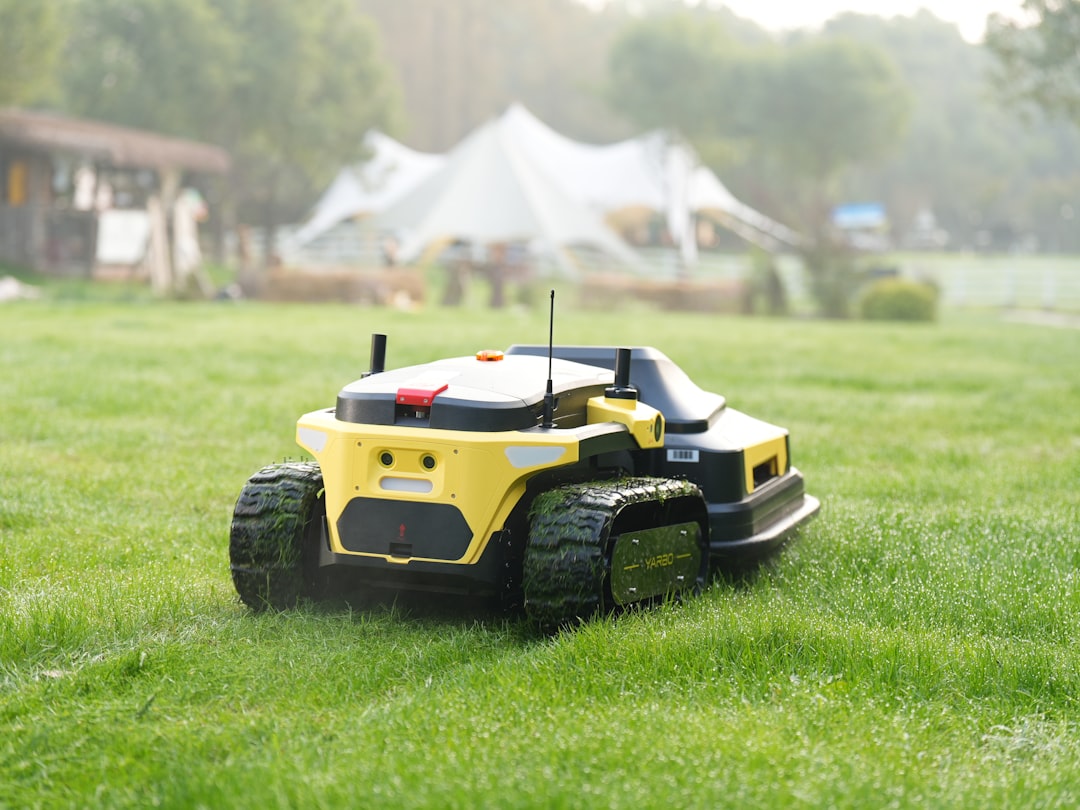
Beyond safety, convenience is a major driver. Whether controlled by a dedicated handheld remote or a smartphone application, users gain flexibility, allowing them to multitask or simply enjoy their leisure while the machine handles the work. This feature also broadens accessibility, enabling individuals with physical limitations to maintain their lawns independently. Furthermore, the precision offered by direct remote control can be superior in certain situations to fully autonomous systems that rely solely on boundary wires or GPS, providing on-demand intervention and fine-tuning.
Market Dynamics and Consumer Adoption
The market for smart outdoor maintenance technology is experiencing significant growth, mirroring the expansion of the broader smart home ecosystem. Early robotic lawnmowers, often high-cost and limited in capability, have evolved into a diverse range of products. Remote-controlled models cater to a specific segment of consumers: homeowners seeking to reclaim time, those managing larger properties where manual mowing is arduous, or individuals prioritizing safety and convenience.
While initial investment costs can be higher than traditional mowers, the long-term benefits of reduced labor, potential for more frequent (and thus healthier) lawn cuts, and increased safety often justify the expenditure. Manufacturers are increasingly integrating features like app connectivity, scheduling, and sensor-based obstacle avoidance, transforming a simple chore into a seamless, technologically-driven process. This segment is poised for continued expansion as technology becomes more affordable and user-friendly.
Beyond the Lawn: A Glimpse at the Future of Task-Specific Automation
The success of remote-controlled lawnmowers provides a blueprint for the future of automation in other niche applications. We are already seeing similar trends in areas such as robotic pool cleaners, automated vacuum systems, and specialized inspection drones for infrastructure. The principle remains consistent: identify a specific, often laborious or hazardous task, and engineer a focused robotic solution to address it.
This approach signals a future where automation isn't about a single, all-knowing machine, but a distributed network of specialized devices, each expertly handling a particular function. These individual technological advancements, though seemingly small, collectively contribute to a significant paradigm shift in how we interact with our environment and manage our daily responsibilities.
Public Sentiment
Public sentiment regarding remote-controlled lawnmowers and similar task-specific automation leans towards cautious optimism. Consumers express a strong appreciation for the sheer convenience and the reduced physical burden associated with these devices. There is also a recognized value in the enhanced safety features, particularly for managing challenging garden landscapes. However, practical considerations such as the initial purchase price, the longevity and reliability of the technology, and the ease of maintenance remain common discussion points. Many view these innovations as valuable tools that complement human effort rather than replace it, acknowledging their role in simplifying mundane tasks while reserving complex decision-making for human operators.
Conclusion
The promise of a fully automated future, as depicted in classic science fiction, continues to inspire. Yet, the path to that future is proving to be paved not by singular, omnicompetent robots, but by a multitude of specialized machines designed to excel at specific tasks. The remote-controlled lawnmower stands as a clear testament to this evolution. It embodies a pragmatic, impactful approach to automation – one that prioritizes safety, convenience, and efficiency in defined roles. As these targeted innovations continue to proliferate, they are collectively shaping a more manageable, accessible, and technologically augmented world, one chore at a time.