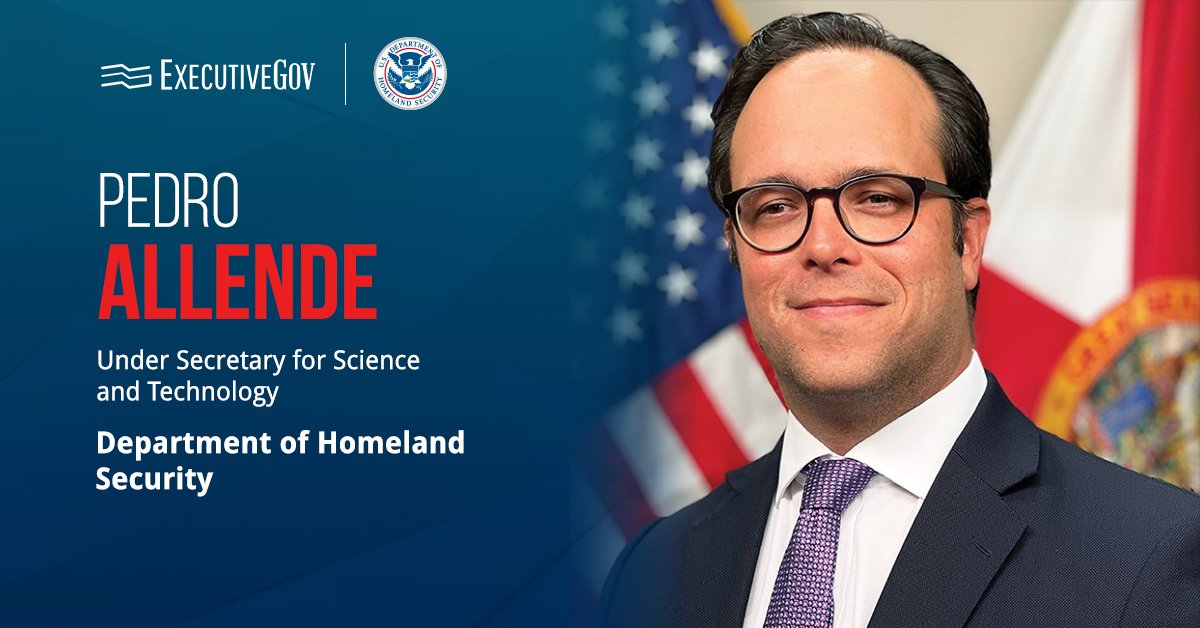
The Department of Homeland Security's Science and Technology (S&T) Directorate is ostensibly the crucible of innovation for America's frontline defense, tasked with forging advanced capabilities against an ever-shifting spectrum of threats. Yet, the recent confirmation of Pedro Allende as its Under Secretary, despite his distinguished but largely administrative career, prompts a necessary interrogation: Is DHS prioritizing managerial acumen over deep technical leadership at a pivotal moment for national security?
Key Takeaways:
-
Administrative vs. Scientific Leadership: Allende's most recent role as Florida's Secretary of Management Services focused on procurement, facilities, and IT oversight, not fundamental scientific research or engineering development.
-
Questionable Alignment: Doubts persist whether a career primarily in administrative oversight and infrastructure management is the ideal foundation for spearheading complex scientific and technological breakthroughs required by DHS.
-
S&T Directorate's Efficacy: The appointment raises concerns about the S&T Directorate's ability to drive cutting-edge innovation if its leader lacks a profound understanding of scientific R&D processes and emerging technological landscapes.
-
Potential for Mission Drift: There is a risk that the directorate's focus under this new leadership could shift towards operational efficiencies and project management, potentially sidelining truly disruptive scientific exploration.
The Allure of the Generalist in a Specialized Role
Allende's resume is undeniably impressive from an administrative standpoint. As Secretary of the Florida Department of Management Services, he oversaw substantial operations, including statewide procurement, telecommunications, and facilities. He managed the Florida Digital Service, supervising key technology officers like the state's CIO and CISO. His prior federal service at DHS included a stint as deputy assistant secretary for infrastructure, risk, and resilience policy, and roles within the Departments of Energy and Labor. These are roles demanding significant organizational skill, legal insight, and operational oversight.

However, the Science and Technology Directorate is not primarily a procurement office or a facilities management division. It is, as DHS itself states, responsible for 'advancing science and technology capabilities' and acts as the 'secretary's science adviser' while directing the 'main research and development organization.' This mandate demands a leader who can not only navigate bureaucracy but also possess an intrinsic understanding of scientific methodology, emerging technological trends, the challenges of R&D, and the complex interplay between theoretical discovery and practical application. Critics argue that appointing a generalist, however capable, to such a specialized and critical scientific leadership position is akin to tasking a seasoned logistics expert with designing a next-generation fighter jet. The skills are orthogonal, not complementary, to the core mission of scientific leadership.
DHS S&T: A Critical Juncture
The S&T Directorate's charter is expansive and vital: delivering mission-focused technologies to address 'evolving threats, strengthen border security, safeguard critical infrastructure and reinforce emergency response capabilities.' It's currently focused on ambitious new priorities, including establishing program executive offices for 'strengthening airspace security and emergency response power capabilities' and supporting major national events like the FIFA World Cup. These are not trivial tasks; they require foresight, deep technical understanding, and the ability to differentiate genuine innovation from mere incremental improvements.

The question isn't whether Allende can manage large-scale projects – his record suggests he can. The question is whether he possesses the specific scientific gravitas and vision to lead a directorate whose very purpose is to push the boundaries of science and technology in service of national security. Will his background enable him to critically evaluate complex scientific proposals, nurture high-risk, high-reward research, or attract and retain top scientific talent who demand leadership with profound technical empathy? The concern is that a focus on 'management' might inadvertently suppress 'discovery' at a time when rapid technological evolution is paramount.
Public Sentiment: A Call for Competence, Not Just Compliance
Across various informal discussions and expert forums, a consistent sentiment emerges: a craving for leadership with deep, demonstrated expertise in their respective fields, particularly when it pertains to national security technology.
"The DHS S&T Under Secretary isn't just a management position; it's a scientific stewardship role," remarked Dr. Lena Sharma, a former Pentagon science advisor. "You need someone who can speak the language of quantum computing, AI ethics, or advanced materials with authority, not just someone who can balance a budget. We're facing sophisticated adversaries, and our scientific leadership must be equally sophisticated."
Another observer, Mr. Raj Mehta, an independent cybersecurity consultant, added, "While Allende's experience in digital services is valuable, it's more about IT operations and security governance. The S&T directorate needs to invent the future, not just manage the existing infrastructure. This appointment feels more like a political reward than a strategic elevation of scientific expertise."
Conclusion: A Risky Gamble for National Security Innovation?
Pedro Allende's confirmation marks a significant moment for the DHS Science and Technology Directorate. Yet, the persistent mismatch between the demands of a high-level scientific and technological leadership role and his demonstrated professional background raises valid, critical questions. While his administrative skills are not in doubt, the strategic gamble here is that managerial efficiency can substitute for specialized scientific leadership at a time of unprecedented technological flux. For a nation facing rapidly evolving threats, prioritizing generalist administration over deep technical expertise in its core scientific innovation arm could prove to be a costly oversight, potentially hindering the very breakthroughs DHS desperately needs to secure the homeland. The 'Rusty Tablet' will be watching closely to see if this managerial approach can indeed catalyze the scientific advancement so critically required.