Key Takeaways
-
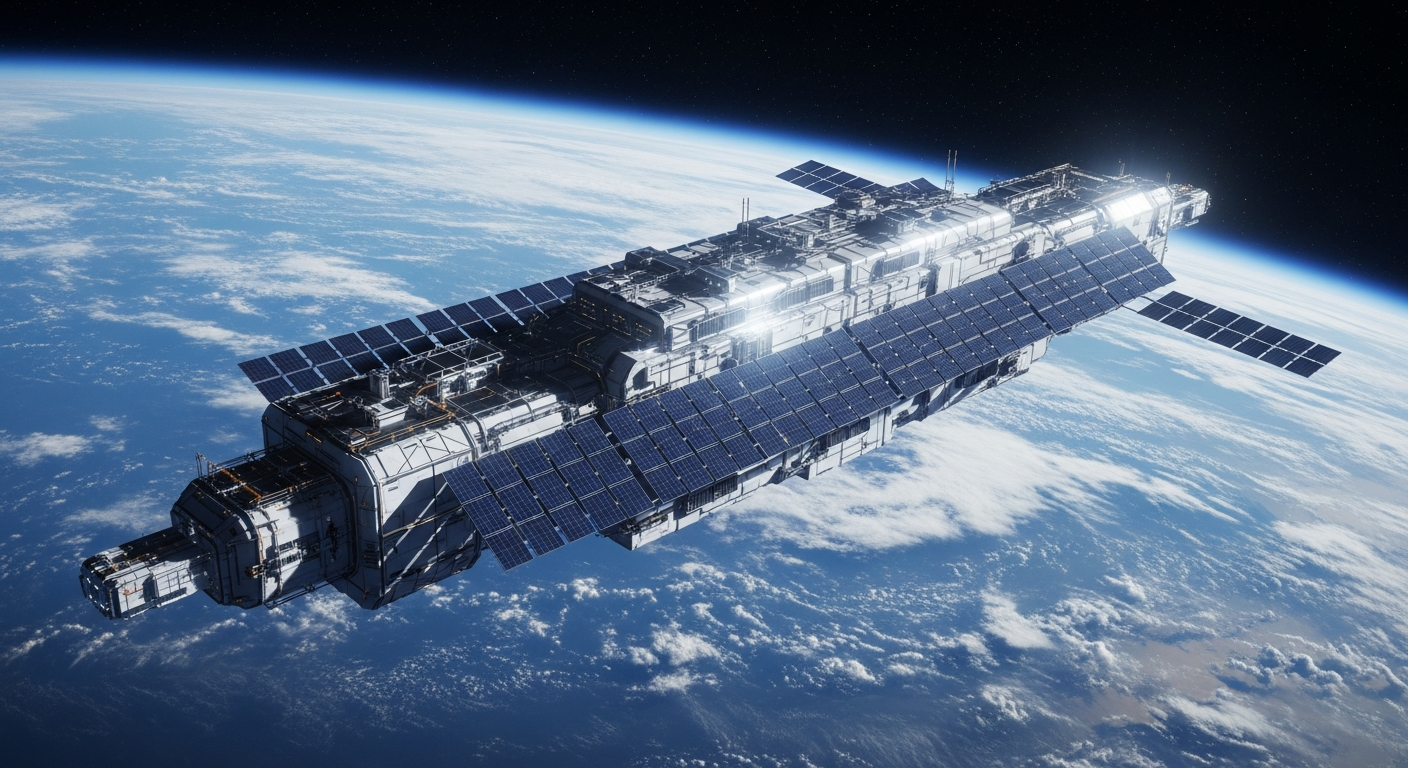
Orbital data centers face exorbitant capital costs, primarily due to launch, in-space construction, and maintenance.
-
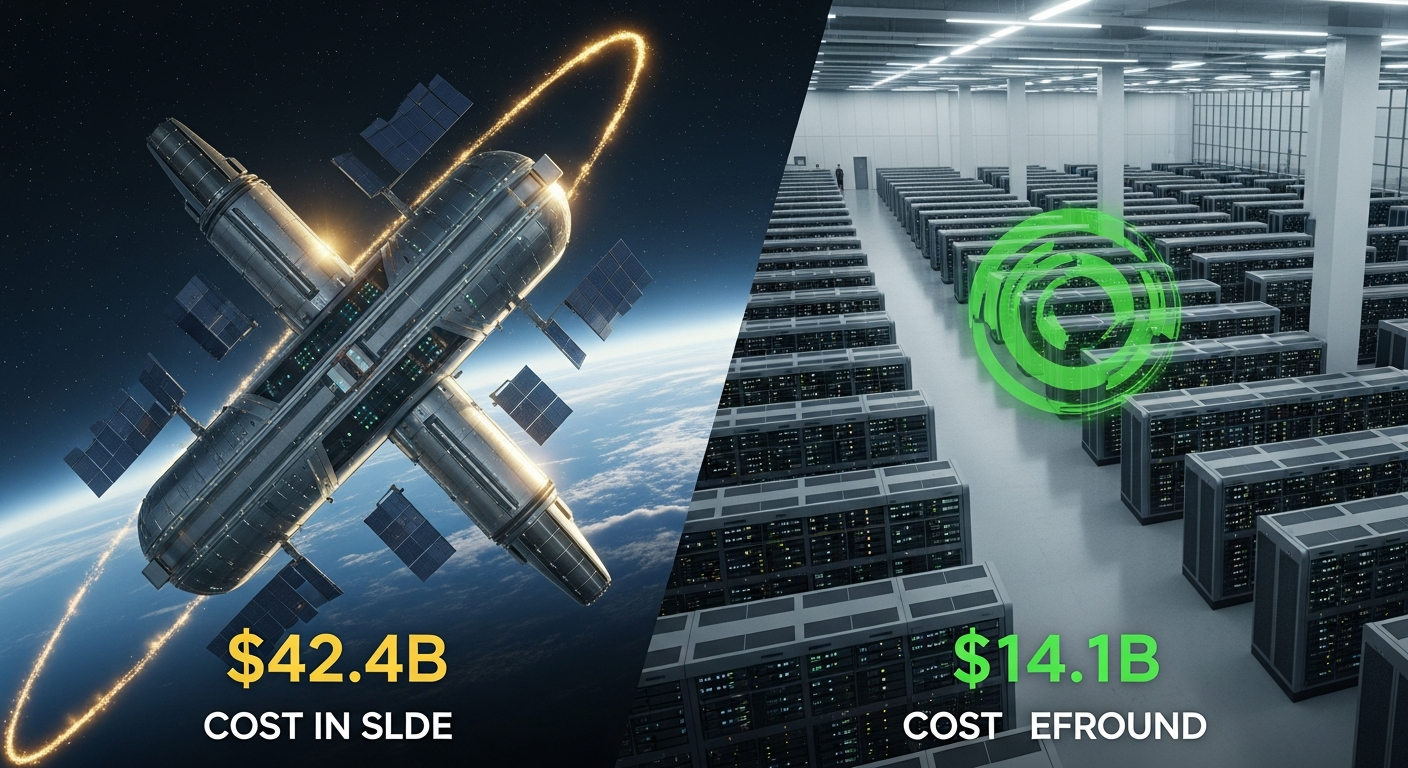
The $42.4 billion price tag for a 1 Gw facility is nearly three times that of its terrestrial counterpart ($14.1 billion).
-
Despite potential benefits like ultra-low latency and security, the economic hurdles are currently prohibitive for widespread adoption.
-
Innovation in space logistics, advanced robotics, and energy generation is crucial to make orbital AI economically viable.
-
The near-term future of AI remains largely ground-based, with space applications reserved for niche, high-value operations.
Main Analysis
The Astronomical Price Tag: Why Space is So Expensive
The figures are clear, and sobering. To construct a 1 Gigawatt (Gw) orbital data center, the kind of facility required to handle truly massive AI workloads or serve future deep-space economies, the projected cost sits at a mind-boggling $42.4 billion. Compare this to its ground-bound equivalent, which would likely demand around $14.1 billion (or less, depending on location and specifics). This isn't just an increment; it's a gulf that swallows budgets whole.
What drives this brutal difference? It's a confluence of unique challenges inherent to operating beyond Earth's protective embrace:
-
Launch Costs: Simply getting the raw materials, components, and eventually personnel into orbit remains incredibly expensive, despite recent advancements in reusable rocketry. Each kilogram is gold.
-
In-Space Construction: Building massive, complex structures in zero-gravity and vacuum requires specialized robotics, novel materials, and entirely new construction methodologies. Radiation hardening for electronics is non-negotiable.
-
Power Generation: A 1 Gw facility demands immense power. This translates to vast solar array farms, sophisticated energy storage systems, and the infrastructure to deploy and maintain them in perpetuity.
-
Thermal Management: Dissipating gigawatts of heat in a vacuum, without the benefit of Earth's atmosphere or oceans, necessitates incredibly efficient and complex cooling systems.
Beyond the Initial Launch: Operational Nightmares
Even if the initial construction costs could be miraculously absorbed, the operational realities of an orbital data center present their own set of economic and engineering nightmares.
-
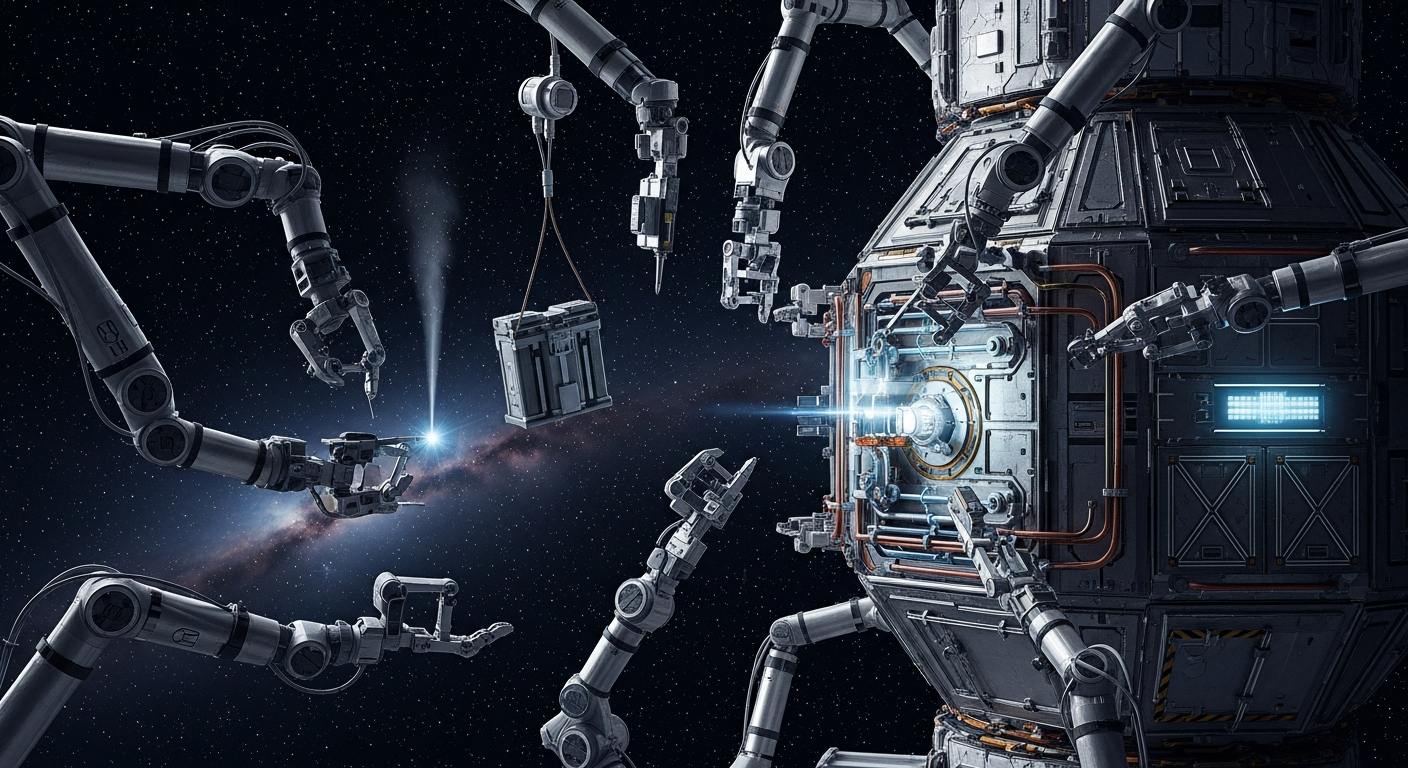
Maintenance and Upgrades: Unlike ground data centers where a technician can swap a faulty drive in minutes, in-space maintenance is an entirely different beast. It requires highly advanced, autonomous robotics, or prohibitively expensive human space missions. Every upgrade or repair is a logistical ballet that adds exponential cost.
-
Environmental Hardening: Space is a harsh mistress. Relentless radiation, micrometeoroids, and temperature extremes necessitate robust shielding and redundant systems, adding weight, complexity, and expense to every component.
-
Data Transfer: While orbital data centers promise ultra-low latency for certain applications, the actual transfer of massive datasets between orbit and Earth (or other orbital assets) requires a robust, high-bandwidth laser communication network. Building and maintaining this global relay infrastructure is another multi-billion-dollar undertaking.
The Allure and the Reality: What Are We Paying For?
The justification for such exorbitant spending typically centers on a few key benefits:
-
Latency Advantage: For truly global or deep-space communication networks, proximity in orbit can reduce signal travel time.
-
Security and Redundancy: Physically isolated from terrestrial disasters, geopolitical instability, or even direct physical attacks.
-
Unique Research Environments: Microgravity offers unprecedented conditions for material science and biological research that could benefit AI development.
-
Clean Energy: Potentially powered entirely by solar energy, reducing carbon footprint concerns associated with ground-based facilities.
However, for the vast majority of current AI applications, these benefits remain theoretical or easily outweighed by the economic reality. Most AI models perform perfectly well on Earth, where infrastructure is established, power is relatively cheap, and maintenance is straightforward. Is the marginal gain of orbital deployment truly worth an exponential cost increase for applications that don't strictly require it?
Pathways to Viability: A Glimmer of Hope?
For orbital AI to transition from a theoretical marvel to a practical reality, several paradigm shifts are required:
-
Radical Cost Reduction in Space Access: The development of truly cheap, frequent, and heavy-lift launch capabilities is paramount. Fully reusable, high-cadence rocket systems are a start, but more is needed.
-
Breakthroughs in In-Space Manufacturing: The ability to print, assemble, and repair components autonomously in orbit would dramatically reduce reliance on Earth-launched parts.
-
Modular and Distributed Architectures: Smaller, more numerous, interconnected AI satellites might be more feasible than a single, monolithic orbital data center.
-
Massive New Markets: The economic equation only balances if orbital AI unlocks entirely new, multi-trillion-dollar industries that simply cannot function from Earth – perhaps asteroid mining, advanced space colonization, or interplanetary internet infrastructure.
Public Sentiment
The public reaction to the idea of orbital AI is a mix of awe and pragmatic skepticism. While the vision of humanity's technological reach extending to the stars is inspiring, many questions regarding cost and necessity abound. Common refrains include:
-
"It sounds incredible, but at $42 billion, how many problems on Earth could that solve first?"
-
"Are we just building a playground for billionaires in space, while essential infrastructure crumbles?"
-
"The engineering is impressive, but the economic viability seems like pure fantasy for now."
-
"If it enables truly revolutionary breakthroughs for all of humanity, then maybe. But the ROI needs to be extraterrestrial too."
-
"Another example of tech pushing boundaries without fully grasping the practical implications for society or budgets."
Conclusion
The promise of orbital AI is vast, a frontier that beckons with the potential for unprecedented computational power and innovative applications. Yet, the current economic landscape paints a stark picture: the cost of realizing this dream is astronomically high, almost to the point of being prohibitive for anything beyond highly specialized, niche government or research projects. Until launch costs plummet, in-space manufacturing becomes commonplace, and truly transformative, space-exclusive economic drivers emerge, the bulk of AI's evolutionary journey will remain firmly grounded. The conversation around orbital AI must shift from simply 'can we?' to 'can we afford to, and why here, not there?' The economics, not the engineering, might be the greatest gravitational force holding back AI's ascent into orbit.