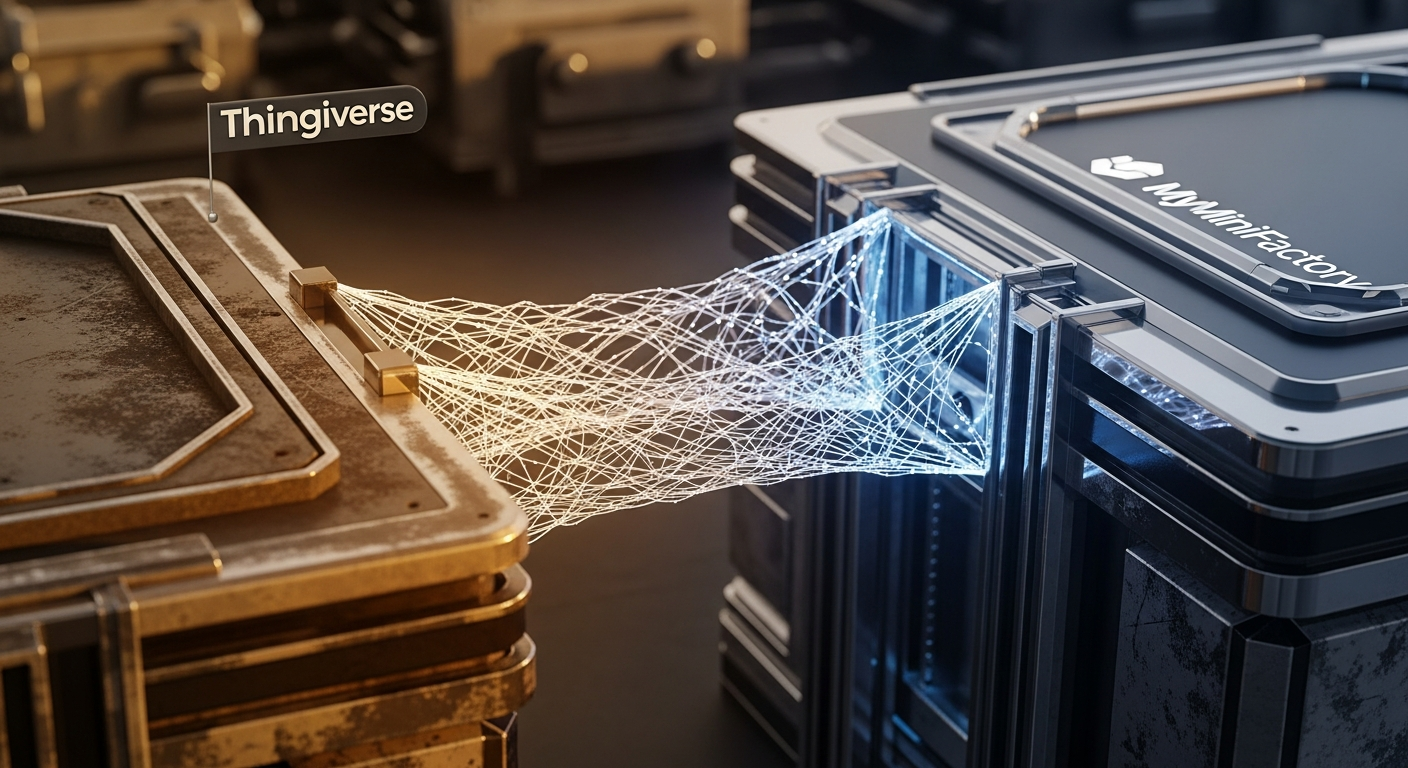
The landscape of 3D printing has long been characterised by open-source collaboration and the free exchange of digital models. Platforms like Thingiverse, Printables, and MyMiniFactory have served as crucial repositories, enabling enthusiasts and professionals alike to download, modify, and print countless designs. However, the advent of generative AI has introduced new complexities, particularly regarding the ethical sourcing and scraping of vast datasets, often without explicit creator consent or compensation.
Key Takeaways
-
Strategic Consolidation: MyMiniFactory has acquired Thingiverse, bringing together two of the largest 3D model repositories under one banner.
-
Anti-AI Mandate: The acquisition is notably driven by MyMiniFactory's commitment to protect creators from AI models scraping their designs without permission.
-
Creator Empowerment: This move aims to re-establish trust and empower designers by ensuring their intellectual property is respected and secured.
-
Industry Precedent: The acquisition could set a new standard for ethical data practices within the 3D printing and broader digital content industries.
-
Future of Open Source: It raises questions about balancing open-source principles with the need for IP protection in the age of AI.
Main Analysis
A Legacy Handover and a New Direction
Thingiverse, launched in 2008 by MakerBot Industries, became synonymous with the early proliferation of accessible 3D printing. It cultivated a vast community and an unparalleled library of user-generated content, becoming a foundational resource for millions. Yet, in recent years, it has faced criticisms regarding stagnation in development, user experience, and a perceived lack of responsiveness to community concerns. MyMiniFactory, in contrast, has steadily grown, differentiating itself with a curated marketplace model alongside free content, a strong emphasis on creator support, and proactive feature development. The acquisition, therefore, is not merely a business transaction but represents a changing of the guard, with MyMiniFactory stepping in to revitalise a beloved, if somewhat neglected, institution.
The 'Anti-AI' Stance: A Defining Feature
The most significant aspect of this acquisition is MyMiniFactory's explicit 'anti-AI focus.' In an era where large language models and generative AI systems are voraciously consuming digital content to train their algorithms, creative communities across the globe, including 3D designers, have voiced profound concerns about their work being used without attribution, compensation, or consent. MyMiniFactory's leadership has affirmed that it will implement measures to prevent AI scraping of designs hosted on both platforms, aiming to create a 'safe haven' for creators. This commitment is a direct challenge to the often opaque and exploitative practices of AI data collection, positioning MyMiniFactory as a champion for intellectual property rights within the digital realm.
Implications for Creators and the Ecosystem
For 3D designers, particularly those who rely on their creations for income or wish to maintain control over their artistic output, this anti-AI pledge offers a much-needed sense of security. It could encourage more designers to share their work, knowing it is less likely to be illicitly ingested by AI. This renewed trust could, in turn, invigorate both platforms, fostering a more vibrant and engaged community. Furthermore, by taking such a definitive stance, MyMiniFactory could attract designers currently hesitant to publish their work online due to AI concerns, potentially consolidating a significant portion of the global 3D printing talent.
Setting a New Industry Precedent
This move has the potential to reverberate across the entire digital content industry. Should MyMiniFactory successfully implement and maintain its anti-AI safeguards, it could pressure other platforms – not just in 3D printing but also in art, photography, and writing – to adopt similar protective measures. It highlights a growing demand from creators for ethical data practices and corporate accountability regarding AI training. The acquisition might serve as a litmus test for how open-source and creator-driven platforms navigate the complex ethical and legal challenges presented by generative AI.
Public Sentiment
The initial reaction from the 3D printing community has been a mix of cautious optimism and outright enthusiasm. Many long-time Thingiverse users express relief that the platform will receive much-needed attention and development. "It's about time Thingiverse got a facelift, and an anti-AI stance is exactly what the community needs right now," commented one user on a prominent forum. Others echo the sentiment of protection for their work: "Knowing my designs won't just be fodder for some AI is a huge relief; this makes me want to upload more." While some express a wait-and-see attitude, hoping the promises translate into effective action, the overall mood suggests a strong desire for platforms that prioritise creator rights amidst the rapid advance of AI technologies.
Conclusion
The acquisition of Thingiverse by MyMiniFactory, underpinned by its explicit anti-AI commitment, is more than a simple business merger; it is a significant declaration of intent within the 3D printing and broader creative technology sectors. At a time when AI's impact on intellectual property is a global debate, MyMiniFactory's bold move positions it as a leader in advocating for creator rights and ethical data practices. The success of this integrated entity, particularly in delivering on its anti-AI promise, will be closely watched, potentially charting a new course for digital platforms and the future of creative collaboration in the age of artificial intelligence. It underscores a crucial message: technological progress must not come at the cost of creator empowerment and ethical responsibility.