Key Takeaways
-
Extreme precision in rotor balancing is non-negotiable for high-speed machinery like jet engines.
-
Imbalance, even minute, can lead to catastrophic failure, turning complex machines into lethal hazards.
-
A recent DIY dynamic balancer project achieved 1-milligram precision, challenging traditional industrial approaches.
-
This innovation highlights the potential for accessible, cost-effective solutions in critical engineering tasks.
-
The project underscores the delicate balance between advanced engineering and fundamental physical principles.
The Unseen Forces: Why Every Milligram Matters
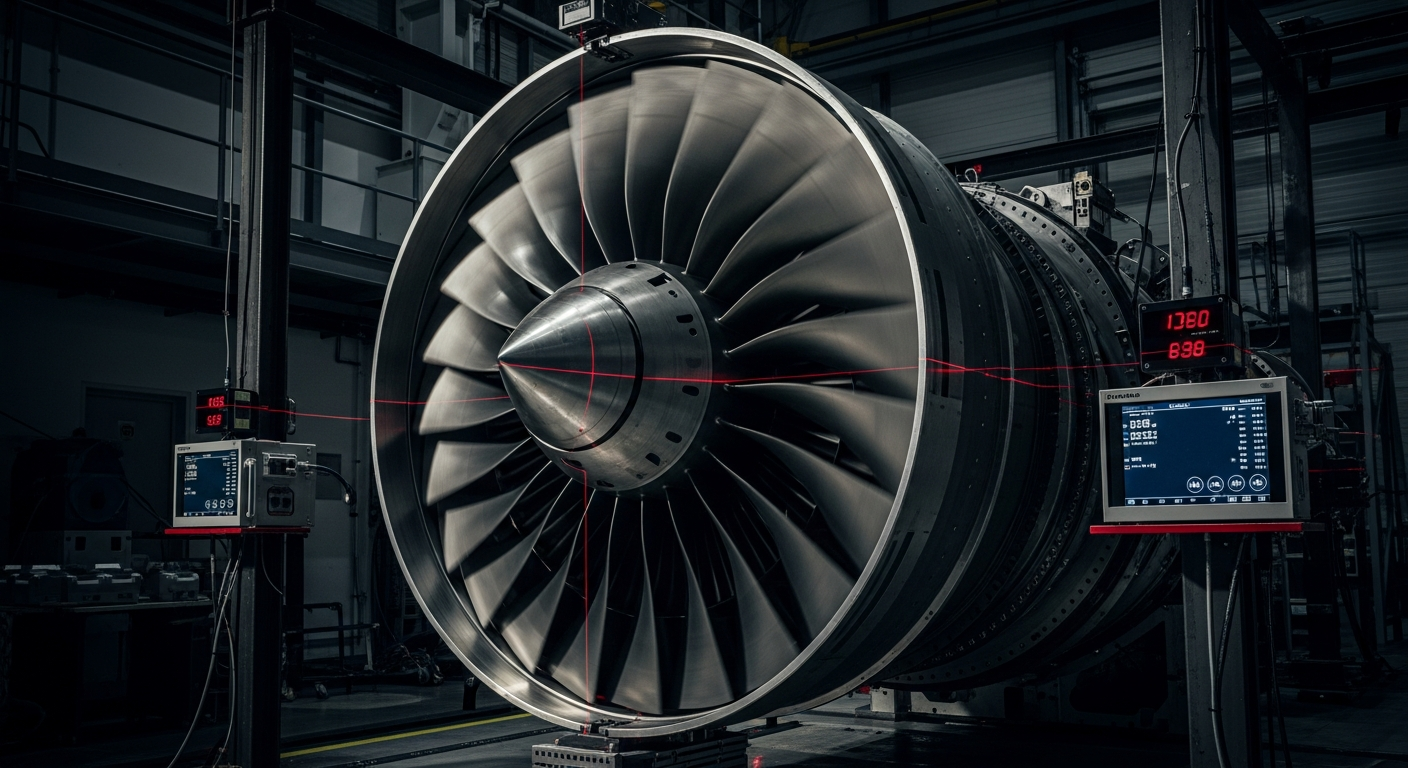
Modern machinery, especially devices operating at thousands of revolutions per minute (RPM) like jet engines, gas turbines, or high-speed centrifuges, exists on a razor's edge. The smallest deviation from perfect symmetry in a rotating component can quickly escalate from a minor vibration into a catastrophic failure. The source context vividly warns that jet engines "tread a fine line between working as intended and vaporizing into a cloud of lethal shrapnel"—a stark reminder of the immense energies involved.
At the core of this risk is mass imbalance. Even a discrepancy as tiny as a single milligram, when spinning at tens of thousands of RPM, generates significant centrifugal forces. These forces create vibrations, which in turn cause metal fatigue, wear on bearings, and structural stresses. Over time, or under specific resonant frequencies, these seemingly minor issues can lead to component disintegration, with potentially devastating consequences for both equipment and personnel. For aerospace, maritime, or power generation industries, precision is not merely an aspiration but an absolute imperative for safety and operational longevity.
Engineering Ingenuity: Building Precision from Scratch
Achieving sub-milligram balancing is typically the domain of highly specialized, multi-axis industrial balancing machines—costly pieces of equipment found in factories and dedicated research facilities. These systems often employ an array of sensors, laser guidance, and sophisticated software to measure and correct imbalance dynamically, meaning while the component is rotating at speed.
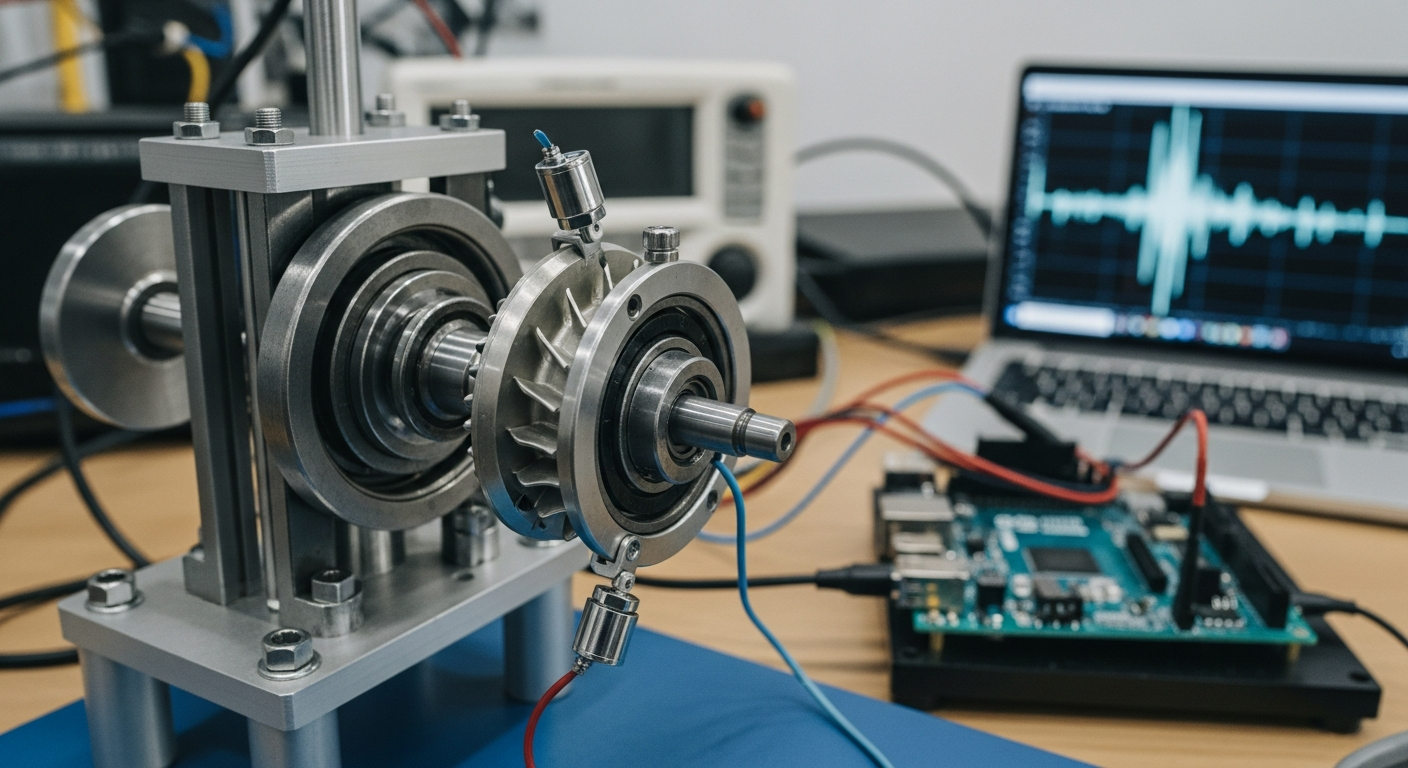
What makes the recent DIY dynamic balancer project so remarkable is its ability to replicate, and in some cases even surpass, this level of precision outside of such an industrial behemoth. While specific details of the build might vary, such a DIY system typically involves a meticulously crafted rotating spindle, highly sensitive vibration sensors (like piezoelectric accelerometers), and a microcontroller or single-board computer (e.g., Arduino or Raspberry Pi) running custom-written software. This software performs complex signal processing, often employing Fast Fourier Transforms (FFT), to accurately pinpoint the magnitude and angular position of the imbalance.
The dynamic nature of the balancer means it can detect imbalance across different speeds, identifying both static and couple imbalances. The achievement of 1 mg precision is a testament not just to the hardware, but to the iterative calibration, algorithm refinement, and deep understanding of vibration physics applied by its creator. It's a prime example of high-level engineering thought translated into an accessible, practical solution.
Democratizing High-Precision Engineering
The implications of such a DIY feat are significant. Firstly, it suggests a potential democratization of high-precision engineering tools. Smaller businesses, startups, educational institutions, or even specialized hobbyists and repair shops, which might not have the capital for industrial-grade balancers, could leverage similar innovative approaches. This could reduce barriers to entry for advanced prototyping, specialized repairs, and small-batch manufacturing of high-performance components.
Secondly, it highlights the power of the 'maker' movement and open-source engineering. By sharing knowledge and designs, such projects can inspire further innovation, leading to a ripple effect across various industries. While regulatory oversight for critical components will always mandate certified equipment, the underlying technical principles and achievable precision demonstrated by DIY solutions cannot be ignored.
The "Rusty Tablet" Perspective: A Testament to Human Ingenuity
From the perspective of Rusty Tablet, this project epitomizes the spirit of innovation we often highlight: the drive to solve complex problems with ingenuity and often, with limited resources. It underscores that foundational engineering principles, meticulous execution, and creative problem-solving are just as crucial as state-of-the-art industrial equipment.
This DIY balancer project serves as a powerful reminder that while the marvels of modern engineering push boundaries, they simultaneously demand absolute precision. It's a delicate balance (pun intended) between complex theoretical designs and the exacting practicalities of material science and mechanics. The ability to achieve such precision, independently, is not just a technical victory but a profound statement on human potential in engineering.
Public Sentiment
"Absolutely incredible! To get that kind of precision outside of a major industrial lab is mind-blowing. Makes you wonder what else hobbyists could achieve." - Aviation Enthusiast
"While impressive, I'd still prefer my airline's engines balanced by certified professionals with million-dollar machines. Safety first, always." - Concerned Traveler
"This is exactly what innovation looks like. Breaking down barriers and showing that high-tech doesn't always mean high cost. Imagine the educational impact!" - STEM Educator
"A great reminder of the hidden complexities in everyday tech. You never think about balancing, but it's literally life or death for something like a jet engine." - Engineer (non-aviation)
Conclusion
The DIY dynamic balancer achieving 1 milligram precision for turbine rotors is more than just a clever project; it's a significant engineering milestone. It reinforces the critical importance of exact balance in high-speed mechanical systems, where the margin for error is virtually nonexistent. More importantly, it showcases the profound impact of combining deep technical understanding with innovative problem-solving, proving that ingenuity can indeed stand toe-to-toe with industrial might. This achievement not only pushes the boundaries of what is considered 'doable' by an individual but also offers a glimpse into a future where high-precision tools are more accessible, fostering a new wave of engineering exploration and development.