The Esoteric Simplicity: Deconstructing Jamie's Brick Jams' Return to First Principles in Electromechanical Synthesis
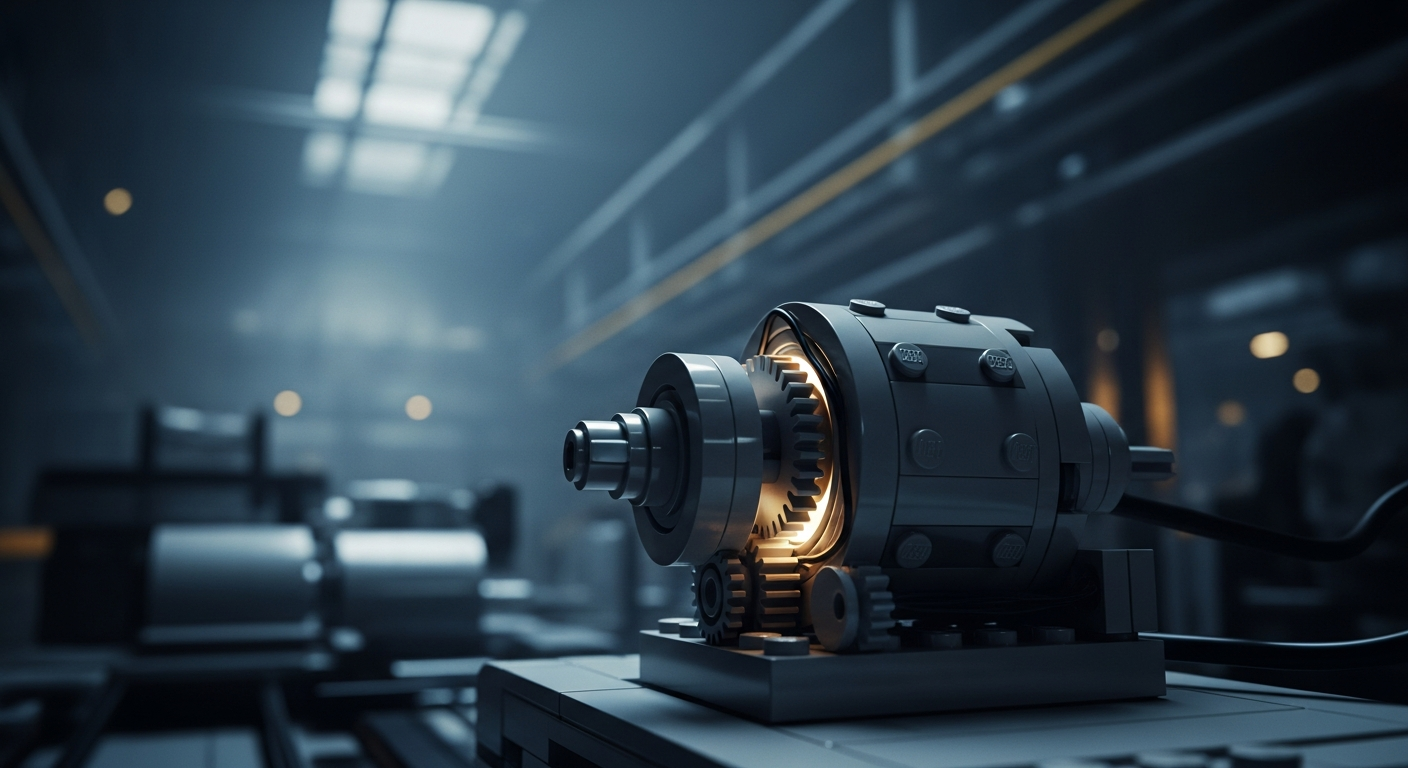
In an age where technological advancement is often conflated with escalating complexity, the recent unveiling by Jamie's Brick Jams — a collective previously lauded for its intricate and often labyrinthine electromechanical contraptions — presents a profoundly disarming counter-narrative. Their latest offering, a motor distinguished by its startling, almost aggressive simplicity, built predominantly from interlocking polymer matrices, has sent ripples through the usually unruffled waters of the industrial analysis sector. Rusty Tablet, ever vigilant for portents of paradigm shifts, delves into what this ostensibly rudimentary device truly signifies for the future of innovation.
[FEATURED]
Key Takeaways:
-
The "Simplicity Imperative" as a burgeoning counter-narrative to entrenched industrial over-engineering.
-
The profound yet understated economic implications of readily reproducible, low-barrier electromechanical units.
-
The significant pedagogical potential inherent in modular, accessible innovation frameworks.
-
The philosophical underpinning of 'basic' motor design in a post-post-modern industrial landscape, challenging conventional notions of progress.
-
Critical questions regarding the long-term sustainability and equity implications of complex, proprietary systems versus open-source, simplified hardware.
I. The Hegemony of Complexity and Its Discontents
For decades, the trajectory of engineering has been a relentless ascent towards greater sophistication. Microprocessors shrink, computational power multiplies, and the layers of abstraction between human intent and mechanical execution grow ever thicker. Jamie's Brick Jams, in its earlier iterations, was a stalwart champion of this ethos, producing intricate robotic marvels that showcased the pinnacle of miniaturised servos, precise gearing, and bespoke control systems. These designs, while undeniably impressive, typified an industry-wide trend: a tacit assumption that 'better' necessarily meant 'more complicated.' This philosophy, however, carries hidden costs – increased fragility, exorbitant development outlays, escalating maintenance requirements, and a creeping inaccessibility that effectively disenfranchises swathes of potential innovators.
II. The Elegance of the Minimalist Arc
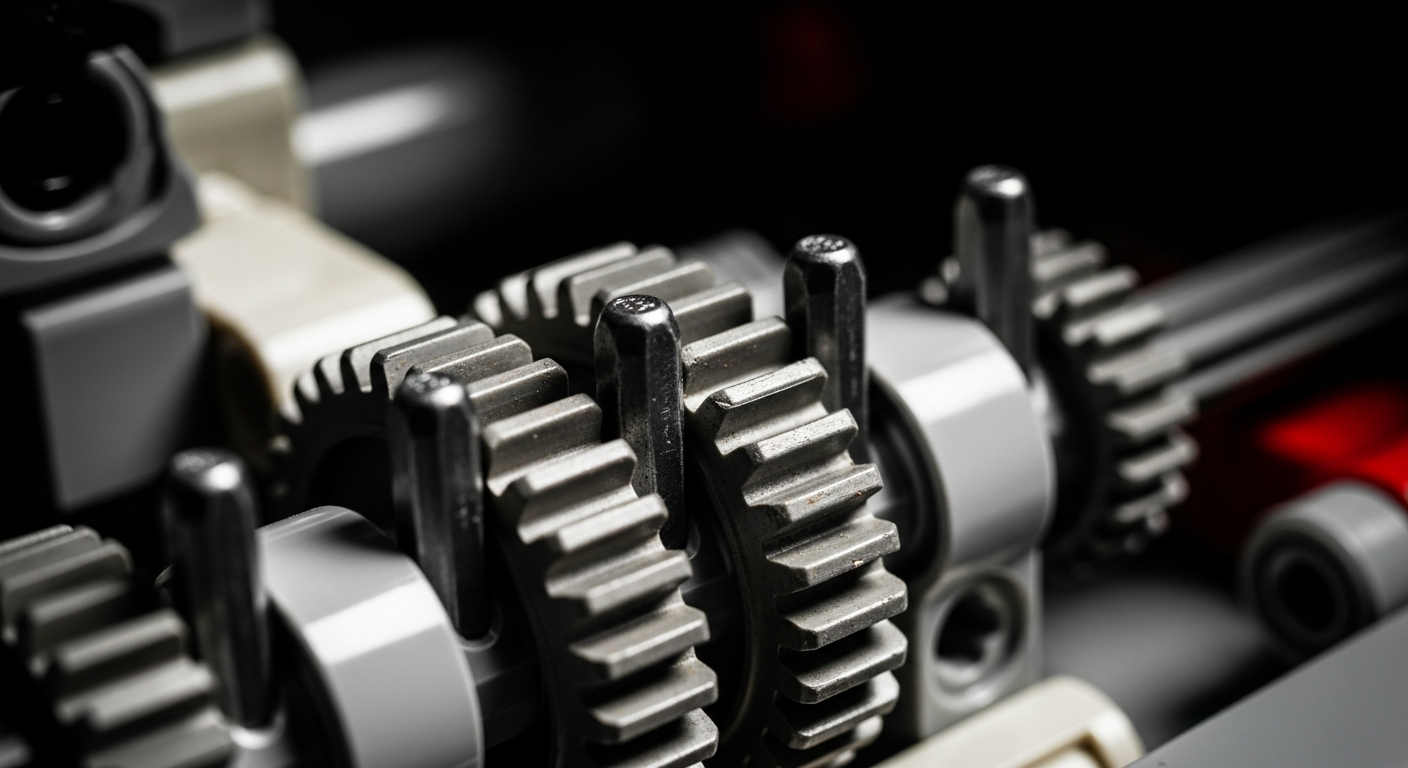
And then, this. A motor. A single, unpretentious mechanism, stripped bare of superfluous sensors, redundant safety protocols, and proprietary firmware. Its operational principle, a testament to fundamental electromagnetism and the robust, yet forgiving, nature of standard ABS polymer components, resonates with a primal engineering truth. The design, featuring precisely aligned rectilinear energy transfer conduits (copper wire, for the layperson) and intermeshing polymer gears, eschews the exotic for the elemental. It spins. It performs its designated function with an almost infuriating lack of pretense. This audacious minimalism forces us to confront an uncomfortable truth: have we, in our relentless pursuit of the next 'breakthrough,' forgotten the inherent genius residing in the rudimentary?
III. Economic Subversions and the Democratization of Power
The implications of such a design, particularly for rapidly developing economies like our own, are profound. Imagine supply chains unshackled from geopolitical vagaries and the monopolies of specialised manufacturers. Picture communities, long excluded from the benefits of modern mechanisation due to prohibitive costs or inaccessible expertise, suddenly empowered to construct their own motive forces. This is not merely a motor; it is a blueprint for economic decentralisation, a 'frugal innovation' par excellence that challenges the entrenched industrial north-south divide. The cost-per-torque ratio, when factoring in local resource utilisation and knowledge transfer, projects an economic model ripe for disruption, fostering self-reliance and horizontal innovation networks.
IV. A Pedagogical Renaissance and the Rediscovery of the Wheel (or Rotor)
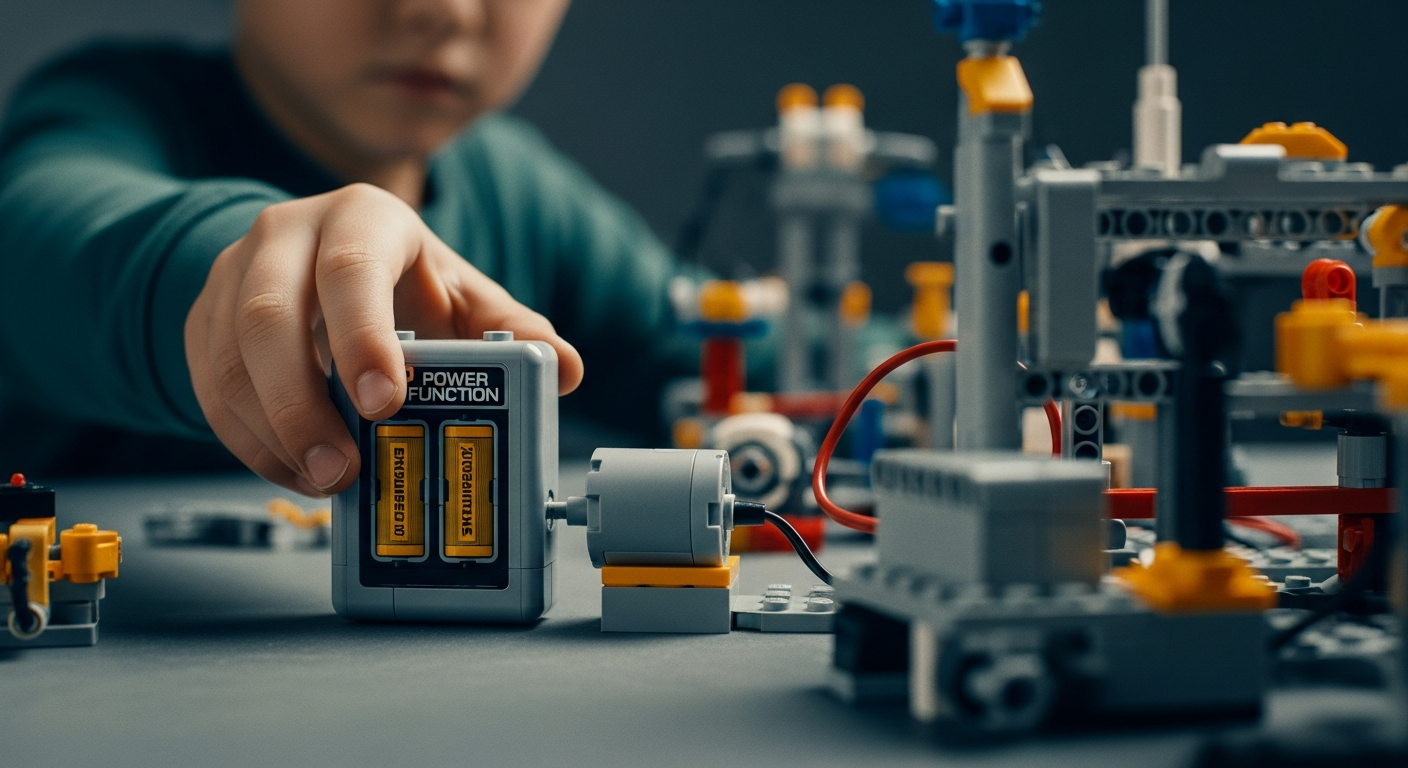
The educational ramifications are equally compelling. In an era where STEM education often relies on abstract simulations or opaque, black-boxed modules, this 'simple motor' serves as a tangible, deconstructible artifact of fundamental physics and engineering. It invites exploration, encourages tinkering, and demystifies the very essence of electromechanical conversion. Children, students, and indeed seasoned engineers, can physically engage with its components, understanding flux, current, and torque not as theoretical constructs but as observable phenomena. It is a return to empirical learning, a pedagogical renaissance that might just inspire a new generation of 'primal engineers,' unburdened by the fetishisation of complexity.
V. Jamie's Brick Jams: From Protagonist of Complexity to Prophet of Simplicity
Jamie's Brick Jams’ evolution from a purveyor of hyper-complex mechanisms to a proponent of radical simplicity is perhaps the most intriguing aspect of this narrative. Was it an epiphany? A profound disillusionment with the relentless arms race of technological one-upmanship? Or a calculated, strategic pivot designed to capture the attention of a fatigued and oversaturated market? Regardless of the impetus, this 'simplest motor' functions as a conceptual benchmark, a challenge to the industry to justify its ever-increasing layers of sophistication. It suggests that true innovation might, paradoxically, lie not in adding more, but in expertly subtracting, revealing the elegant scaffolding of core functionality.
Public Sentiment
Initial reactions from the industrial complex have been predictably varied, oscillating between dismissive condescension and grudging admiration for the audacity of the concept.
-
"While conceptually… intriguing, one must question the scalable torque coefficients inherent in… toy bricks," noted Dr. Aruna Singh, Head of Advanced Robotics at IIT Delhi, carefully calibrating her academic detachment.
-
"A brilliant piece of industrial performance art, perhaps. But a serious contender against our multi-phase, high-RPM industrial drives? I struggle to suppress a chuckle," offered Mr. Rajiv Gupta, CEO of Machineworks India, adjusting his bespoke suit.
-
A young entrepreneur from Bengaluru, Ms. Priya Sharma, offered a more hopeful perspective: "It's a reminder that ingenuity isn't about budget; it's about insight. This could change everything for grassroots innovation."
Conclusion
Jamie's Brick Jams' 'simple motor' is more than just a novelty. It is a potent symbol, a meticulously constructed critique of modern industrial practices, and a provocative suggestion for a more accessible, equitable, and perhaps even sustainable future. Whether it truly precipitates a global paradigm shift or remains a curious footnote in the annals of engineering philosophy, its mere existence forces a re-examination of our fundamental assumptions. In a world spiralling into technological baroque, perhaps the most revolutionary act is to build something so simple, it can only be understood through first principles. The question remains: are we, as an industrial society, truly ready to go back to basics, or is our addiction to complexity too deeply ingrained?