Key Takeaways:
-
Compromised Ideals: The "art and science" blend often yields to cost-driven pragmatism, sacrificing aesthetic or human-centric design.
-
Superficial Innovation: Much touted "innovation" is frequently iterative, driven by market demand for novelty over genuine breakthroughs.
-
Material Constraints: Optimal material choices are often sidelined by economic realities, supply chain issues, and cost pressures.
-
Rapid Prototyping's Trap: The speed of 3D printing can encourage rushed development, masking deeper flaws rather than fostering meticulous refinement.
-
Tech's Unseen Costs: Over-reliance on AI, IoT introduces complexity, security risks, ethical dilemmas, and new environmental burdens.
The Illusion of Seamless Integration
Design engineering's narrative as a harmonious blend of art and science is compelling, yet often misleading. While crafting solutions that are technically robust and aesthetically pleasing is commendable, commercial and industrial realities frequently sacrifice one for the other. The "art" or human-centric aspect is often a secondary concern, especially when faced with aggressive cost-cutting or tight production schedules. An elegant form factor can quickly be discarded if it adds a fraction of a cent to manufacturing costs or complicates assembly. This tension reveals less a seamless fusion and more a constant battle, with pragmatic engineering frequently emerging victorious, leaving designs functional but devoid of genuine artistry or user empathy.
Innovation, Or Just Iteration?

The pervasive use of "innovative solutions" often masks a more mundane truth: much of what is heralded as groundbreaking is sophisticated iteration. In fiercely competitive markets, pressure to deliver "new" products prioritizes incremental features or minor aesthetic refreshes over truly transformative breakthroughs. Genuine innovation—that which redefines paradigms—requires significant investment in time, research, and capital, coupled with a high tolerance for failure. This contrasts sharply with rapid product cycles, where "innovation" can often mean little more than a faster processor or a new color option. Are we witnessing constant revolution, or simply adept repackaging of existing ideas, driven by a market craving novelty above all else?
Material Promises vs. Market Realities
The critical role of materials science in design engineering is undeniable. Understanding material properties is foundational. However, the theoretical ideal of selecting the perfect material for performance, sustainability, and cost often clashes violently with real-world market realities. Supply chain instabilities, geopolitical tensions, and the sheer economic advantage of cheaper materials frequently force significant compromises. While lightweight carbon fiber or smart medical devices are inspiring, most consumer and industrial products remain beholden to the economics of steel, standard plastics, and readily available alloys. The rhetoric of sustainable, cutting-edge materials often overshadows persistent reliance on less ideal options driven by profit margins.
The Prototyping Paradox
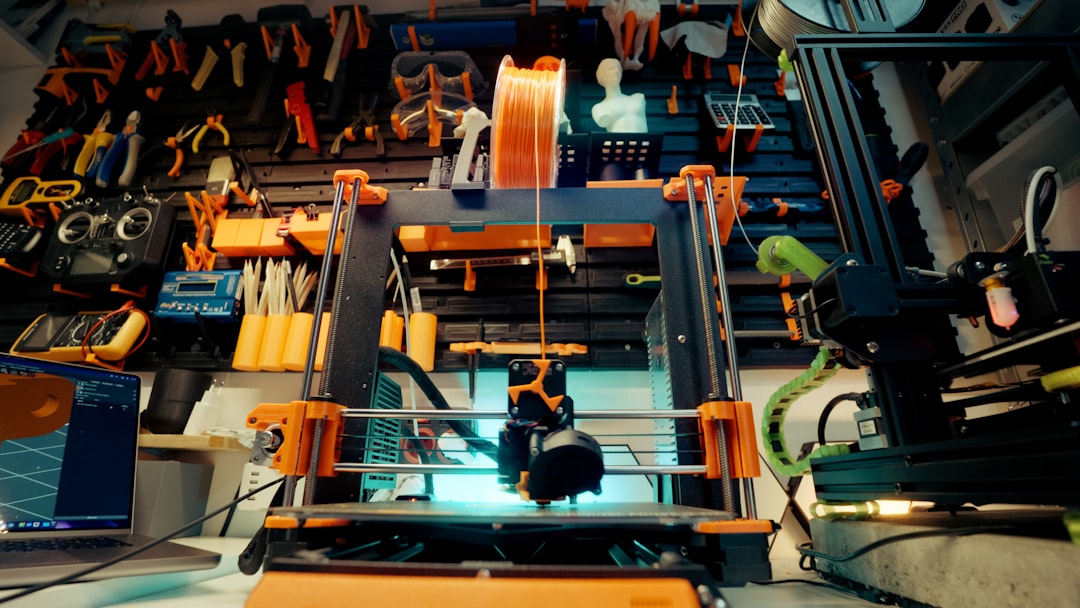
Prototyping and testing are vital. The advent of additive manufacturing has indeed accelerated the creation of complex geometries. Yet, this rapid prototyping capability, while beneficial, introduces its own set of challenges—a paradox of efficiency. The ease of quickly printing a prototype can lead to a 'fail fast' culture that risks becoming 'fail often without deep analysis.' Instead of meticulous refinement, there's a danger of superficial problem-solving, where quick fixes are applied without fully understanding root causes. This accelerated pace can bypass critical analytical stages, leading to designs that pass initial tests but falter in long-term reliability or scalability, pushing expensive rectifications further down the production line.
Future Tech: A Double-Edged Sword
The future of design engineering is linked to artificial intelligence, machine learning, and the Internet of Things. While these technologies promise sophisticated, connected systems, their integration is far from a universally positive narrative. The pursuit of "smart" and "connected" often introduces layers of complexity, security vulnerabilities, and ethical quandaries. Dependence on AI can lead to opaque decision-making, while widespread IoT deployment creates vast attack surfaces and privacy concerns. Moreover, increased automation raises legitimate questions about job displacement and the diminishing role of human intuition. While design engineers aim for sustainable solutions, the energy footprint and resource demands of an ever-more interconnected, data-hungry world also present a significant, downplayed environmental burden.
Public Sentiment
"I bought a smart home device last year, touted for 'intuitive design.' A year later, it's riddled with software bugs, functionality locked behind a subscription, and constantly collecting data. 'Innovation' feels more like a thinly veiled excuse to sell me something half-baked." – Frustrated Consumer, Dallas, TX
"My company's last launch focused on 'sustainable materials' and 'eco-friendly design.' In reality, it was a slight tweak to plastic, and 'eco-friendly' meant a smaller box. Marketing did the heavy lifting, not the engineers." – Disillusioned Project Manager, Detroit, MI
"They talk about 'collaborative teams,' but it's always tight deadlines and the lowest bidder for components that dictate the final product. All the fancy design thinking workshops won't change that." – Experienced Manufacturing Engineer, Pittsburgh, PA
Conclusion
Design engineering, despite its grand proclamations, operates firmly within the confines of practical, economic, and often cynical market forces. The romantic ideal of bridging art and science, or delivering truly revolutionary solutions, frequently succumbs to cost-efficiency, incremental updates, and the uncritical adoption of new technologies without fully reckoning with their drawbacks. For the field to mature, it must engage in a more honest self-assessment, acknowledging the profound challenges that hinder genuine innovation and the persistent tension between what is possible and what is merely profitable. Only then can design engineering move beyond the gloss and truly craft solutions with integrity and foresight.