
Meta Platforms has announced a profound strategic shift for its Horizon Worlds metaverse platform, moving away from its original VR-first orientation to embrace a mobile-centric future. This decision, revealed by Samantha Ryan, Reality Labs' VP of content, in a recent blog post, explicitly separates Meta's Quest VR platform from its Worlds platform, signaling a clear admission of the challenges in building a mass-market metaverse solely on virtual reality.
[FEATURED]
Key Takeaways
-
Explicit Separation: Meta is "explicitly separating" its Quest VR platform from its Worlds platform, a significant strategic uncoupling.
-
Mobile-First Focus: Horizon Worlds will now shift its focus to be "almost exclusively mobile," aiming for broader market penetration.
-
Competitive Reorientation: The new approach positions Meta to directly compete with popular mobile-first social platforms like Roblox and Fortnite.
-
Reality Labs Restructuring: This pivot follows substantial layoffs (approximately 10% of Reality Labs), closure of three VR studios, and discontinuation of content for VR fitness app Supernatural and its metaverse for work.
-
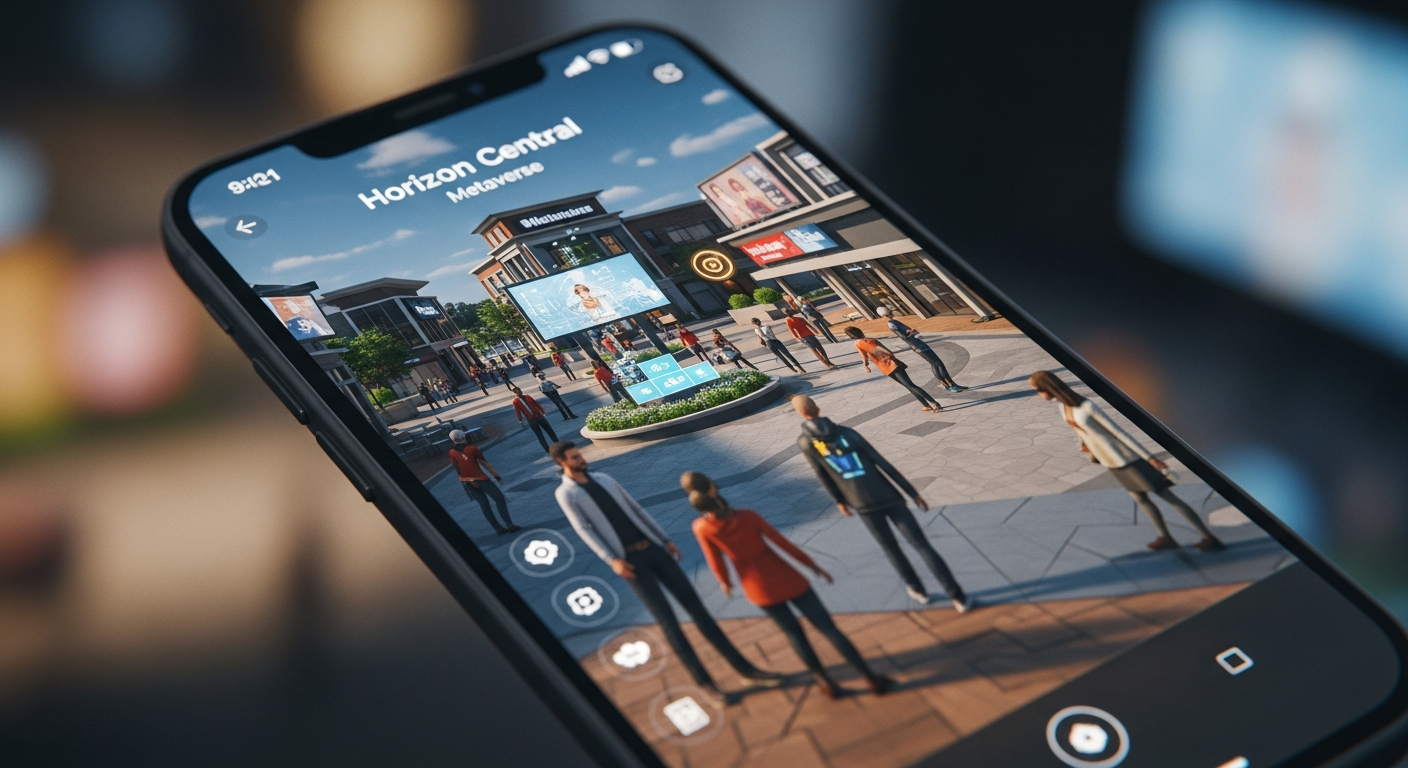
New Engine Underpins Change: Horizon Central, the metaverse's town square, already runs on the new Meta Horizon game engine, facilitating this cross-platform shift.
Main Analysis: A Strategic Retreat or a Pragmatic Advance?
The Pivot Explained: From Immersion to Accessibility
Meta's initial vision for the metaverse was deeply intertwined with virtual reality, positing VR headsets as the primary gateway to a fully immersive digital realm. However, the path to widespread VR adoption has proven challenging, marked by high hardware costs, technical barriers, and a smaller user base compared to traditional mobile platforms. The explicit separation of Quest VR from Horizon Worlds indicates an acknowledgment that tying the metaverse's fate solely to VR headsets has limited its growth potential.
Samantha Ryan's statement clarifies that the company is now "shifting the focus of Worlds to be almost exclusively mobile." This means optimizing the experience for smartphones and tablets, platforms that billions already own and use daily. The move is less about abandoning VR entirely – Quest headsets will still offer access – but more about prioritizing the largest possible audience for Horizon Worlds' development and content creation.
Strategic Rationale: Competing for Mindshare in a Crowded Market
The most telling aspect of this strategic recalibration is Meta's stated intention to "better compete with platforms like Roblox and Fortnite." These gaming and social platforms have successfully cultivated massive, engaged communities, primarily on mobile, by offering user-generated content, social interaction, and accessible gameplay. Their success lies in their ubiquity and low barrier to entry.
By pivoting Horizon Worlds to mobile, Meta is aiming for a piece of this established, lucrative pie. It's a recognition that the foundational elements of a metaverse – social interaction, digital identity, content creation, and shared experiences – can thrive on mobile just as effectively, if not more so, than in a VR-only environment, particularly for casual users. This approach positions Horizon Worlds as a broader social destination rather than a niche VR application.
Reality Labs Reassessment: The Cost of Ambition
This strategic shift does not occur in a vacuum. It follows a period of significant turmoil and re-evaluation within Meta's Reality Labs division, the engine behind its metaverse endeavors. The recent layoffs, affecting approximately 10 percent of the division, the closure of three VR studios, and the cessation of new content for Supernatural (a VR fitness app) and its metaverse for work product (Quest for Business/Workrooms), paint a picture of a company under pressure to justify its immense investments in the metaverse. The initial high burn rate and slower-than-anticipated adoption for VR-first metaverse concepts necessitated a hard look at the strategy.
The re-prioritization towards mobile suggests a more fiscally responsible and market-driven approach, seeking to leverage existing technological infrastructure and user habits rather than solely pioneering new ones that require significant hardware penetration.
Implications for Meta's Broader Metaverse Vision
Does this mobile pivot dilute Meta's original, grand vision for an immersive metaverse? For hardcore VR enthusiasts, it might seem like a retreat. However, for Meta, it could be a crucial step towards making the metaverse a reality for a wider audience. By proving out the core social and content creation loops on mobile, Meta can build a foundation that might eventually bridge back to more immersive VR experiences as hardware becomes more sophisticated and affordable.

This strategy is not without its challenges. Competing with Roblox and Fortnite means navigating an already saturated market with established incumbents and strong network effects. Meta will need to differentiate Horizon Worlds significantly, offering compelling reasons for users to shift their attention.
Public Sentiment
Industry analysts have largely interpreted Meta's pivot as a pragmatic, albeit belated, adjustment to market realities. Many view it as an admission that the 'VR-first' metaverse was ahead of its time, or at least, too narrow a path for mass adoption. Critics, however, might see it as Meta backtracking on its foundational promise of immersive virtual worlds, questioning the long-term commitment to high-end VR. Online commentators frequently highlight the potential for greater accessibility, noting that "Meta realizing everyone has a phone, but not a Quest, is a huge step." Others express skepticism, suggesting Meta is simply "throwing everything at the wall to see what sticks" given the scale of its previous metaverse investments.
Conclusion
Meta's decision to shift Horizon Worlds to an almost exclusively mobile platform represents a critical inflection point in its metaverse journey. It's a strategic maneuver born out of necessity and pragmatism, acknowledging the current limitations of VR market penetration while capitalizing on the ubiquitous reach of mobile devices. Whether this pivot will ultimately pave the way for Meta to achieve its ambitious metaverse goals remains to be seen. The path ahead involves intense competition and the challenge of convincing a vast mobile audience that Horizon Worlds offers a uniquely compelling social and creative experience. This new direction, however, suggests a more grounded and potentially more viable approach to building the next generation of digital interaction.