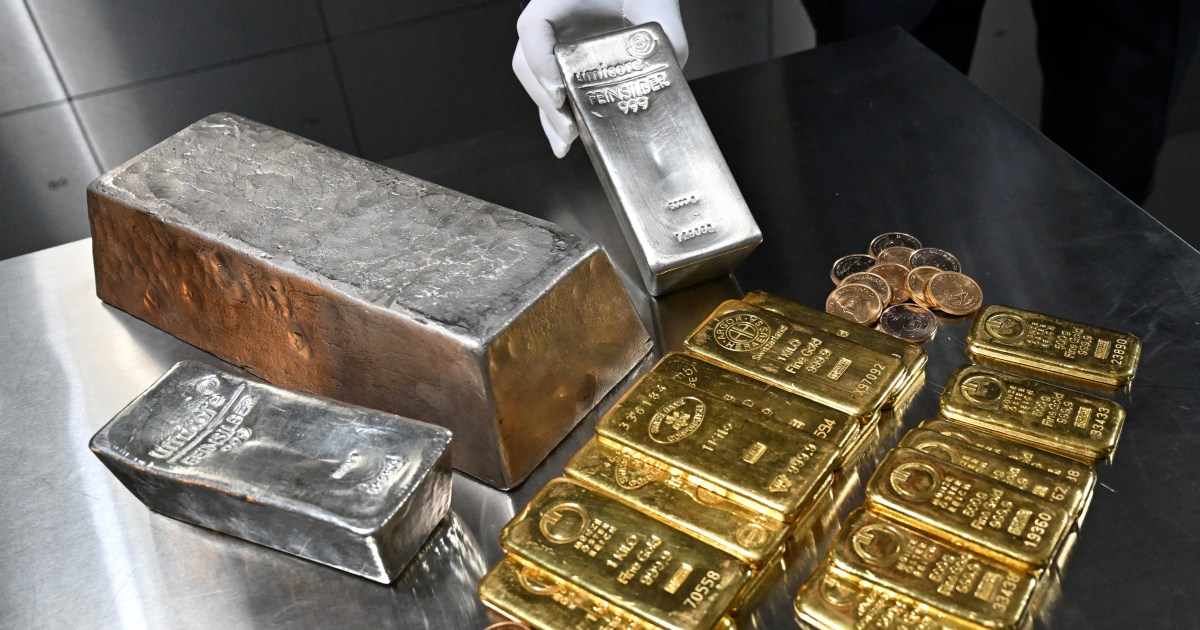
Beirut, Lebanon – Inside his Beirut jewellery store, Simon Bouri, a veteran of the trade, fielded calls, a cigarette in hand, his usual composure rattled. Beside him, Aziz Arida, a commodities expert, idly manipulated worry beads. The scene encapsulated a wider bewilderment gripping Lebanon’s gold market: an unprecedented and dizzying fluctuation in precious metal prices that has left even decades-long practitioners questioning fundamentals.
By Wednesday, a troy ounce of gold hovered around $5,000, a dizzying midpoint between a recent peak of $5,595 and a low of roughly $4,600. “We cannot predict anything,” Simon confessed, "It's crazy." Turning to Aziz, he asked incredulously, “Have you seen a 20 percent fluctuation in one day before?” Aziz, whose experience spans volatile markets from wheat to other perishables, offered a solemn reply: “Only once. Chornobyl.” He referred to the 1986 nuclear disaster in Ukraine that sent wheat prices soaring. Yet, unlike that infamous event, no singular, identifiable cause has emerged to explain gold and silver’s current radical shifts.
Lebanon’s Enduring Trust in Gold
This market anomaly is particularly acute in Lebanon, a country mired in one of modern history's worst economic and banking crises since 2019. Even before this cataclysm, many Lebanese instinctively turned to precious metals, especially gold, as a bulwark against inflation and a shield for their savings. For an older generation, the 2019 crisis was a grim echo of past currency collapses, including the civil war era when the Lebanese lira plummeted from 3 to over 1,000 against the US dollar. Banks, having repeatedly failed their depositors, have largely forfeited public trust. Gold, by contrast, has been viewed as a steadfast investment, its value historically growing steadily through times of geopolitical or economic uncertainty. This deep-seated reliance makes the current volatility all the more disquieting.
Global Crosscurrents and Local Impact
The past year has undeniably seen its share of global instability, especially in the Middle East. Geopolitical commentators point to a "volatile cocktail" of factors: the looming specter of Donald Trump's return to the U.S. presidency, his leveraging of tariffs, pressure on the Federal Reserve, and past threats concerning Greenland, Venezuela, and Iran. While a direct link to gold’s daily fluctuations remains elusive, the sense of overarching global uncertainty undoubtedly contributes to market jitters. As one anonymous Beiruti jeweller curtly put it, "Go ask Trump," reflecting a broader sentiment of exasperated helplessness.

Analysts Divided, Businesses Stalled
The financial community remains split on the underlying causes of this rapid revaluation. Some analysts theorize that more stable economic conditions globally and a strengthening U.S. dollar prompted investors to offload gold when prices peaked. Others contend the sharp drop was a necessary "course correction," reflecting that the commodity had simply become overvalued. Despite the current turbulence, some financial analysts, notably from JP Morgan, anticipate gold continuing its upward trajectory, potentially increasing in value by 30 percent before the close of 2026.
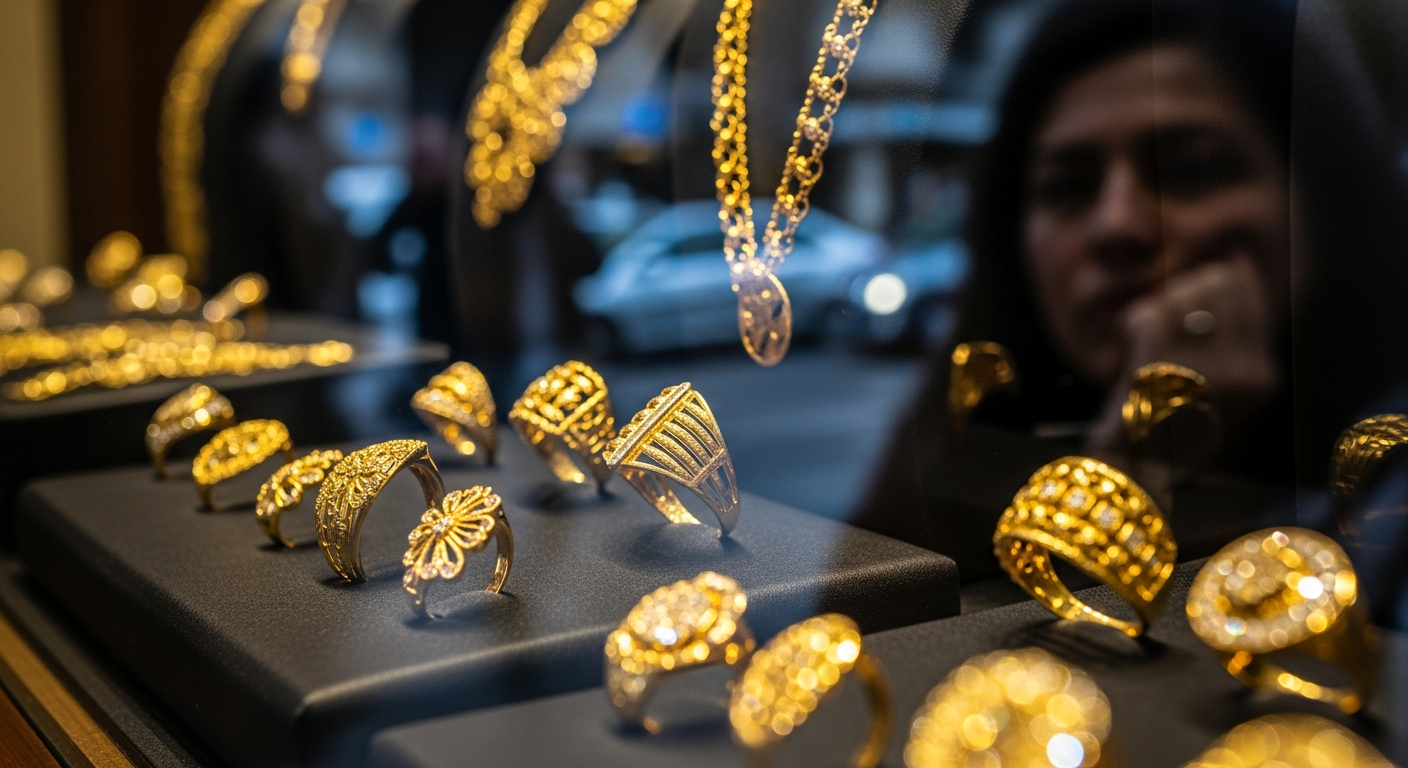
However, the immediate impact on the ground in Beirut is palpable. Khodr, another jeweller, noted a significant slowdown in business. "Work has slowed down," he observed, with gold rings glinting nearby in a glass display. The sudden swings make transactions precarious. Simon, the jeweller, articulated the core dilemma: "It's definitely affecting business. Yesterday, a customer wanted to sell me something with gold, but I couldn't buy it. What if I bought it from him for a certain price, and the second day it costs 10 to 20 percent less?" This hesitancy extends to buyers, who are equally wary of purchasing an asset that could depreciate sharply overnight.
Public Sentiment: "No Logic, It's All Speculation"
The prevailing mood among those directly involved is one of deep confusion and frustration. "Nobody understands this," Khodr stated plainly. Simon reiterated, "It makes no sense. The price shouldn't be this high. The cost of mining and turning it into bars did not change." Aziz concluded, encapsulating the collective bewilderment, "There's no logic. It's all speculation." This sentiment underscores a crisis of confidence not just in the market, but in the very predictability of an asset once considered immutable.
Conclusion
As Lebanon grapples with a proposed "gap law" to address its severe liquidity crisis and an economy heavily reliant on remittances (averaging $6.38 billion annually from 2020-2024, though dropping to $5.8 billion in 2024), the stability of gold has never been more crucial. Yet, this traditional safe haven finds itself in an unprecedented state of flux. The erratic fluctuations pose a significant challenge to individual investors seeking security and to the local economy that relies on the trade of precious metals. Until a clearer understanding of these market forces emerges, the golden enigma of Beirut will likely continue to baffle and impede.