The Last Bastion of the Twisted Circuit: In Praise of the Wire Wrapper
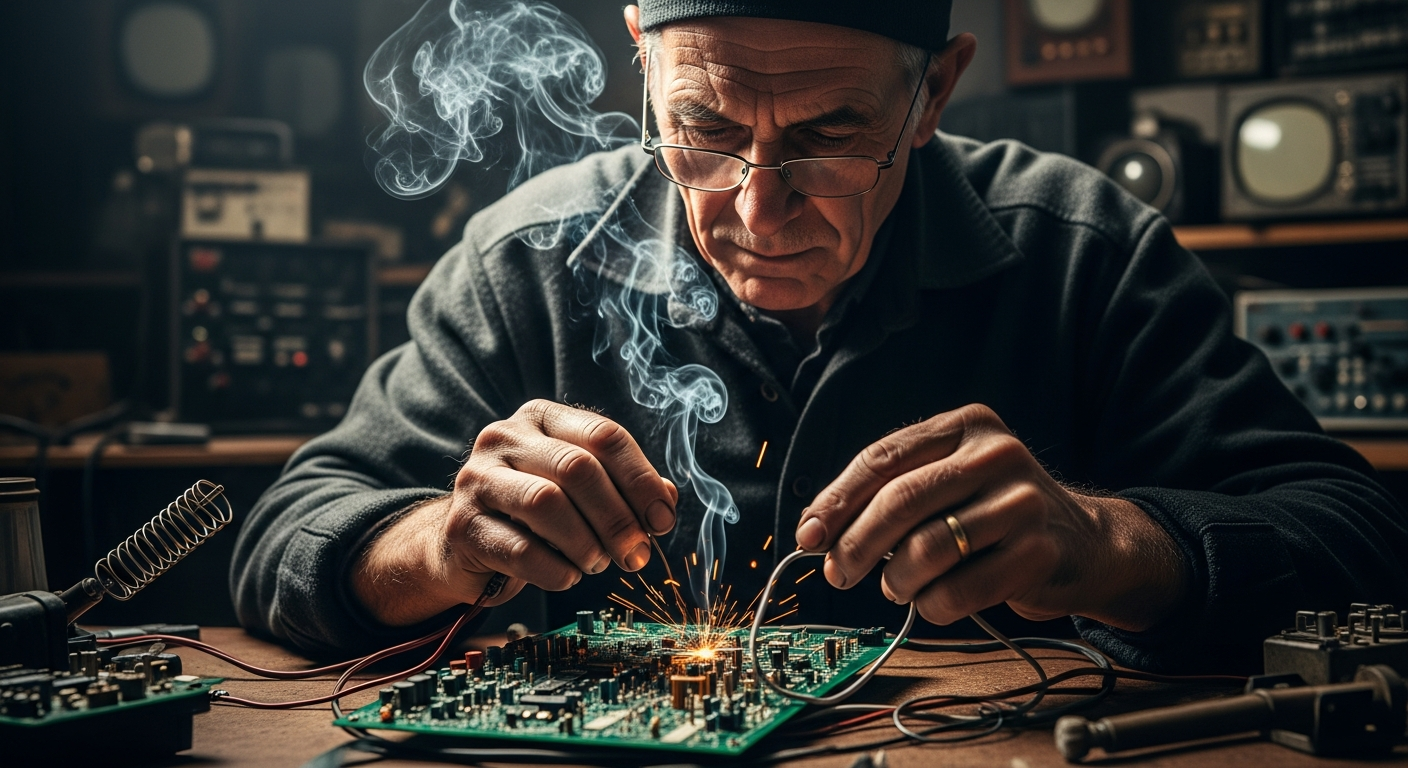
In the hallowed halls of electronic history, often obscured by the blinding glare of microchips and fiber optics, lies the dusty, forgotten shrine of the wire wrapper. These were the titans of a bygone era, the unsung artisans whose meticulous (or spectacularly chaotic) handiwork formed the very backbone of early electronic devices. Before the advent of the Printed Circuit Board (PCB), where electrons flow along pre-determined, boringly precise pathways, circuits were a battleground of human ingenuity, molten solder, and the occasional electrical fire. It was, dare we say, a more human era. [FEATURED]
Key Takeaways:
-
Wire wrappers were the unsung, often singed, architects of pre-PCB electronics.
-
Their craft demanded immense skill, patience, and a high tolerance for troubleshooting spaghetti-like wiring.
-
The rise of PCBs marked the end of an era, replacing artisanal complexity with mass-produced, efficient monotony.
-
We satirically mourn the loss of a 'golden age' where human error was an intrinsic feature, not a bug.
The Golden Age of Tangled Glory
Picture it: a dimly lit workshop, the air thick with the metallic tang of solder fumes and the quiet hum of concentration. Here, perched precariously on a stool, was the wire wrapper. With tools that looked more suited to dentistry than circuitry, they’d meticulously (or, let's be honest, frantically) connect terminal strips, resistors, capacitors, and tubes with lengths of insulated wire. Each connection was a small act of faith, a whispered prayer that the electrons would indeed follow the intended path and not, say, ignite the entire apparatus in a flash of unbridled enthusiasm.
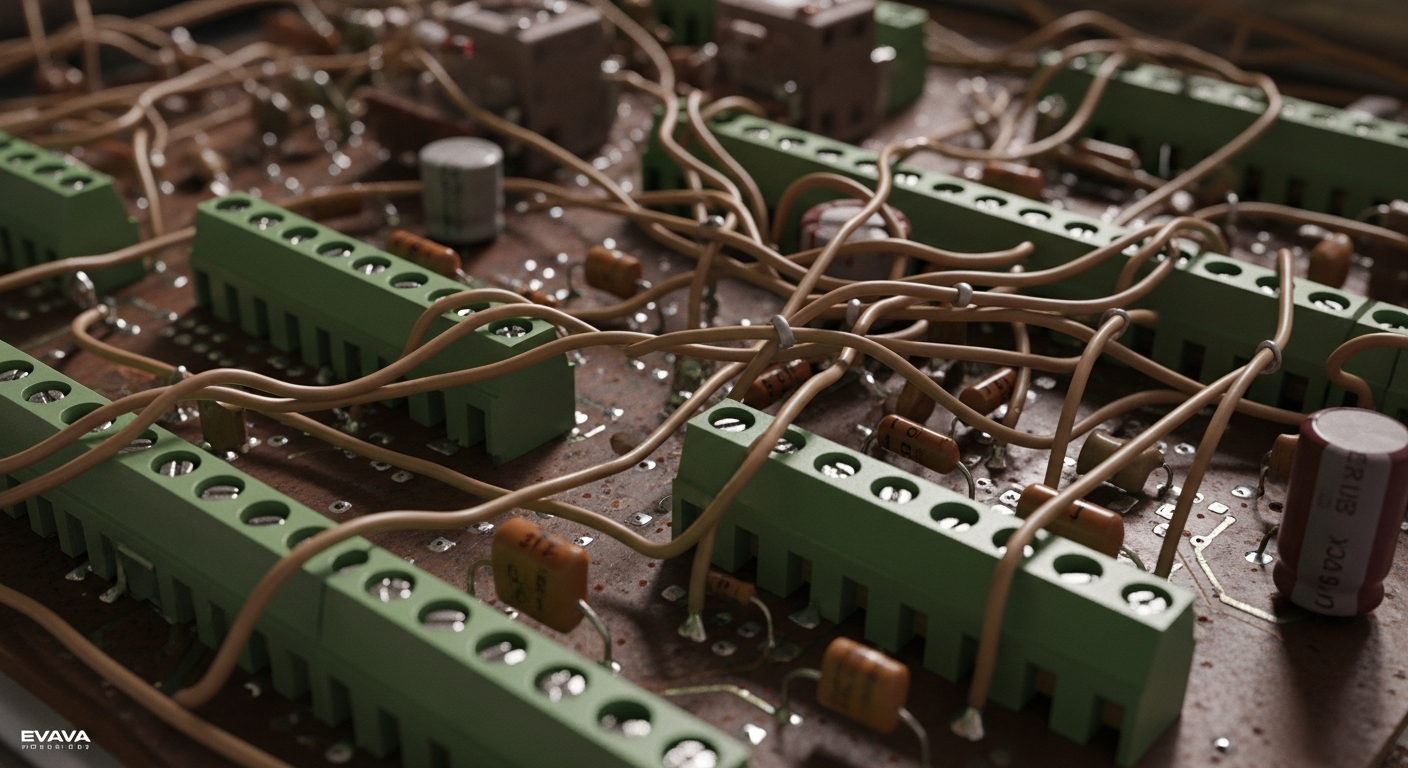
This wasn't just assembly; it was art. The 'beautiful wire connections' mentioned in ancient texts were the Mona Lisas of their time – intricate, fragile, and often requiring hours of 'debugging' (read: cursing and prodding with a multimeter) to resolve an errant strand. Every circuit had a unique personality, a bespoke collection of quirks and potential short circuits. Manufacturers would proudly display these intricate copper tapestries, marveling at the sheer human willpower it took to create something so complex, yet so prone to spontaneously combusting. Ah, the good old days!
The Silicon Betrayal: When Efficiency Became the Enemy
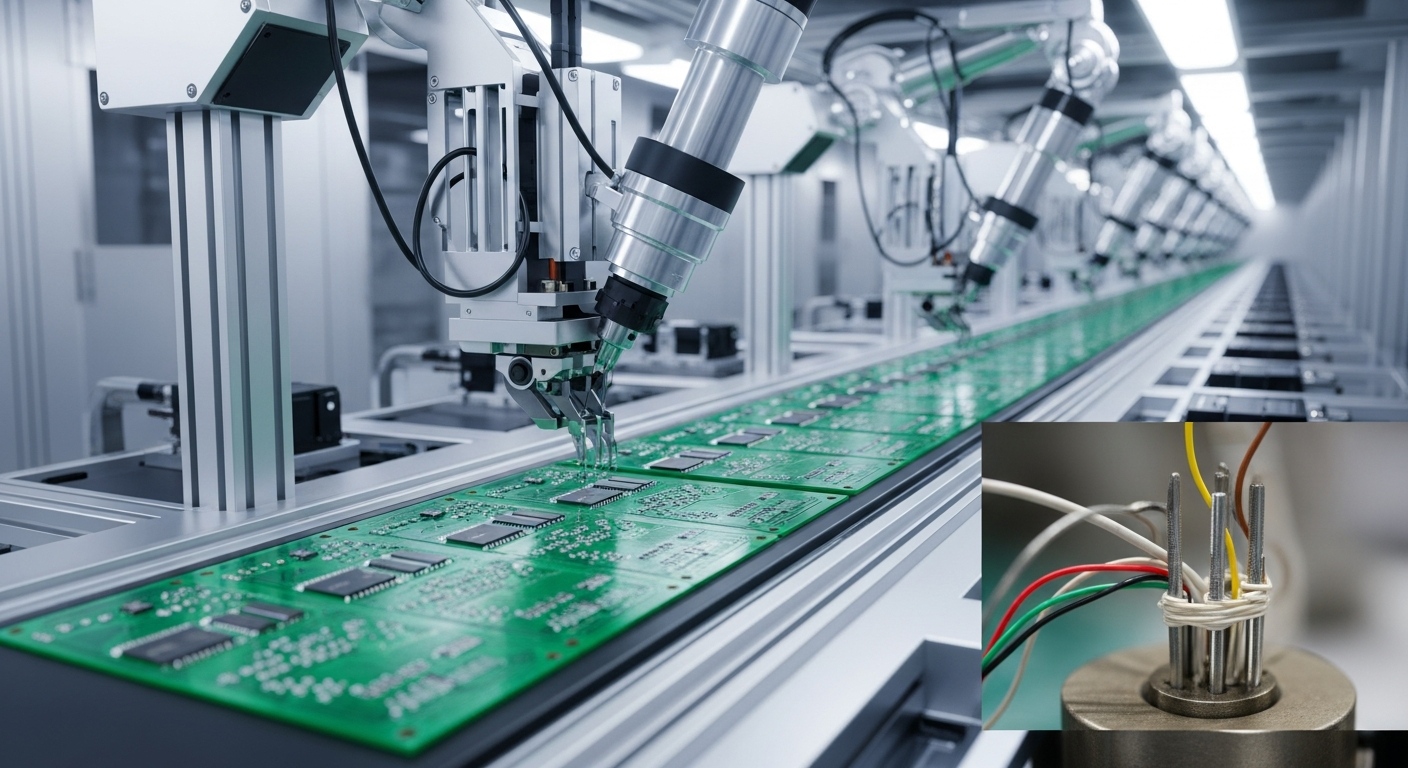
Then came the PCBs. Printed Circuit Boards. Flat, green, utterly devoid of character. They promised efficiency, reliability, and most damningly, repeatability. Suddenly, the human element – the unpredictable, beautiful mess of hand-wired connections – became an obstacle. Why painstakingly wrap hundreds of wires when a machine could etch thousands of identical pathways in minutes? It was a betrayal of the artisanal spirit, a cold, calculated move towards soulless automation.
The wire wrapper, once a revered master of the intricate knot, was relegated to the history books, their calloused fingers replaced by sterile robotic arms. The joy of deciphering a spaghetti diagram, of tracing a fault through a labyrinth of copper strands, was lost. Instead, we got… uniformity. Predictability. Where's the drama in that? Where's the thrill of wondering if your new radio will pick up transmissions from Jupiter or simply melt into a puddle of molten plastic? Modern electronics just work, and frankly, that's just a bit boring.
Public Sentiment: A Fervent Yearning for Filament Failures
Even today, whispers of a return to the 'golden age' can be heard in certain nostalgic corners of the internet.
-
"My first amplifier sounded so much warmer," reminisces 'Circuit_Junkie78' on the retro-tech forum, AnalogDreams. "Probably because the wires were actually glowing hot. You don't get that kind of tactile feedback from a PCB!"
-
"Troubleshooting a hand-wired circuit wasn't just fixing a problem, it was an archaeological dig," claims Dr. Elek Tron, a self-proclaimed 'Vintage Volts' enthusiast. "Every spark was a clue, every puff of smoke a data point. Now it's just 'replace the board.' So pedestrian."
-
"My grandpa always said a proper circuit should feel like a rat's nest that's been electrocuted," posted 'FluxCapacitorFanatic'. "He built a TV that played nothing but static, but it was his static. You can't put a price on that kind of authenticity."
Conclusion: The Unbearable Lightness of Being Efficient
So, as we gaze upon our sleek, silent, and alarmingly functional devices, let us spare a moment for the wire wrapper. The unsung, often under-appreciated hero whose chaotic genius paved the way for our perfectly ordered, yet undeniably less 'spirited,' technological landscape. Perhaps one day, a boutique market will emerge for 'artisanal, hand-wrapped circuits' – exorbitantly priced, highly unreliable, and utterly charming in their capacity for unexpected combustion. Until then, we can only dream of a time when circuits had character, and 'read more' often meant 'grab a fire extinguisher.'