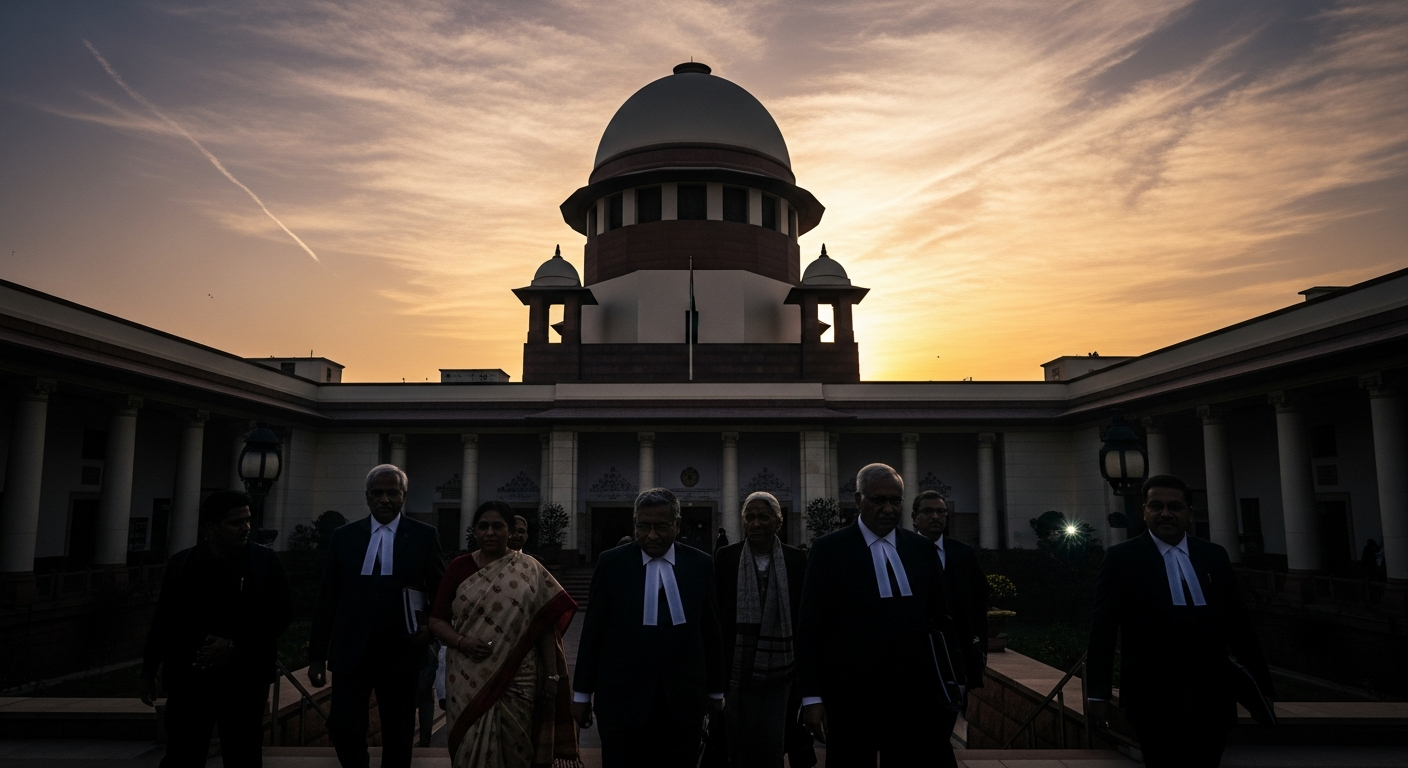
The Indian legal landscape, often a crucible for complex family and financial disputes, is once again under the lens with a contentious appeal reaching the Supreme Court. At its heart lies the formidable legacy of the Kapur family, entangled now with the enduring allure of Bollywood royalty.
Key Takeaways
-
Priya Kapur, second wife of the late Sunjay Kapur, seeks certified copies of Karisma Kapoor's 2016 divorce settlement with Sunjay Kapur.
-
This legal challenge critically questions the sanctity of sealed court documents, especially in high-profile cases involving substantial wealth.
-
The move highlights potential ongoing financial and familial complexities within the Kapur dynasty following Sunjay's demise.
-
The Supreme Court's impending decision could establish a significant precedent for celebrity privacy and judicial transparency in India.
The Unveiling Request: A Deep Dive into Legal Intrusion
At first glance, the request seems straightforward: Priya Kapur, nee Sachdev, has formally appealed to the Supreme Court for access to the sealed divorce records between Karisma Kapoor and Sunjay Kapur, finalized in 2016. However, the implications are anything but simple. Why would the current spouse of a deceased man need details of his previous divorce, especially one that concluded years ago and was largely sealed to protect the privacy of all parties involved?

Legal experts suggest several possibilities. The most prominent theory revolves around inheritance and estate disputes. With Sunjay Kapur’s passing, his substantial industrial fortune would naturally become a point of contention. Details of his previous settlement with Karisma—specifically alimony, asset division, and any agreements pertaining to his children with Karisma—could be crucial in establishing the current distribution of his estate or in challenging existing claims. Priya Kapur, seeking 'certified copies,' implies a formal, legal purpose, suggesting these documents are not merely for curiosity but for strategic use in future or ongoing financial litigation. This request, therefore, is not just about unearthing a past settlement; it's about leveraging historical financial arrangements to influence current and future wealth allocation within the powerful Kapur family.
The Kapur-Kapoor Legacy: A Public Saga
The Kapur-Kapoor marital sagas have consistently provided fodder for headlines. Sunjay Kapur, a scion of an industrialist family, had a high-profile marriage to Bollywood star Karisma Kapoor, which eventually dissolved in a famously tumultuous and protracted divorce. The settlement, when it finally arrived in 2016, was largely private, a common practice in Indian courts to protect children and prevent public spectacle around sensitive financial details.
Karisma Kapoor's public image, coupled with Sunjay Kapur's industrial background, ensured that their divorce, despite its sealed nature, remained a subject of intense public and media speculation. The very premise of the original sealing was to draw a line between public interest and private lives. Priya Kapur's current legal maneuver now seeks to erase that line, reopening old wounds and inviting fresh scrutiny into a chapter that many believed had been definitively closed.
The Privacy Paradox: Celebrity, Wealth, and the Courts
The core of this legal battle lies in the eternal tension between an individual's right to privacy and the public's — or in this case, a litigant's — perceived right to information. In India, divorce proceedings, especially those involving significant wealth, are often kept confidential. This is to safeguard the personal and financial details of the parties involved, preventing misuse and protecting minor children from undue public exposure.

However, when the parties are public figures or when significant inheritances are at stake, the lines blur. Is there a genuine 'public interest' in the granular details of Karisma Kapoor's divorce settlement, or is this merely a legal pathway for one party to gain an advantage in an unrelated financial dispute? The 'Rusty Tablet' has long opined that the courts must tread carefully in such instances, upholding the spirit of privacy provisions while acknowledging the complexities of familial and financial disputes that often intertwine with public personas. Granting access could set a precedent where private settlements become vulnerable to repeated challenges, leading to an erosion of trust in the confidentiality provisions of the judiciary.
Setting a Precedent? The Implications for Indian Law
The Supreme Court's decision in this case will be monumental. Should it rule in favour of Priya Kapur, it could open a Pandora's Box, potentially encouraging other parties in similar high-net-worth family disputes to seek access to previously sealed divorce records. This could lead to a wave of litigation, as past settlements are scrutinised for leverage in present-day inheritance battles or property disputes. It would fundamentally alter the understanding of 'finality' in divorce settlements, especially for those involving public figures or substantial assets. Conversely, a rejection of the appeal would reinforce the sanctity of private divorce proceedings, reaffirming the judiciary's commitment to protecting individual privacy even amidst public curiosity and intricate family dynamics.
Public Sentiment
Across social media and public forums, opinions are sharply divided. Online forums and social media are abuzz. 'Why should her past divorce be someone else's business now? This is an invasion of privacy,' commented one user on X, echoing concerns about personal boundaries. Another countered, 'If it affects inheritance or current financial claims, then transparency is crucial. Wealthy families often hide things.' There's a palpable sense of fatigue with public family squabbles, yet an undeniable pull towards the drama unfolding in the highest court of the land, reflecting a society grappling with where to draw the line between public interest and personal lives.
Conclusion
Priya Kapur's audacious appeal to the Supreme Court marks more than just a family dispute; it represents a critical juncture for privacy laws and judicial discretion in India. The Court's ruling will not only determine the fate of access to Karisma Kapoor's divorce details but could also lay down a significant marker on how far the public gaze, and indeed the gaze of subsequent spouses, can penetrate the intensely personal realms of sealed legal settlements. As the 'Rusty Tablet' has long contended, the interplay of celebrity, wealth, and legal precedent continues to offer compelling narratives that shape not just our headlines, but the very fabric of our societal norms.