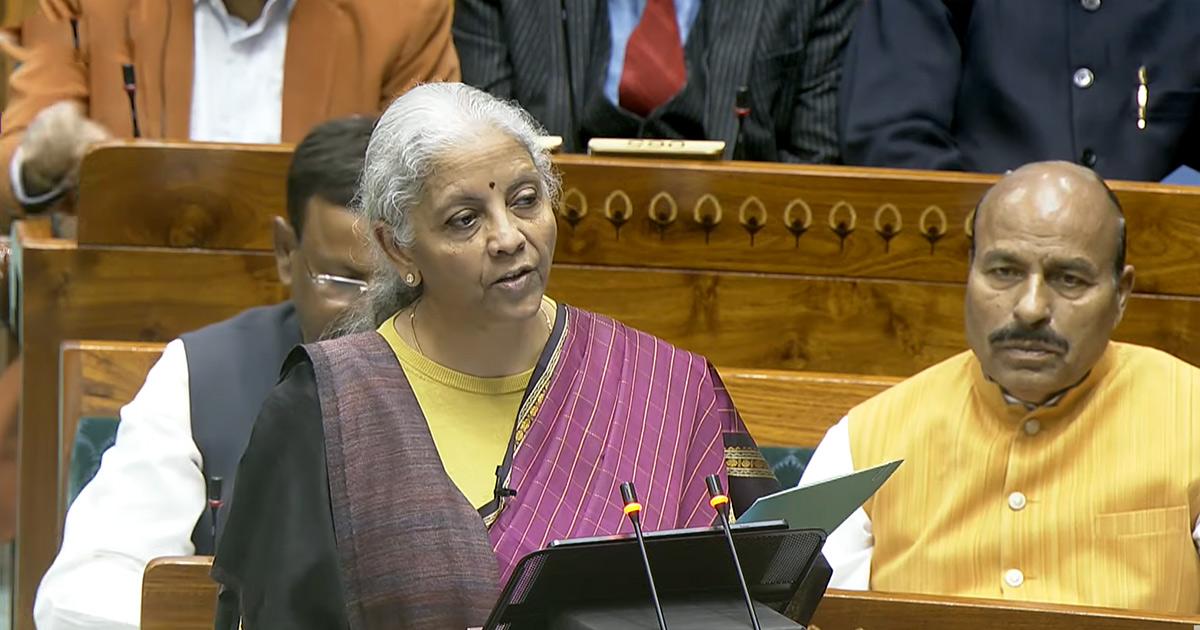
Finance Minister Nirmala Sitharaman’s ninth consecutive Union Budget for 2026 has been presented as a comprehensive blueprint for India’s economic future, aiming to sustain growth amidst rising global uncertainties. With a robust outlay of Rs 53.5 lakh crore, the Budget prioritizes long-term stability and infrastructure-led development, while offering tantalizing prospects for US technology firms.
Key Takeaways
-
Fiscal Discipline Maintained: Despite impending state elections, the Budget adheres to fiscal consolidation, targeting a reduced debt-to-GDP ratio of 55.6% and a fiscal deficit of 4.3%.
-
Manufacturing and Infrastructure Boost: Capital expenditure is significantly hiked to Rs 12.2 lakh crore, alongside incentives for seven key manufacturing sectors and new infrastructure projects.
-
Digital Infrastructure Lure: A landmark 20-year tax holiday for global data center services and a 15% safe harbor on costs for related entities position India as a highly attractive destination for cloud and data infrastructure investment.
-
SME and Sectoral Support: A dedicated Rs 10,000 crore SME Growth Fund, along with initiatives for agriculture, tourism, biopharma, and textiles, aim to foster diverse economic growth.
-
Market Volatility: Higher Securities Transaction Tax (STT) on derivatives trading caused immediate market jitters, highlighting a tension between growth ambitions and investor sentiment.
Fiscal Prudence Amidst Global Headwinds
Sitharaman’s Budget demonstrates a steadfast commitment to fiscal discipline, a notable stance given the five key state elections on the horizon. This is evident in the government's target to reduce the debt-to-GDP ratio to 55.6% and the fiscal deficit to 4.3%. This strategic choice signals India's dedication to long-term stability, even as it navigates a “complex backdrop” of global geopolitical tensions, volatile commodity prices, and uneven monetary easing. This approach, complementing previous tax reforms, aims to fortify the Indian economy against external pressures, including US President Donald Trump’s tariffs, projecting reliability to international investors.
Driving Growth: Manufacturing, Agriculture & Tourism
The Budget outlines a multi-pronged approach to stimulate economic expansion. A substantial increase in capital expenditure (capex) outlay to Rs 12.2 lakh crore underscores the government's focus on infrastructure-led growth. This includes new Dedicated Freight Corridors, 20 National Waterways, and seven high-speed rail corridors, all designed to enhance connectivity and industrial efficiency.
Seven key sectors—pharmaceuticals, semiconductors, rare-earth magnets, chemicals, capital goods, textiles, and sports goods—are earmarked for a significant manufacturing boost, complemented by a Rs 10,000 crore investment to develop India as a biopharma manufacturing hub. Agriculture and tourism also receive dedicated support, with plans for ecologically sustainable mountain trails and archaeological site development. Small and medium enterprises (SMEs) are bolstered by a Rs 10,000 crore SME Growth Fund.

The Digital Frontier: India's Appeal to US Data Centers
Perhaps the most compelling aspect of Budget 2026, especially for US-based multinational corporations, is its bold push to transform India into a global data center services hub. The announcement of a 20-year tax holiday for overseas firms providing global data center services from India, coupled with a 15% safe harbor on costs for data center services from related entities of foreign cloud firms, represents a significant policy shift. This unequivocally signals New Delhi's proactive intent to attract major digital infrastructure investments.
These measures arrive at a critical juncture where cloud majors like Google, Microsoft, and Amazon Web Services have already committed substantial investments in India. The new incentives offer compelling financial predictability and operational advantages, making India a highly attractive proposition for US data companies looking to expand their global footprint.
Compared to other established, and often more geopolitically complex, markets in the Asia-Pacific region, India’s transparent and incentivized approach to digital infrastructure offers a strategic advantage. For US companies seeking robust, scalable, and cost-effective data center operations, India is rapidly positioning itself as a premier destination, promising not only competitive rates but also a more stable regulatory environment. The New Income Tax Act, 2025, also promises simpler rules and forms, further easing compliance.

Market Reactions & Expert Opinion
While the Budget broadly signals confidence, certain measures met with immediate market apprehension. The decision to hike the Securities Transaction Tax (STT) on futures and options trading rattled stock markets, underscoring the government’s challenge in balancing revenue generation with fostering vibrant capital markets. Prime Minister Narendra Modi, however, lauded the Budget as “historic” and a “highway of opportunities,” emphasizing its role in accelerating India’s journey towards a ‘Viksit Bharat’ (Developed India) by 2047.
Christian de Guzman, Senior Vice President at Moody's Ratings, acknowledged the Budget's tactical support for the economy amidst external uncertainties. He noted that while measures provide resilience, potential erosion of tax revenue could impact debt affordability. However, Moody's expects India's broader fiscal strength to remain intact, suggesting a recognition of India's fiscal resolve.
Conclusion
India's Union Budget 2026 is a testament to a nation determined to balance growth with fiscal responsibility. While navigating global complexities and domestic pressures, the Budget has strategically laid the groundwork for significant economic transformation. The aggressive incentives for global data centers, in particular, paint a clear picture: India is not just open for business; it's actively courting the world’s digital giants. For US data companies, the combination of a massive domestic market, a supportive regulatory environment, and substantial tax benefits presents an opportunity that is increasingly difficult to overlook, positioning India as an attractive and perhaps more stable alternative for long-term investment than other major players in the region. The time to invest in India's rapidly expanding digital future appears to be now.