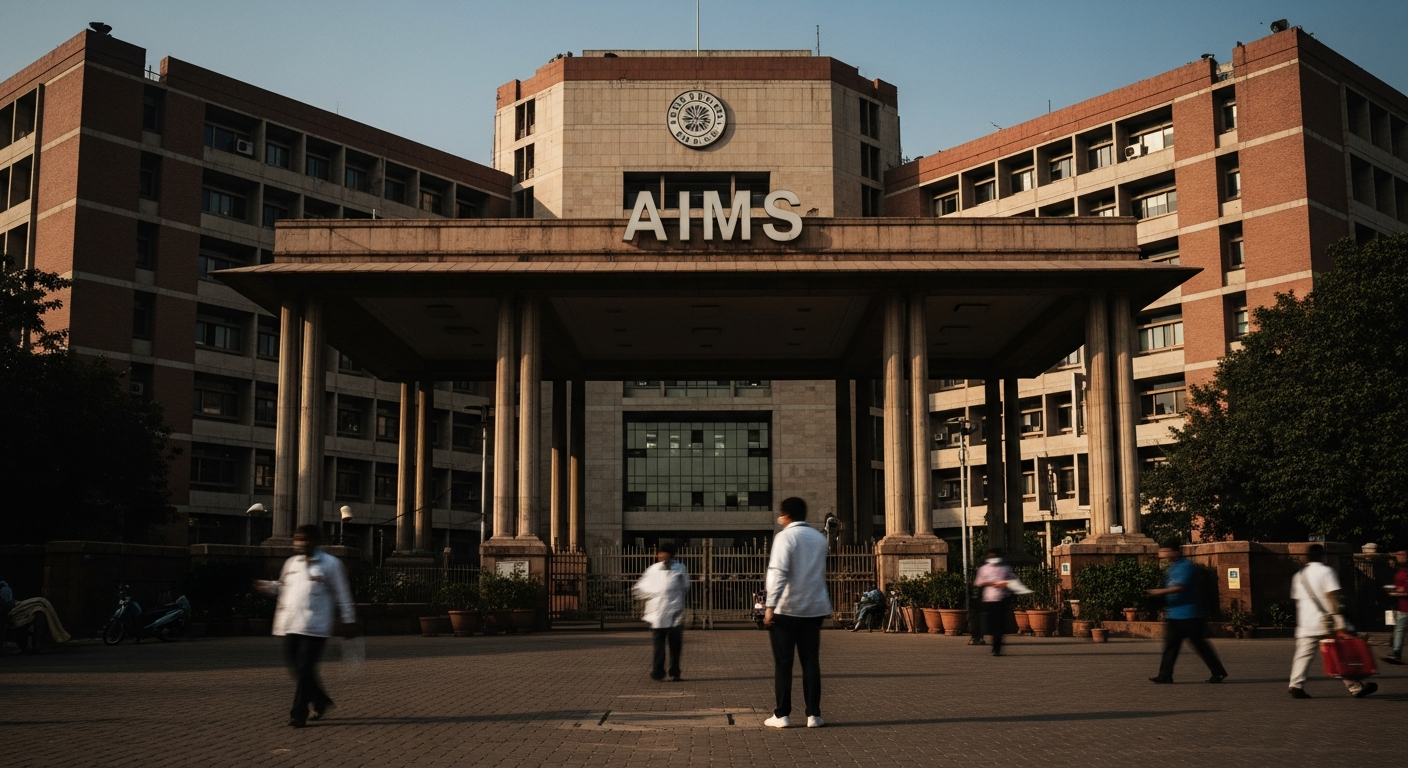
The hallowed halls of India's All India Institutes of Medical Sciences (AIIMS), once bastions of unparalleled medical education and tertiary care, are now struggling under the weight of an unprecedented crisis. A severe faculty shortage, revealed by government data, is crippling the system, with none of the country's 20 AIIMS institutions able to fill even 80% of their sanctioned posts. This critical deficit ranges dramatically from 24% to a staggering 73%, painting a grim picture for the future of public health and medical academia in the nation.
Key Takeaways:
-
Widespread Shortages: All 20 AIIMS, including the flagship Delhi institute, operate with significant faculty vacancies, with some experiencing shortages as high as 73%.
-
Newer AIIMS Hit Hardest: Recently established AIIMS in locations like Madurai and Rajkot are particularly vulnerable, struggling to attract and retain even a fraction of their required teaching staff.
-
AIIMS Delhi Not Immune: Even the venerable AIIMS Delhi, considered India's top public medical facility, suffers from a substantial 35% faculty vacancy rate.
-
The Private Sector Lure: A primary driver of the crisis is the increasing attractiveness of the commercialized, profit-driven corporate hospital sector, which offers better incentives than public academic roles.
-
Ineffective Measures: Current governmental attempts, such as inviting retired teachers and visiting faculty, have proven insufficient to stem the tide of vacancies.
The System Under Strain
India's AIIMS network, designed to replicate the excellence of AIIMS Delhi across the nation, is buckling. An analysis of government replies to Parliament questions indicates a systemic failure to staff these critical institutions adequately. The implications are profound: compromised patient care, reduced quality of medical education, and an overburdened existing faculty.

Generational Gaps: Old vs. New AIIMS
The crisis cuts across generations of AIIMS institutions. While newer facilities are understandably struggling to establish themselves, even the most established institutes are not immune. AIIMS Madurai in Tamil Nadu, which became operational as recently as 2022, exemplifies the severity, having filled less than 27% of its 183 sanctioned faculty posts (a mere 49 positions). Similarly, AIIMS Rajkot in Gujarat, functional since 2020, operates with just 76 out of 183 sanctioned faculty members, a little over 40%.
Alarmingly, this struggle is not confined to these 'third-generation' institutes. The situation is hardly better at 'second-generation' institutions, and even the revered AIIMS Delhi, a global benchmark for tertiary care and medical education, reports a colossal 462 faculty positions vacant—over 35% of its 1,306 sanctioned posts. This widespread vacancy rate across the entire spectrum of AIIMS institutions points to a deeper, more pervasive problem than mere teething issues at new facilities.
The Lure of the Private Sector
The exodus of senior doctors and faculty members from the public AIIMS system to the private sector is the gravitational pull behind this crisis. Dr. Antony K.R., a prominent public health specialist, articulated this shift starkly: “Healing and teaching as a profession have lost their charm and glory in a highly commercialised, profit-driven business world. Super specialty clinical practice in corporate hospitals is more attractive than academic teaching and research in medical colleges and AIIMS.”
This sentiment reflects a brutal reality. The burgeoning corporate hospital sector offers competitive salaries, modern infrastructure, reduced bureaucratic hurdles, and often a better work-life balance compared to the demanding, often under-resourced public sector. For highly skilled specialists, the financial and professional incentives of private practice are increasingly outweighing the prestige and academic satisfaction traditionally associated with AIIMS.
Ineffective Mitigations
Despite the glaring faculty crunch, the measures adopted to address the shortage have proven largely ineffective. Strategies such as inviting retired teachers from medical colleges to rejoin and allowing visiting faculty from within India and abroad have failed to make a significant dent in the vacancy rates. This suggests that the underlying issues – remuneration, working conditions, career progression, and bureaucratic inefficiencies – are not being adequately addressed, leading to a continuous outflow of talent rather than a sustainable inflow.
Public Sentiment
The prevailing public sentiment, echoing the words of experts, is one of concern and disillusionment. There's a growing perception that the noble professions of healing and teaching, particularly within public institutions like AIIMS, are losing their inherent value in a world increasingly driven by commercial gains. The public questions the long-term viability of a system that cannot retain its best minds, fearing a decline in the quality of accessible healthcare and a detrimental impact on medical innovation and research.
Conclusion
The faculty crisis at India's AIIMS institutions is a clarion call for urgent, systemic reform. It's a multifaceted problem that demands more than stop-gap measures. Unless significant structural changes are implemented – perhaps a re-evaluation of remuneration packages, modernization of administrative processes, and renewed focus on making academic medicine professionally fulfilling – the 'glory' of AIIMS risks fading completely. The ripple effects will be catastrophic, undermining India's capacity to provide advanced medical care and train the doctors of tomorrow.