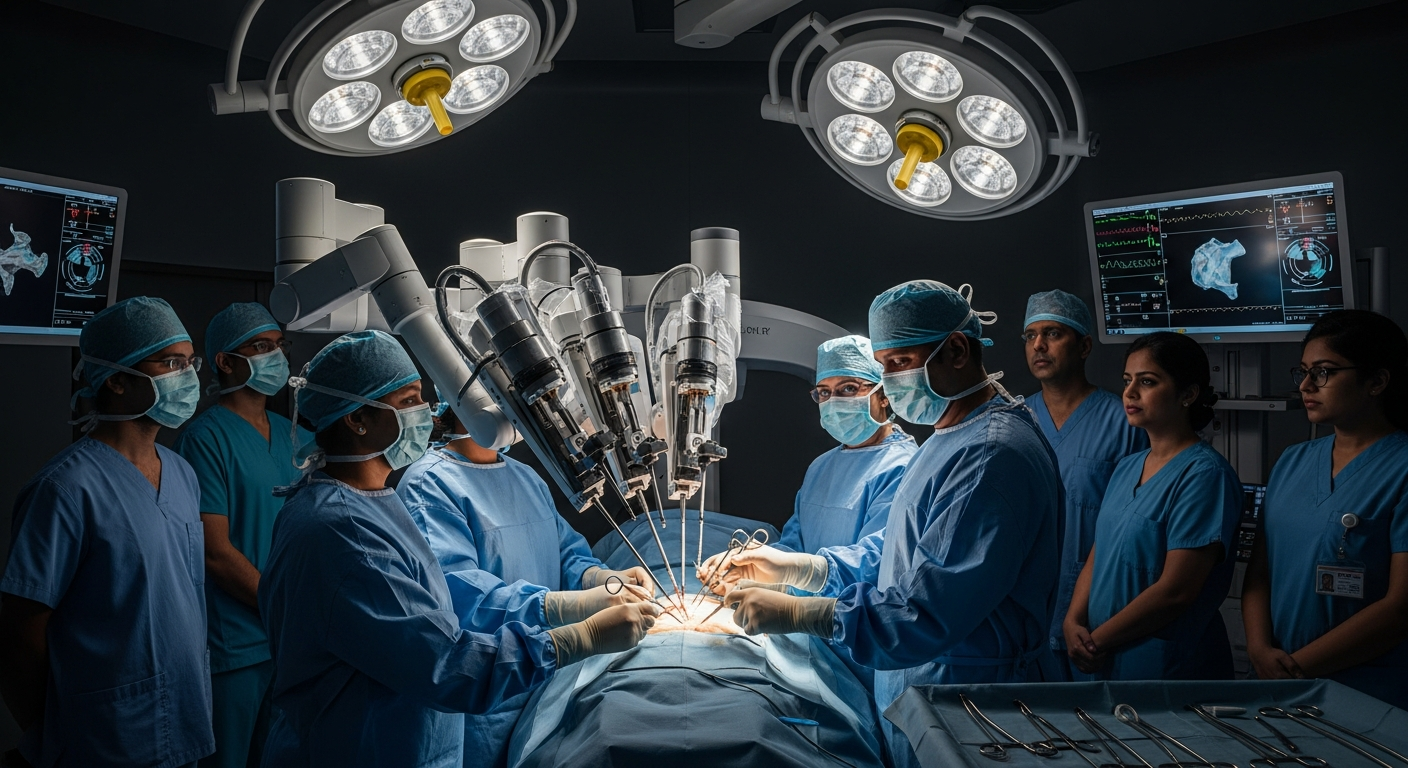
The All India Institute of Medical Sciences (AIIMS) Delhi has made headlines with its declaration of over 1,000 robotic surgeries performed in the last 13 months. This achievement, touted as a 'transformative milestone' by the institution, places AIIMS Delhi at the forefront of integrating cutting-edge surgical robotics into India's public healthcare system. On the surface, it’s a resounding success story, signaling progress and a commitment to advanced patient care and medical training. However, beneath the celebratory announcements, a critical examination reveals complexities regarding equity, sustainability, and the broader implications for a nation grappling with immense healthcare disparities.
Key Takeaways
-
Technological Triumph: AIIMS Delhi has successfully adopted advanced robotic surgical systems, completing over 1,000 complex procedures in just over a year, spanning multiple specialties from gastrointestinal to endocrine surgeries.
-
Public Sector Pioneer: This initiative positions AIIMS as one of the first government general surgery units in India to embrace such high-tech solutions, potentially bridging the gap with private sector adoption.
-
Training & Development: The program offers crucial hands-on experience for surgical residents, aiming to align their training with global standards.
-
Equity Concerns: While celebrated for making advanced care 'accessible to a larger population,' the high cost and specialized nature of robotic surgery raise questions about its scalability and equitable distribution across India's diverse public health landscape.
-
Sustainability Challenge: The long-term economic viability, maintenance, and consistent funding for such high-end technology within a resource-limited public system remain critical areas for scrutiny.
A Leap in Public Healthcare? [FEATURED]
AIIMS Delhi's venture into robotic surgery is undeniably a testament to its institutional capabilities. The array of procedures now performed – including intricate hepatobiliary surgeries, kidney transplantations, and resections for endocrine tumours – showcases the robot's versatility and the surgical team's expertise. The benefits cited, such as reduced blood loss, shorter hospital stays, and faster patient recovery, are concrete improvements that align with global trends in surgical excellence.
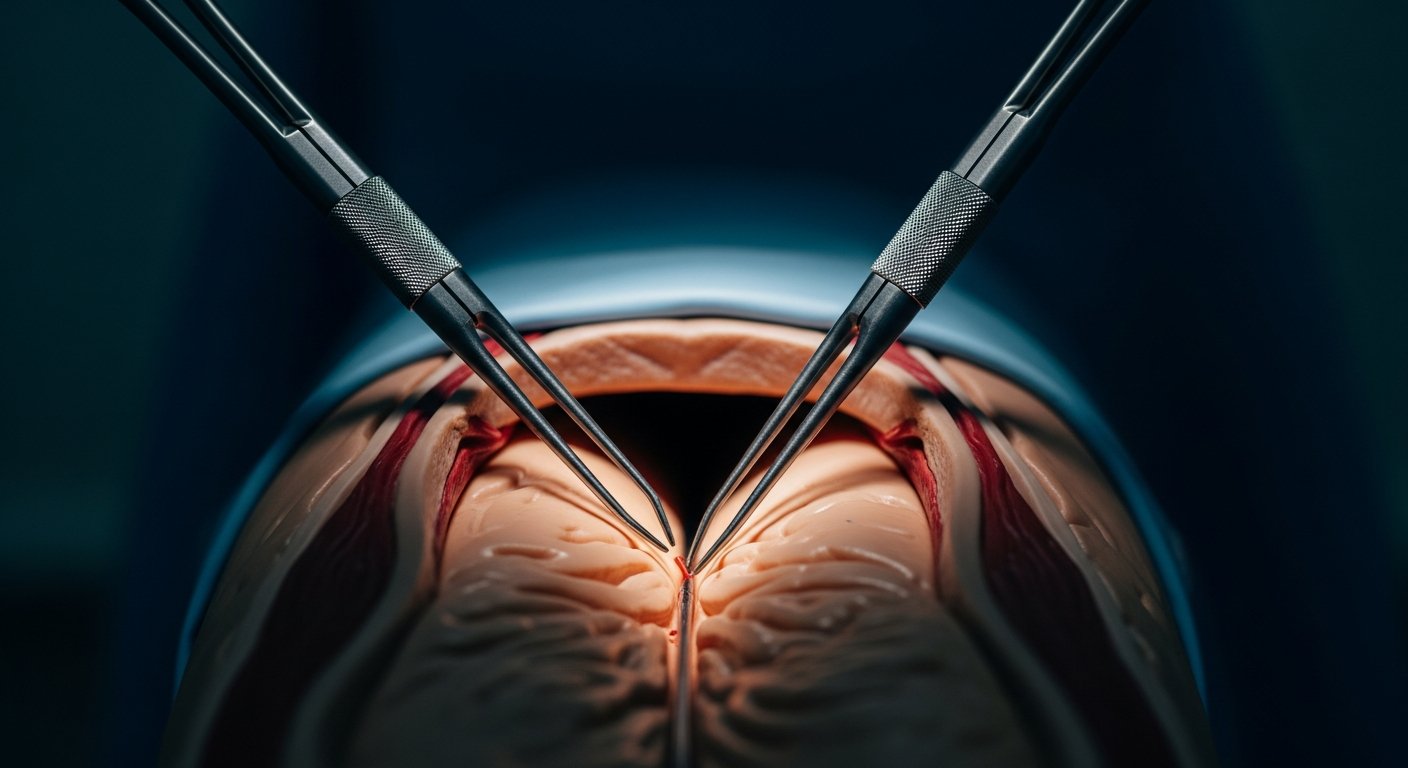
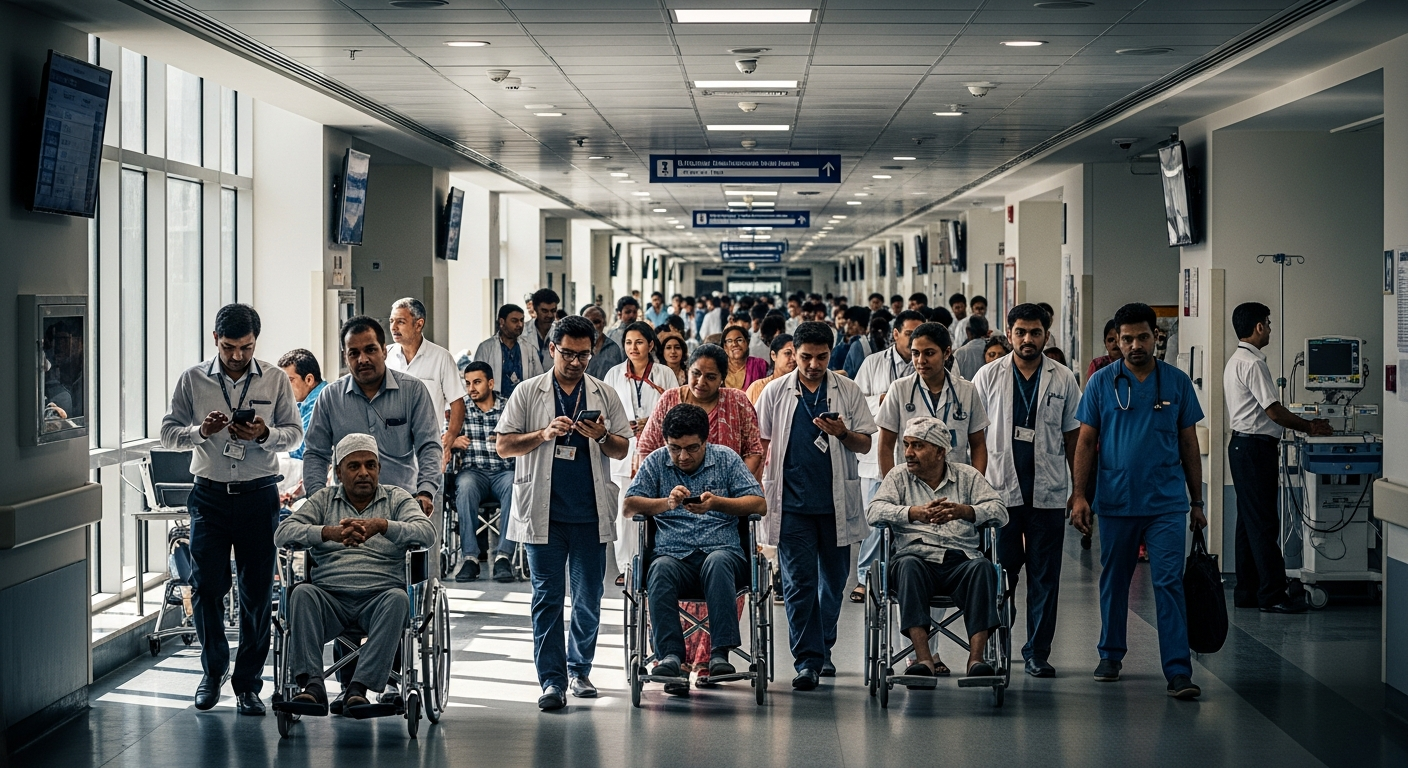
Yet, the claim of making these highly precise surgeries 'accessible to a larger population' warrants closer inspection. While AIIMS serves a vast patient base, often drawing individuals from across the country due to its reputation and affordability, the reality is that only a fraction of those patients will benefit from robotic procedures. The sheer volume of patients requiring surgical intervention in India's public hospitals far outstrips the capacity of even a single state-of-the-art robotic system. The initiative, while commendable, must be viewed as a concentrated effort within an apex institution rather than an immediate, widespread solution for the masses.
Bridging the Digital Divide – Or Widening It?
The source context highlights that while private hospitals in metropolitan areas have embraced robotic systems for over a decade, their adoption in government hospitals, particularly for General Surgery, has been limited. AIIMS Delhi is indeed bridging a significant gap by bringing this technology into a public setup. This move theoretically allows patients from diverse socio-economic backgrounds to access care previously limited to those who could afford expensive private facilities. However, the cost implications are substantial.
Robotic surgical systems represent a massive capital investment, followed by ongoing costs for maintenance, specialized consumables, and highly specialized training for surgical and technical staff. For a public healthcare system often strained by basic resource allocation, the allocation of funds for such high-end technology raises critical questions about opportunity cost. Is investing heavily in a few advanced centers the most equitable approach when many peripheral public health facilities still struggle with fundamental infrastructure, equipment, and staffing? Without a clear roadmap for scaling this technology or integrating it into a broader public health strategy, there's a risk of creating an elite tier within public healthcare, further accentuating the existing disparities.
The Economics of Precision
The advantages of robotic surgery, such as reduced complications and quicker recovery times, are often presented as leading to overall cost savings due to shorter hospital stays. While true for individual patients and potentially for a hospital's bed turnover rate, the long-term economic impact on a public healthcare system requires a more transparent analysis. What is the actual net cost saving, if any, when factoring in the initial purchase price (often in millions of dollars), ongoing service contracts, and per-procedure disposable instrument costs? A comprehensive cost-benefit analysis, openly shared, is crucial for evaluating the true value proposition of robotic surgery in a public, developing-world context.
Training the Next Generation
Professor Sunil Chumber, Head of the Department of Surgical Disciplines, rightly emphasizes the invaluable training opportunity for surgical residents. Positioning AIIMS's curriculum 'on a par with any of the renowned medical institutes of the world' is a powerful statement. Developing a cohort of surgeons proficient in robotic techniques is essential for the future of Indian healthcare. However, a pertinent question arises: what happens to these highly trained residents when they graduate and are posted to less equipped district or state hospitals? Will their advanced skills be utilized, or will there be a mismatch between their training and the available resources, potentially leading to skill atrophy or a migration to the private sector where such technology is more prevalent? A robust national strategy for disseminating this expertise and infrastructure is vital to maximize the return on this investment in human capital.
Public Sentiment
Conversations around advanced medical technology in public hospitals often reveal a blend of pride and pragmatism among the general public:
-
"It's a matter of immense pride that AIIMS, a government hospital, is doing such advanced surgeries. It gives hope to ordinary people like us who can't afford private care." – Ramesh Kumar, Delhi
-
"While it's fantastic for those who get it, you have to wonder how many people truly benefit. Most public hospitals still struggle with basic facilities. This feels like a drop in the ocean." – Priya Sharma, Agra
-
"My relative had a robotic surgery at AIIMS, and the recovery was much faster than expected. The technology is amazing, but the waiting lists are still long. How do they choose who gets it?" – Anjali Singh, Lucknow
-
"The training for young doctors is key. But what good is training if they can't practice these skills outside of a few elite hospitals? We need this technology everywhere, not just in one place." – Vijay Prasad, Retired Civil Servant
Conclusion
AIIMS Delhi's achievement of 1,000 robotic surgeries in 13 months is a significant stride forward, showcasing the potential for advanced medical technology within India's public healthcare system. It sets a new benchmark for surgical precision, patient outcomes, and medical education. However, to truly deem this a 'transformative milestone' for the nation, the conversation must expand beyond the immediate success at AIIMS. The challenge now lies in how this benchmark translates into equitable access, sustainable financing, and broader infrastructure development across the vast and varied landscape of India's public health. Without a comprehensive policy framework addressing these critical aspects, this commendable achievement risks remaining an isolated beacon of excellence rather than a catalyst for systemic change.