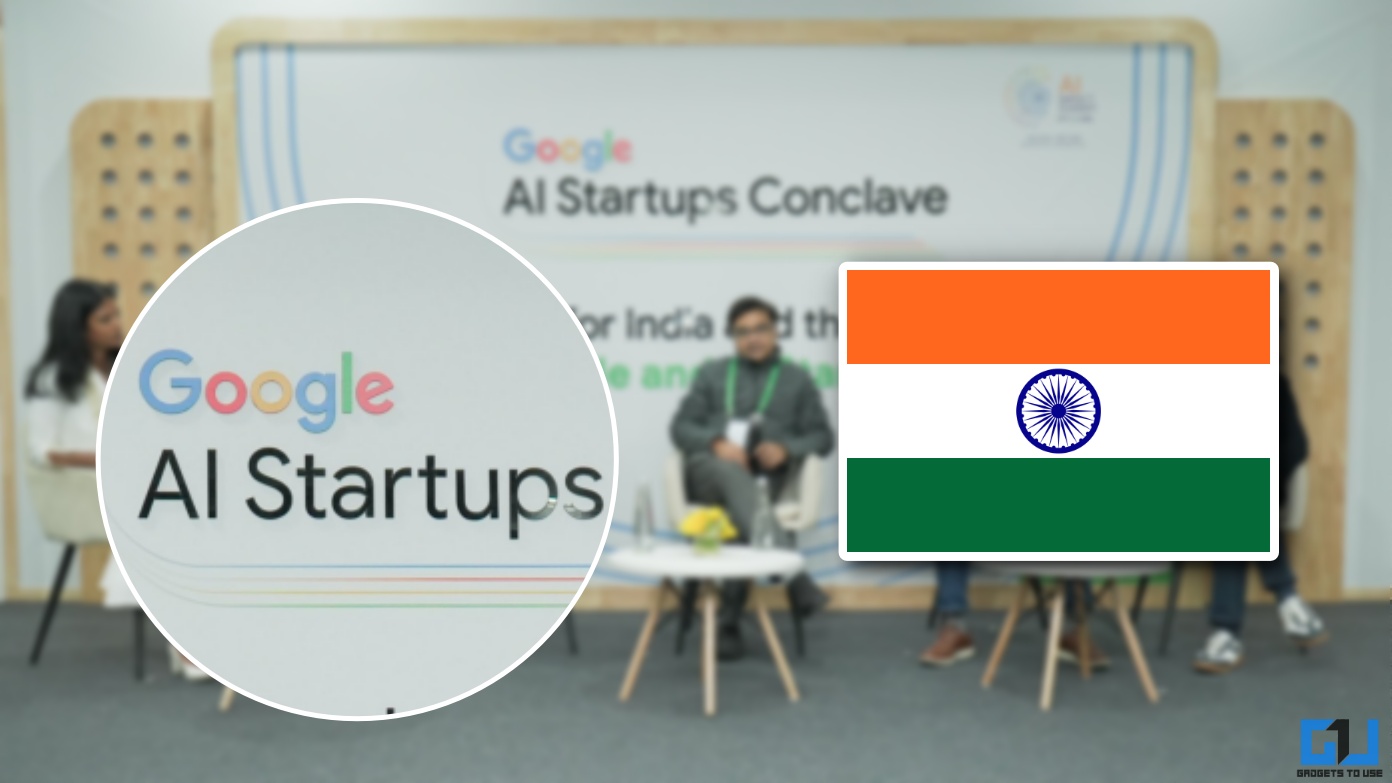
India's burgeoning AI startup ecosystem has long been lauded for its innovation and technical prowess. Yet, a persistent challenge has been the leap from developing powerful AI products to securing global enterprise customers and achieving international scale. Recognizing this crucial gap, Google has introduced its Market Access Program for India, an initiative distinctively focused on the commercialization and global expansion of AI-first Indian startups. This program represents a deliberate move beyond traditional accelerators, zeroing in on the practicalities of market entry and large-scale adoption outside India.
Key Takeaways
-
Google's Market Access Program targets commercial scaling for AI-first Indian startups.
-
The initiative focuses on bridging the gap to global enterprise adoption, particularly in North America, Europe, and Southeast Asia.
-
It's a collaboration with government-backed agencies MeitY Startup Hub and Startup India.
-
Unlike traditional accelerators, it supports companies past the prototype phase with existing products and use cases.
-
Key support areas include global sales strategies, compliance, pricing, and distribution.
-
Google also launched new AI models, MedGemma 1.5 (healthcare) and FunctionGemma (on-device AI), expanding its developer ecosystem.
-
Applications are open until January 20, 2026, with no upfront charges but potential equity involvement.
A Strategic Pivot: From Incubation to Global Scale
Unlike many growth programs that prioritize product development or seed funding, Google's Market Access Program is fundamentally commercial. It is not designed for early-stage experimentation or R&D, but rather for startups that have already moved past the prototype phase, possessing working products, established use cases, and technical validation. These companies often face hurdles in areas such as navigating complex update cycles, formulating effective pricing strategies, meeting stringent compliance expectations, and establishing global distribution channels. Google's program directly confronts these challenges, providing structured support aimed at equipping startups to sell to and integrate with large international enterprises.

The program is a collaborative effort, designed in partnership with government-backed agencies MeitY Startup Hub and Startup India. This collaboration underscores a shared national objective to empower Indian AI innovation for global competitiveness. While domestic market expansion remains a component, the primary intent is to position these startups for accelerated enterprise AI adoption in regions like North America, Europe, and Southeast Asia—markets where demand for advanced AI solutions is rapidly escalating.
Addressing the Enterprise AI Gap
India's AI talent pool and innovative use cases are undeniable. However, the structured support required for selling AI at scale, particularly to large organizations demanding reliability, security, and long-term commitment, has often been absent. Google's Market Access Program endeavors to fill this void by providing insights into global enterprise procurement processes, helping startups refine their offerings for international standards. This includes guidance on adapting product roadmaps for diverse regulatory environments and optimizing sales strategies for a global clientele. The program’s focus on companies with existing customer bases ensures that the support is tailored for immediate impact and market readiness.
Broader AI Ecosystem Developments and Google's Track Record
Google's commitment to fostering AI development in India extends beyond the Market Access Program. Alongside this new initiative, the company has expanded its open AI model ecosystem with two significant additions to its Gemma family: MedGemma 1.5 and FunctionGemma. MedGemma 1.5 is a 4-billion-parameter multimodal model fine-tuned for healthcare and medical AI applications, capable of working with complex imaging modalities and text-based medical records to enhance diagnostic assistance and health data interpretation. FunctionGemma, a lightweight, function-calling-optimized variant, enables developers to translate natural language commands into executable actions for on-device AI applications, enhancing secure, local customer support. These models underscore Google’s broader strategy to provide robust foundational tools for AI innovators globally.
Google's engagement with Indian startups is not new. Over the years, programs like the Google for Startups Accelerator and AI-first cohorts have provided technical mentorship, cloud infrastructure, and access to Google's AI stack to numerous founders. Companies like Nawgati (CNG station finder), BigOHealth (medical facility connector), NeuralGarage (generative AI audio-visual models), and Predis.ai (AI-powered ad creation) are examples of Indian startups that have previously benefited from Google's support, demonstrating the company's long-standing interest in nurturing the ecosystem.

Program Criteria and Application Process
Startups interested in the Google Market Access Program must meet specific criteria. The company must be AI-first, with a product either already in commercial deployment or very close to it; early-stage ideas or research-only projects will not be considered. This prerequisite reinforces the program's focus on market-ready solutions. Applications are reviewed by Google's internal teams, though the exact selection criteria beyond the basic requirements have not been publicly disclosed. The application process is streamlined: register online, apply through the designated portal using a Google or company email, and provide necessary startup details and attachments. The deadline for registration is January 20, 2026.
Currently, there are no direct charges for enrolment. However, Google may seek an equity stake or a similar financial arrangement with selected startups, a common practice for such high-impact incubation and acceleration initiatives.
Public Sentiment
Industry analysts and startup founders alike view Google’s Market Access Program with cautious optimism, recognizing its potential to be a game-changer for India's AI landscape. "This is precisely the kind of focused support our mature AI ecosystem needs," remarked a prominent venture capitalist specializing in deep tech. "The technical talent is here; the challenge has always been the translation into global enterprise sales cycles and navigating international compliance. Google, with its global reach, is uniquely positioned to bridge that." Entrepreneurs have echoed this sentiment, with one founder noting, "Having a product is one thing, but understanding how to scale it across diverse global markets is an entirely different beast. A commercially-driven program like this could provide the missing blueprint." The sentiment suggests a widespread belief that while Google's previous efforts built a strong foundation, this new program targets the immediate, practical hurdles to global dominance.
Conclusion
With the Market Access Program, Google is addressing one of the most significant impediments in India's AI startup journey: the critical transition from capable technology to widespread global enterprise adoption. By offering targeted support in enterprise exposure, market readiness, and practical scaling, the initiative has the potential to significantly accelerate the growth of Indian AI startups. This strategic move by Google not only validates the quality of Indian AI innovation but also provides a powerful mechanism for these companies to compete effectively and meet the demand in foreign markets, ultimately solidifying India's position as a global AI powerhouse.