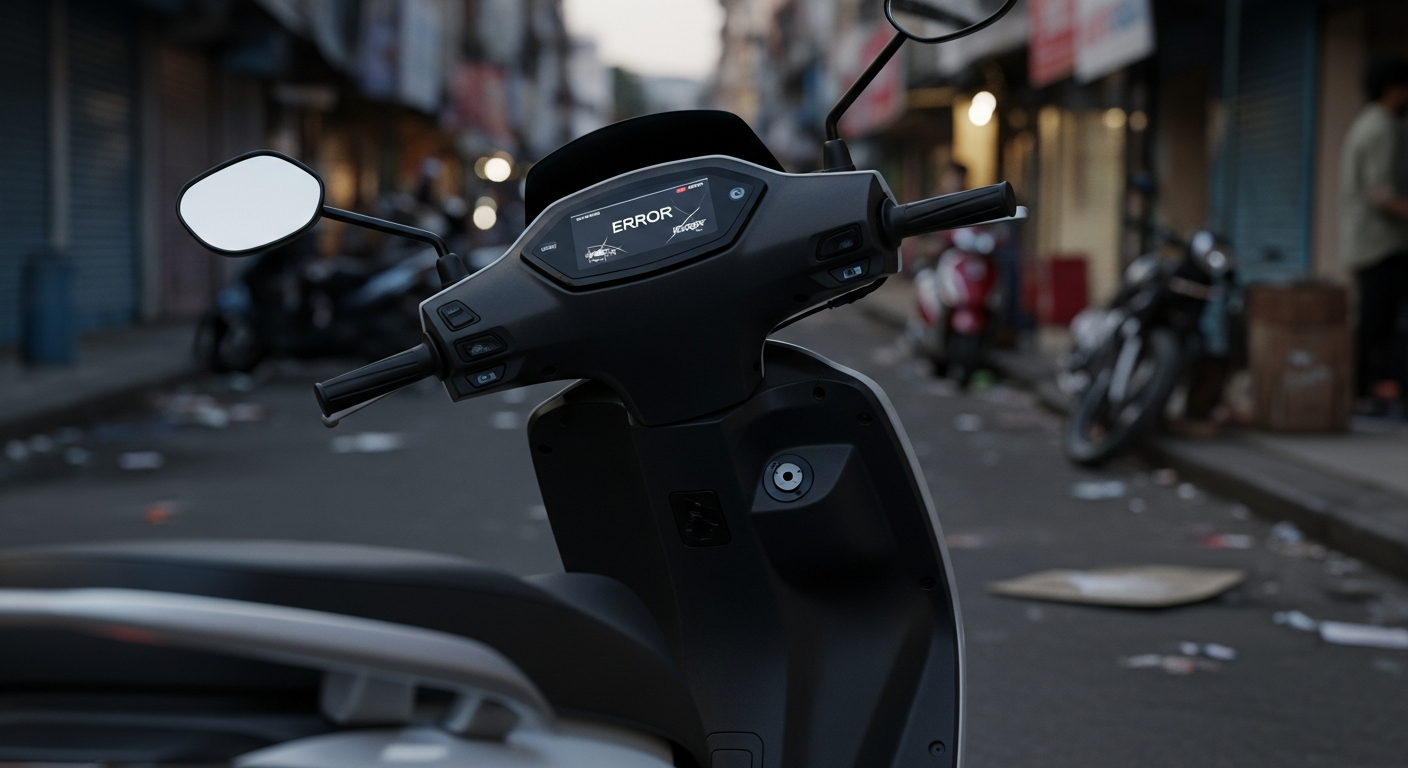
The dream of a seamless, app-controlled commute often collides with the harsh reality of corporate mortality. Such is the saga of Äike, an Estonian scooter company that, much like a fleeting monsoon shower, made a splash and then vanished, leaving a trail of utterly bewildered customers. What's left isn't just a physical shell of metal and plastic, but a profound existential question: what do you own, really, when your prized possession is tethered to a company that no longer exists?
Key Takeaways:
-
The Cloud's Cruel Hand: Modern 'smart' devices are increasingly reliant on third-party cloud services, creating a single point of failure that can render hardware useless.
-
Planned Obsolescence, Unplanned Demise: Even without an intentional design, the collapse of a company can lead to immediate, forced obsolescence for its products.
-
Consumer Vulnerability: Users invest significant capital in products whose long-term functionality is entirely out of their control, highlighting a gaping hole in consumer protection laws for digital dependencies.
-
The 'Default Key' Delusion: The promised convenience of digital access is easily revoked, leaving users with no 'manual' or 'default' override for their bricked devices.
The Ephemeral Cloud and the Concrete Reality
For years, we've been promised a frictionless future, a digital utopia where every device is connected, intuitive, and perpetually updated. The Äike scooter was a poster child for this vision: sleek, electric, and entirely dependent on its accompanying app and cloud service. When the company ceased operations, so too did the digital brain of these scooters.
Suddenly, what was a marvel of engineering became an inert lump, unable to start, track, or even fully function. It’s a bit like buying a brand new Mahindra XUV700, only to discover it won't start because the company that manages its infotainment subscription went belly-up. The sheer audacity of it! We've moved from owning objects to merely licensing experiences, and when the licensor goes dark, so does your 'ownership'.
This isn't just a niche European problem; it's a global blueprint for digital disaster. In a market like India, where technology adoption races ahead, often outstripping the legal and ethical frameworks, such incidents serve as a chilling harbinger. Imagine the chaos if a major smart home ecosystem or a popular electric vehicle brand were to pull the plug. Our cities would be littered with 'smart' junk, a monument to our digital hubris. Perhaps a sturdy Hero Splendor, which requires nothing more than a kick-start and a prayer, isn't so 'dumb' after all.
From Estonian Streets to Indian Alleyways: A Global Gaffe
Rasmus Moorats, an Äike owner, found himself in this unenviable position. His 'smart' scooter, once a symbol of urban mobility, was now a rather expensive, two-wheeled paperweight. The app, the very key to its operation, had lost functionality. This isn't just about a scooter; it’s a symptom of a larger disease plaguing the tech industry – the assumption of perpetual service availability. In India, where consumers are increasingly wary of 'use-and-throw' culture, albeit with a growing appetite for smart tech, this reliance on external, often ephemeral, services poses a unique challenge. We value longevity; our pressure cookers last generations, our ancient refrigerators hum on despite all odds. A scooter that dies because a server in Tallinn went offline feels like a betrayal of trust.
The irony is particularly poignant when you consider the burgeoning EV market in India. From Ola Electric to Ather, startups are promising a connected, efficient future. But what happens if one of these giants stumbles? Will a million scooters become static statues overnight? The 'default key' in this digital age isn't a physical object you can keep in your pocket; it’s a string of code on a server that might be halfway across the world, maintained by a company teetering on the brink.
The Consumer's Conundrum: A Digital Dharma
The Äike debacle underscores a critical failure in the social contract between tech companies and their users. Consumers are often left with no recourse, no 'offline mode,' and certainly no refund for a product rendered useless by circumstances entirely beyond their control. Who bears the responsibility? The company that built it? The company that hosted the servers? Or the unsuspecting consumer who simply wanted a smart way to get to work?
This isn't just about technical glitches; it's about the very concept of ownership in the digital age. When a product's core functionality is leased rather than owned, the consumer is always at the mercy of the provider. It's a particularly bitter pill for the Indian market, which often adopts technology with gusto but expects a certain robust resilience. We understand that a 'smart' television might need Wi-Fi for some features, but we expect it to at least function as a television without it. A 'smart' scooter should, at the very least, function as a scooter.
Public Sentiment
Across online forums and local chai shops, the sentiment ranges from frustrated resignation to darkly satirical humour.
-
"First the internet goes down, then my scooter. What's next, my smart pressure cooker refuses to cook biryani without a cloud subscription?" – Aravind M., Bengaluru
-
"Honestly, my grandfather's bicycle with a bell is more reliable. At least that doesn't need an Estonian server to pedal." – Priya S., Mumbai
-
"This 'smart' tech is making us dumb. I miss the days when a key actually started a vehicle, not just unlocked its potential to be a paperweight." – Rohan K., Delhi
-
"Maybe we should go back to bullock carts. At least the bull won't go bust and brick the whole system!" – Farmer G., Punjab
Conclusion
The fall of Äike is more than just a footnote in the annals of startup failures; it's a profound parable for our hyper-connected age. It forces us to confront the precariousness of 'smart' technology and the illusion of ownership in a world where everything is 'as-a-service'. As we hurtle towards an even more interconnected future, perhaps it's time to demand that our innovations come with a 'default key' – a guarantee that when the digital scaffolding collapses, our physical possessions don't crumble with it. Otherwise, we risk filling our streets not just with traffic, but with monuments to magnificent obsolescence, each a silent testament to the ghost in the machine. [FEATURED]