The Unrelenting Quest for Truth in the Digital Age
Key Takeaways
-
Forensic science integrates diverse fields like biology, chemistry, and physics to provide irrefutable evidence.
-
DNA analysis and trace evidence remain cornerstones, profoundly impacting investigations and case resolution.
-
Emerging technologies, including AI, machine learning, and 3D printing, are rapidly enhancing forensic capabilities.
-
Despite technological advancements, the integrity of evidence handling and expert interpretation are crucial challenges.
-
The future demands continuous innovation, rigorous validation, and professional development to maintain reliability and unlock new potentials.
Main Analysis: Dissecting the Past, Forging the Future
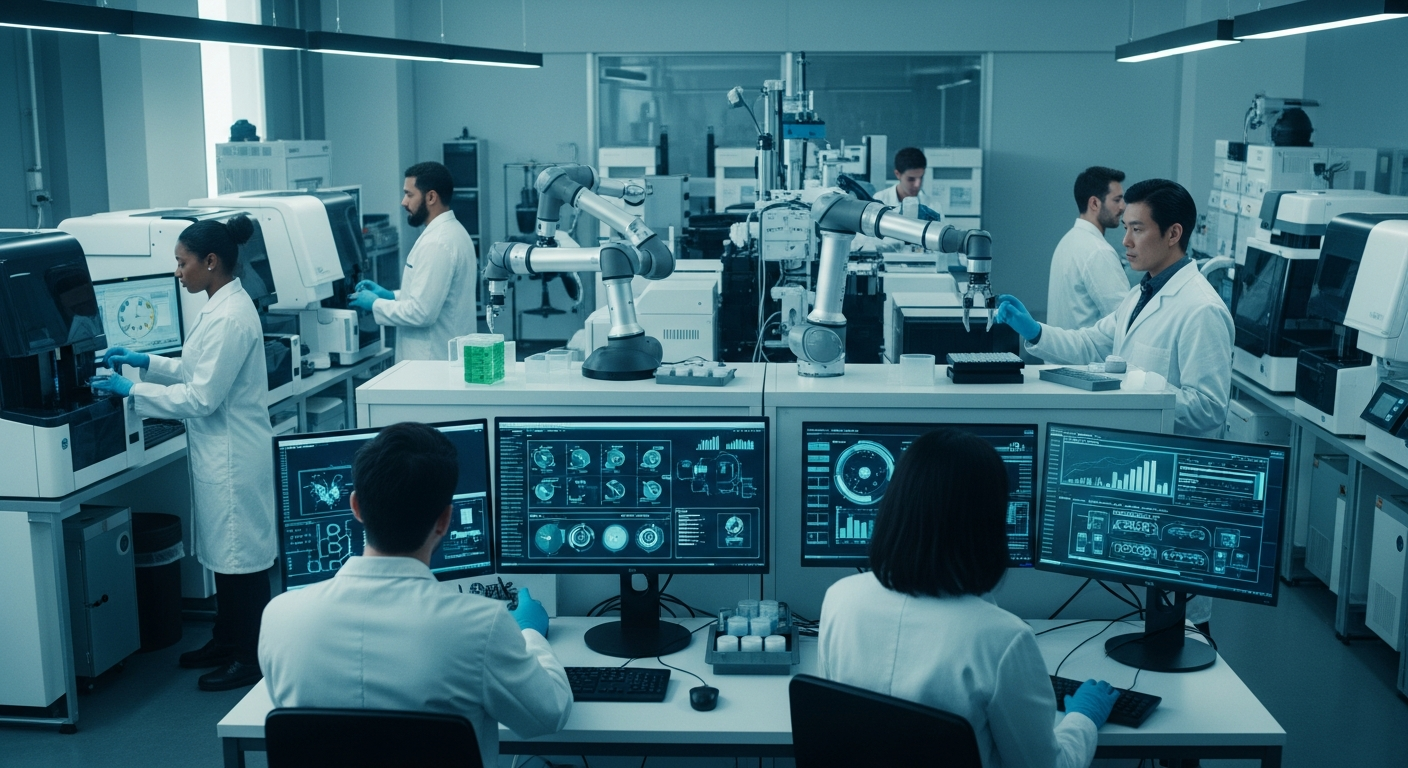
Forensic science operates at the intersection of history and precision, acting as a master detective for society. It is the systematic application of scientific principles to legal problems, a field where observation and analysis converge to reconstruct events, often with profound implications for justice. This isn't merely academic; it's an industrial-scale operation involving specialized laboratories, extensive databases, and a global network of experts. The core mandate is clear: transform the ephemeral into the undeniable.
The Immutable Language of Evidence
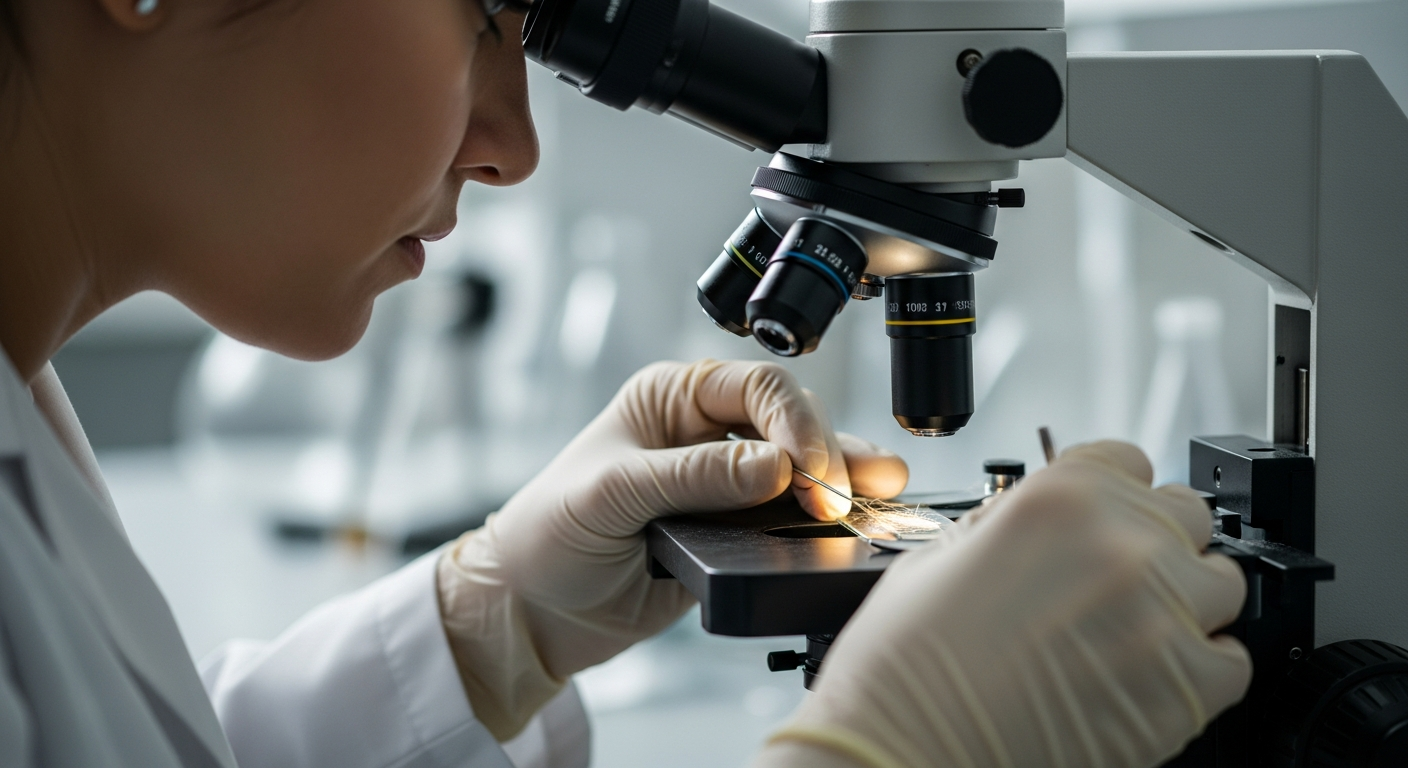
At the heart of every forensic investigation lies the concept of evidence. Every object, every substance, every measurable fact that can contribute to recreating the circumstances of an incident is critical. This encompasses an astonishing breadth of material, from biological samples like DNA and fingerprints to the often-overlooked minutiae of trace evidence, and increasingly, the vast landscape of digital data. Forensic scientists employ an array of sophisticated techniques, from microscopic examination to complex statistical modeling, to extract meaning from these disparate clues. The robustness of this process is what elevates forensic findings from conjecture to compelling fact in a court of law.
Trace Evidence: Whispers from the Scene
One of the most potent, yet subtle, aspects of forensic inquiry is the analysis of trace evidence. These are the minute transfers—a stray fiber, a speck of soil, a single hair—that inherently link individuals to locations or other people. Such transfers, often imperceptible to the untrained eye, provide an eloquent narrative of movement and interaction. The presence of a unique soil type on a suspect's footwear, for instance, can place them definitively at a crime scene. This meticulous examination of the minuscule is a testament to the field's commitment to comprehensive understanding, demonstrating that even the smallest details can carry immense weight in uncovering the truth.
The DNA Revolution and Beyond
Few advancements have reshaped forensic science as dramatically as DNA analysis. By comparing unique genetic profiles from crime scenes against established databases or suspect samples, investigators can achieve identifications with unprecedented accuracy. The process, involving DNA extraction, amplification via PCR, and subsequent profile comparison using specialized software, has been instrumental in solving cold cases and exonerating the wrongly accused. However, DNA is not the sole arbiter of truth. Other established techniques, such as the intricate matching of fingerprints or the distinct ballistic signatures identified through firearms analysis, continue to play indispensable roles, each providing a unique piece of the evidentiary puzzle.
The March of Technology: AI and 3D Replication
Forensic science is a field perpetually in flux, driven by relentless technological innovation. We are witnessing the integration of technologies that were once the exclusive domain of science fiction. 3D printing, for example, is now being deployed to create precise replicas of crime scenes and critical evidence, allowing for enhanced visualization and analysis that was previously impossible. More profoundly, artificial intelligence and machine learning algorithms are beginning to sift through enormous datasets, identifying patterns and correlations that would evade human perception. These tools promise to accelerate investigations, predict outcomes, and provide insights that strengthen the pursuit of justice.
Challenges and the Imperative for Rigor
Despite its undeniable power, forensic science is not without its vulnerabilities. The potential for evidence contamination or mishandling remains a critical concern, capable of compromising an entire investigation and leading to erroneous conclusions. Furthermore, the interpretation of complex forensic data demands a high degree of specialized expertise, where missteps can have severe, real-world consequences. The ethical imperative for continuous training, rigorous testing, and scrupulous adherence to established protocols is non-negotiable. The integrity of the science is directly proportional to the integrity of its application.
Public Sentiment
“It’s incredible how much science can tell us from so little – a single hair, a tiny speck. It really makes you feel safer knowing that level of detail is available to law enforcement.” – Maria P., Seattle
“While the technology is amazing, I always wonder about the 'human factor.' How do we ensure forensic scientists are always unbiased and impeccably accurate? One mistake can ruin a life.” – David L., Austin
“The idea of AI helping solve crimes is mind-blowing. Imagine the cold cases that could be cracked with that kind of analytical power. It's truly the future of justice.” – Sarah K., New York
Conclusion: A Future Forged in Precision
Forensic science is more than just a tool for solving crimes; it is a critical lens through which we understand human actions and their consequences. Its journey is an ongoing narrative of discovery and refinement, driven by the principles of scientific inquiry and an unwavering commitment to truth. As we continue to push the boundaries of what is scientifically feasible, the importance of rigorous validation, ongoing education, and ethical application becomes even more pronounced. By embracing innovation while upholding scientific integrity, forensic science will continue to evolve, unlocking new capabilities to ensure a more just and accountable society for all. The power to reveal hidden truths is a profound responsibility, and one that the field of forensic science is uniquely positioned to fulfill, charting pathways to justice that were once unimaginable.