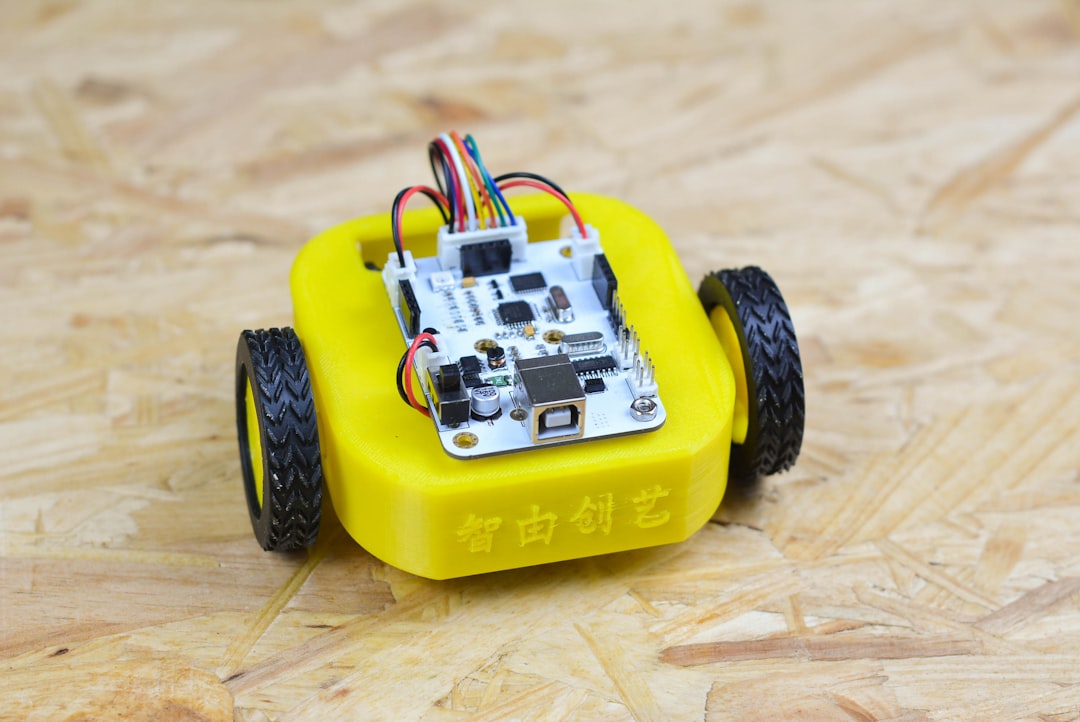
In an era defined by insatiable computational hunger, where every smart toaster demands cloud connectivity and your average toothbrush boasts multi-core processing, a quiet rebellion is brewing. It’s not from a rogue AI, but from a device so profoundly primitive it makes a abacus look like a supercomputer. We are, of course, referring to Jeremy’s epoch-making, CPU-less, light-seeking robot.
For those of us who recall the halcyon days of building line-following contraptions with a few resistors and a dream, Jeremy’s creation evokes a powerful, almost tearful, nostalgia. This isn't just simple; it’s a technological asceticism, a digital detox for the circuit board. It sees light. And that, dear readers, is it. No data processing. No complex algorithms. No existential dread about its purpose. Just pure, unadulterated photodetection.
Key Takeaways:
-
The Age of Un-Enlightenment: A robot that operates without a central processing unit challenges the very foundation of modern robotics.
-
Revolutionary Simplicity: Jeremy's design proves that sometimes, the most 'advanced' solution is the one that barely functions beyond its most rudimentary task.
-
Existential Crisis for Silicon Valley: The invention throws shade on the tech industry's obsession with ever-increasing computational power.
-
A Return to Analog: Could this signal a broader trend towards less intelligent, yet undeniably functional, devices?
The Grand Unveiling of Absolute Minimalism
Jeremy, a figure whose public profile remains delightfully obscure (perhaps he’s afraid his creation might lead to a brain drain – literally), has ushered in an era where robots can finally embrace their inner plankton. His light-seeking automaton functions with an elegance that borders on the absurd. It detects light, and then, presumably, moves towards it. Or away from it. The precise behavioral intricacies are secondary to the sheer audacity of its non-computational existence. It's less a robot, more a sophisticated, ambulatory light meter.
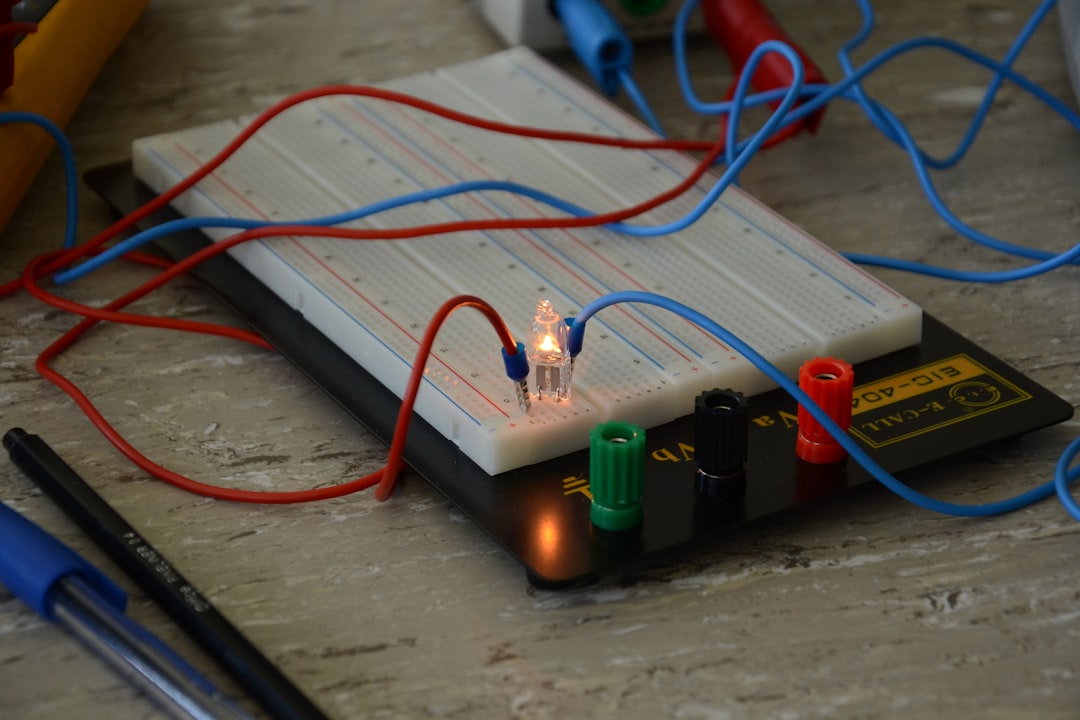
One can almost hear the collective gasp from Silicon Valley – not of admiration, but of existential dread. Decades of research, billions in venture capital, countless lines of code dedicated to making machines ‘smarter,’ only for Jeremy to remind us that a handful of transistors can effectively tell a servo which way to twitch. It’s like discovering that the secret to faster travel wasn’t the warp drive, but simply walking very, very quickly.
Silicon Valley's Impending Identity Crisis
The implications for the tech industry are, predictably, catastrophic. If a robot can perform its core function – however limited – without a CPU, what does that say about all those exorbitant server farms, the quantum computing initiatives, the endless pursuit of 'A.I.'? Are we to believe that the future of robotics lies not in neural networks, but in simple feedback loops that would make a 1970s garage hobbyist yawn?
Imagine the board meetings: 'Sir, our latest drone achieves perfect autonomous flight using a single capacitor and a particularly stubborn snail.' The entire edifice of 'smart' technology trembles before the elegant stupidity of Jeremy's creation. Companies will scramble to launch their own 'brainless' lines: the 'Dumb Fridge' that simply keeps food cold, the 'Analog Phone' that only makes calls, the 'Existentially Vacant Autonomous Vehicle' that drives only to the nearest lamp post.
This isn't innovation; it's a defiant act of de-innovation. It's a protest against bloat, against complexity, against the very idea that a machine needs to think. Jeremy’s robot doesn’t think; it reacts. Like a particularly well-designed amoeba. The question isn't what it can do, but what it refuses to do: compute.
Public Sentiment: A Wave of Disinterest and Profound Confusion
Initial reactions from the public have been, as expected, a mix of mild curiosity and profound bewilderment. Here’s what the Twitterati (or what’s left of them) are saying:
-
“Finally, a robot even my toaster can understand. Does it come with a warranty for not having a brain?” – @TechSkeptic88
-
“My Roomba probably has more processing power than this thing. Wait, does that mean my Roomba is overqualified?” – @CleanFreakAI
-
“Is this what they mean by 'edge computing'? Because it feels more like 'ditch computing'.” – @DigitalNomadLess
-
“I always suspected my microwave was just faking intelligence. This confirms my suspicions.” – @MicrowaveTruths
Conclusion: The Future is Dim, But Detectable
Jeremy’s CPU-less robot is more than just a quaint engineering feat; it's a philosophical statement etched in copper and silicon. It’s a bold, albeit simple, finger pointed squarely at the ever-escalating arms race of processing power. Perhaps the real innovation isn't in making machines smarter, but in making them utterly, wonderfully, brain-dead – yet still capable of performing a single, solitary function with unwavering dedication. The Rusty Tablet applauds Jeremy’s commitment to simplicity, even if it feels like witnessing the technological equivalent of a sentient rock. The future, it seems, might not be artificially intelligent, but organically obtuse. And frankly, after a decade of smart devices that only make us feel dumber, perhaps that's exactly what we need.