
Claude's WordPress Conquest: An AI Takeover or a New Era of Digital Insight?
In the relentless march of artificial intelligence, another significant frontier has fallen: WordPress. The ubiquitous content management system, powering over 40% of the internet, is now directly in the sights – and grasp – of Anthropic's Claude AI. What was once the domain of human analysts and complex dashboards, web traffic, and internal site metrics, can now be dissected and understood by an AI, promising an era of unprecedented automated insight. But as ever with such advancements, the glittering promise comes with a shadowy caveat.
Key Takeaways:
-
Deep Integration: Claude can now directly access and analyze WordPress site data, including traffic and internal metrics.
-
Efficiency Boost: Offers potential for automated insights, saving time and resources for site owners.
-
Data Sovereignty Concerns: Raises critical questions about who controls and interprets this sensitive data.
-
Impact on SMEs (India Focus): Significant implications for India's vast WordPress-dependent small and medium enterprises, balancing competitive advantage with operational risks.
-
Evolving Human Role: Shifts the focus from manual data crunching to strategic interpretation and ethical oversight of AI-generated insights.
The AI-WordPress Nexus: A New Frontier in Digital Management
The headline is stark: "It just got easier for Claude to check in on your WordPress site." This isn't merely a plugin; it's a profound shift in how website management, analytics, and content strategy could be conducted. WordPress users can now leverage Claude to analyze web traffic, identify user behaviour patterns, pinpoint underperforming content, and even unearth information about internal site metrics that might otherwise require dedicated data scientists. For Indian e-commerce ventures, digital publishers, and countless service providers built on WordPress, this represents a potent new tool – or a formidable new challenge.
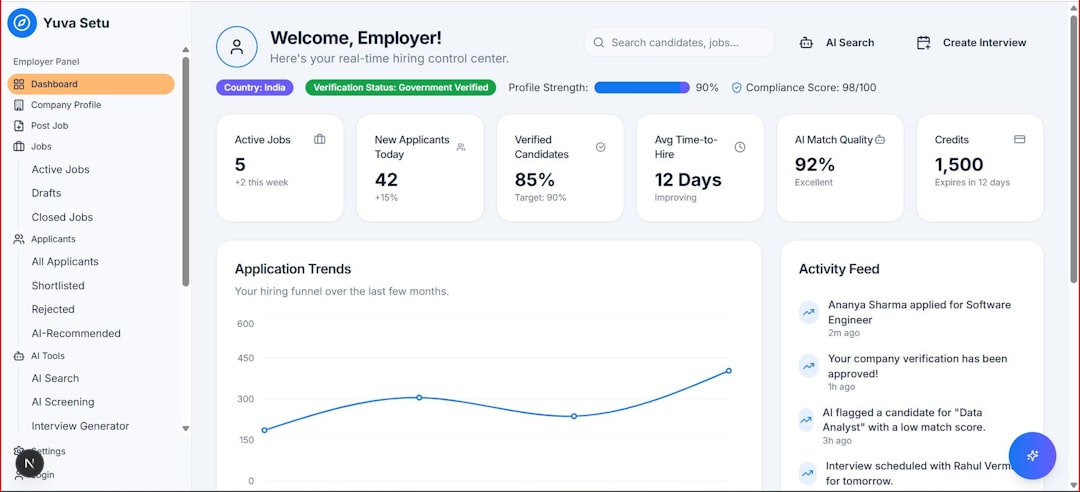
The allure is obvious. Imagine an AI proactively identifying why your latest product page isn't converting, or why a specific blog post is seeing high bounce rates. Picture an AI sifting through gigabytes of access logs to present actionable insights on peak traffic times or geographical interest, allowing for highly targeted content pushes or server optimizations. This level of automated, granular analysis, especially accessible to those without extensive analytics teams, could democratize sophisticated digital strategy.
The Indian Context: Balancing Innovation with Introspection
India's digital landscape is characterized by its vastness and rapid adoption of technology, particularly among its millions of Small and Medium Enterprises (SMEs). A significant portion of these businesses rely on WordPress for their online presence, drawn by its flexibility, cost-effectiveness, and extensive ecosystem. For these entities, the promise of Claude's integration is a double-edged sword.
On one hand, it offers a competitive edge. Indian SMEs can now theoretically punch above their weight, utilizing AI-driven insights to refine their digital marketing, personalize user experiences, and optimize their online operations without the prohibitive costs of hiring specialized data analysts. This could foster innovation and growth in a highly competitive market.
However, the 'trust' factor becomes paramount. Entrusting an external AI with the intimate details of customer behaviour, proprietary content performance, and internal operational metrics requires a leap of faith. In a region where data privacy regulations are still evolving and awareness around digital security is growing, the implications of such deep access warrant intense scrutiny. What are the data governance policies of Anthropic concerning Indian user data? How is this data secured? These are not trivial questions; they are foundational to building a resilient and trustworthy digital economy.
The Double-Edged Sword: Privacy, Autonomy, and the Illusion of Control
The fundamental question isn't if Claude can analyze data, but what it does with that analysis, and who truly benefits. Giving an AI unprecedented access to a site's inner workings hands over a significant degree of control. While the output promises to be insights, the input is raw, unadulterated, and often highly sensitive user data. For a platform like WordPress, which prides itself on user autonomy and open-source principles, this integration introduces a powerful, proprietary black box into the mix.
Beyond data privacy, there's the question of algorithmic bias. An AI trained on certain datasets might inadvertently perpetuate biases in its analysis, leading to skewed recommendations or an incomplete understanding of diverse user bases, particularly problematic in a country as demographically varied as India. If Claude recommends content optimization based on a global, or even Western-centric, understanding of 'engagement,' it could inadvertently alienate local audiences or misinterpret culturally specific nuances in user behaviour.
Furthermore, the ease of automated analysis could foster an over-reliance, potentially diminishing the critical thinking and nuanced human understanding that seasoned webmasters and content strategists bring to the table. Are we outsourcing strategic thinking, or merely augmenting it? The line is thin and easily blurred.
Public Sentiment: A Mix of Enthusiasm and Caution
The digital chatter in India reflects a characteristic blend of tech-forward optimism and pragmatic skepticism. Many early adopters and tech-savvy entrepreneurs are eager to experiment, foreseeing efficiency gains and a competitive edge. "This is a game-changer for my e-commerce store," remarked one Bengaluru-based startup founder, "Imagine knowing exactly which product images convert best, automatically!"
However, privacy advocates and veteran digital marketers express palpable concern. "It’s one thing to use Google Analytics; it's another to give an AI carte blanche to crawl every aspect of your site, potentially linking it to broader datasets," cautioned a Mumbai-based cybersecurity consultant. "We need transparency, not just powerful features. What are the long-term implications for data ownership and strategic independence?" This sentiment underscores a growing awareness that convenience cannot come at the cost of control.
Conclusion: Navigating the AI Frontier with Eyes Wide Open
Claude's integration with WordPress is not merely an upgrade; it's a paradigm shift. For India, a nation poised at the forefront of digital transformation, this development presents both immense opportunities and significant challenges. The ability to harness AI for deep analytical insights can propel businesses forward, offering efficiencies and competitive advantages previously unimaginable. Yet, it simultaneously demands a robust conversation about data ethics, privacy safeguards, and the imperative to retain human agency in an increasingly automated world.
The 'Rusty Tablet' maintains that progress, however inevitable, must be scrutinized. As Claude peers deeper into our digital storefronts, we must ensure that the insights gained empower, rather than enslave, the human spirit of innovation and entrepreneurship. The future of WordPress, and indeed the internet, may well be AI-powered, but its direction must remain human-guided, especially in markets as vibrant and complex as India's.