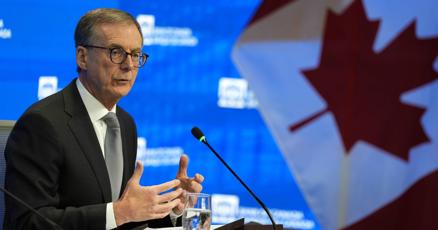
The economic landscape for Canada is currently navigating a complex confluence of domestic stability and external pressures. At the forefront of this tension are the persistent threats from the U.S. administration, particularly President Donald Trump's rhetoric around imposing hefty tariffs on Canadian imports. Despite this palpable uncertainty, the Bank of Canada (BoC) is widely expected to maintain its policy interest rate at its upcoming Wednesday morning announcement.
This anticipated decision is not merely a passive observation but a strategic affirmation of the central bank's commitment to its established economic outlook, first articulated last October. Economists broadly concur that the BoC will adhere to its message, resisting calls for further rate cuts as long as economic growth and inflation figures align with their internal forecasts.

Key Takeaways
-
Rates Held Steady: The Bank of Canada is projected to keep its benchmark interest rate unchanged, defying immediate pressure from trade disputes.
-
Tariff Resilience: This decision reflects a measure of confidence within the BoC regarding Canada's economic resilience in the face of potential U.S. tariffs.
-
Forward Guidance Adherence: The central bank is sticking to its October guidance, indicating no further rate cuts are planned unless economic conditions significantly diverge from forecasts.
-
Objective Stance: The move underscores an objective, data-driven approach to monetary policy, prioritising long-term stability over short-term political or trade-related anxieties.
Main Analysis: Navigating a Turbulent Economic Climate
The Shadow of Tariffs and Economic Uncertainty
President Trump's renewed threats of significant tariffs—up to 100 per cent on Canadian goods—have injected a substantial degree of uncertainty into the Canadian economic outlook. Such measures, if implemented, could severely disrupt cross-border trade, impact supply chains, and potentially lead to job losses in export-oriented sectors. This backdrop typically compels central banks to consider accommodative monetary policies, such as interest rate cuts, to stimulate economic activity and cushion the blow of external shocks.
However, the Bank of Canada appears to be charting a different course, one rooted in a more long-term view of domestic economic fundamentals. This suggests that while the tariff threats are acknowledged, they may not yet be perceived as a fundamental threat requiring immediate monetary policy intervention. The BoC's assessment likely weighs the probability of these tariffs materializing and their actual economic impact against the current health of the Canadian economy.
BoC's Measured Approach: A Commitment to Stability
The central bank's anticipated decision to hold rates firm is a direct continuation of its stance articulated in October. At that time, the BoC signalled a 'wait-and-see' approach, indicating that further rate cuts would not be entertained provided that economic growth and inflation evolved in line with its projections. This forward guidance has proven critical in shaping market expectations and providing a degree of predictability.
Economists have largely endorsed this strategy, viewing it as a prudent move that avoids knee-jerk reactions to external political noise. Holding rates steady allows the BoC to conserve its monetary policy ammunition for more severe and sustained downturns, should they arise. It also prevents premature easing that could risk overheating certain sectors of the economy or exacerbating inflationary pressures, albeit inflation remains a moderate concern at present.

Domestic Economic Resilience vs. External Headwinds
Canada's economy, despite its significant reliance on trade with the United States, has demonstrated pockets of resilience. Employment figures, consumer spending, and the housing market have shown varying degrees of strength, providing the BoC with some latitude to maintain its current policy. The central bank's objective is to achieve stable inflation (around 2 per cent) and maximum sustainable employment. Their latest projections likely indicate that, even with the looming tariff threats, the economy is still largely on a path that can achieve these targets without immediate changes to borrowing costs.
Public Sentiment: Cautious Optimism Amidst Global Jitters
Market analysts and business leaders, while wary of the potential fallout from a trade war, generally view the Bank of Canada's anticipated decision with a sense of stability. "The BoC's consistent message from October has been crucial in anchoring expectations," noted one senior economist at a major Canadian bank. "They're not succumbing to the immediate headlines, which is a sign of robust institutional independence."
Another industry observer remarked, "Businesses appreciate predictability. Knowing that the central bank is holding its line provides a degree of certainty, even as we grapple with the unpredictable nature of trade policy. It allows for better planning, albeit with a close eye on Washington."
There is a general sentiment that while the tariff threats are serious, the BoC's current position prevents an unnecessary weakening of the Canadian dollar or a premature reduction in lending rates that might not be warranted by domestic conditions alone.
Conclusion
The Bank of Canada's expected decision to maintain its policy interest rate marks a significant statement of confidence and independence. By holding the line amidst aggressive tariff threats and an 'uncertain economy,' the central bank is signalling its belief in the underlying strength of Canada's economic fundamentals and its commitment to a long-term, data-driven monetary policy. While the global trade environment remains volatile, this move provides a critical anchor of stability for Canadian businesses and consumers, allowing them to navigate the turbulent waters with a more predictable domestic financial landscape.