Key Takeaways
-
Santa Anita's "Racing on Demand" machines, resembling Historical Horse Racing (HHR) slots, were swiftly confiscated by the California Department of Justice.
-
The Stronach Group, owners of Santa Anita, maintains the machines are legal under existing pari-mutuel laws and challenges the state's inaction on their prior legal analysis.
-
Native American tribes vehemently oppose the machines, viewing them as an encroachment on their exclusive gaming compacts and a "fool's errand" for the struggling horse racing industry.
-
California has a history of aggressive enforcement against gambling outside tribal compacts, including bans on sweepstakes casinos and DFS.
-
A significant legal battle is now anticipated, with implications for the future of gambling regulation and the survival of horse racing in California.
The Audacious Launch and the Predictable Crackdown
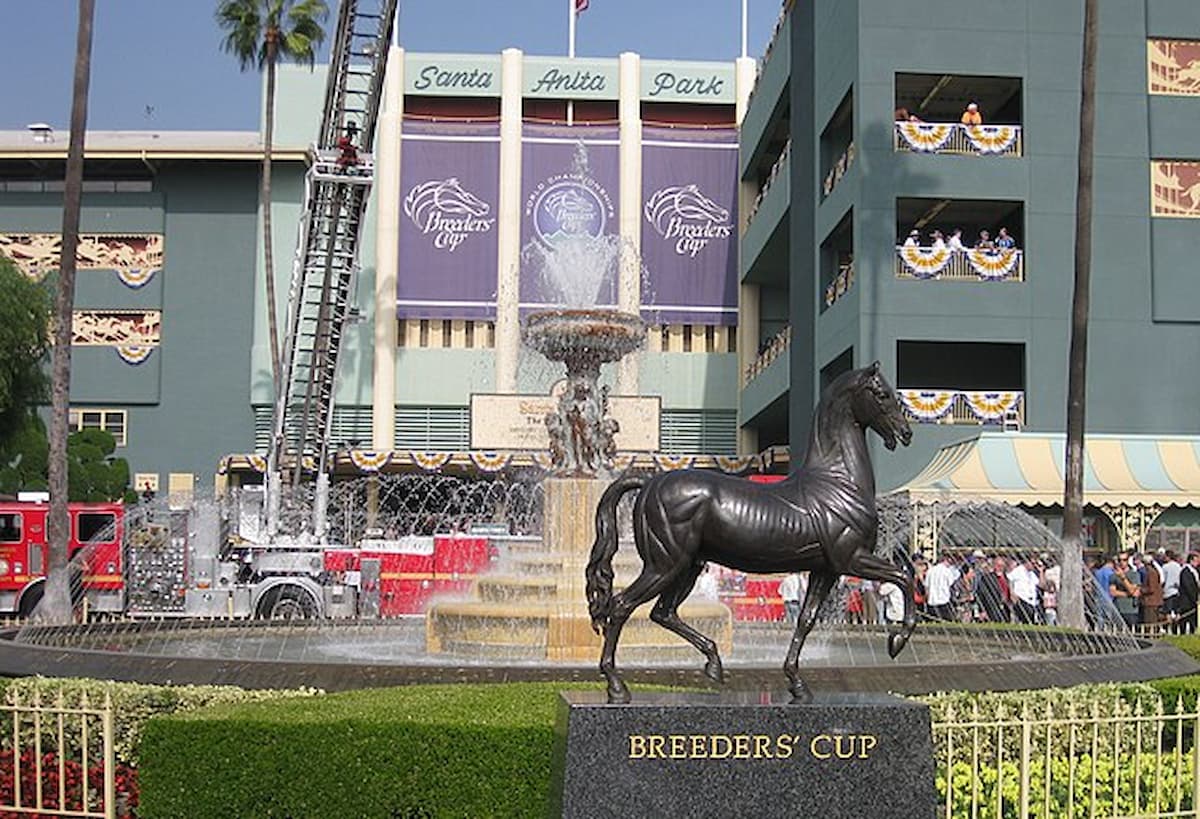
One must almost admire the sheer gall, if not the foresight, of Santa Anita’s recent gambit. In an era where innovation is touted as the panacea for all industrial ills, the venerable racecourse decided its salvation lay not in the thunder of hooves, but in the digital whir of "Racing on Demand" machines. Installed with a stealth that would make a ninja proud – no advertising, no fanfare, certainly no notification to the California Horse Racing Board – these contraptions, designed to turn past races into slots-like entertainment, took a respectable $26,600 in wagers in a mere two days. A tidy sum, indeed, until the long arm of the California Department of Justice came swinging.

Like a particularly inefficient heist, the machines appeared on a Thursday and were unceremoniously hauled away by a phalanx of officers on Saturday. One can almost picture the scene: stern-faced officials, badges gleaming, instructing bewildered staff to clear the premises as the illicit devices, cash and all, were trundled onto handcarts and spirited away. It’s a tableau rich with dramatic irony, a testament to the naive hope that one could simply circumvent established power structures with a bit of technological wizardry and a hopeful interpretation of "pari-mutuel wagering laws."
A "Fool's Errand" or Solid Legal Ground? The Battle of Narratives
Scott Daruty, the Stronach Group’s senior vice president, has adopted the posture of a man deeply wronged. He asserts that these machines operate on "solid legal ground," and that Attorney General Rob Bonta's office had "ample time to raise concerns" after receiving a "comprehensive legal analysis" nearly a year ago. One can practically hear the indignant huff through his official statement: "They did not. We proceeded... We're fully prepared to defend ourselves." It's a bold claim, suggesting either an impressive degree of legal certainty or a rather profound misreading of California's political landscape.
On the other side stands Victor Rocha, the Indian Gaming Association's conference chair, whose pronouncements drip with the sagacity of someone who's seen this dance before. For Rocha, Santa Anita's move was not merely predictable, but entirely foolish. "There was always only one outcome out of this. They know it. I know it," he declared, framing the venture as a "desperate act by a desperate company." His blunt assessment – that nothing short of "the second coming" can save horse racing in California – isn't just critical; it's a brutal epitaph for an industry seemingly caught in a terminal decline, scrambling for any port in a storm.
California's Uncompromising Stance and the 'Duck Test' Dilemma
California, it appears, is not a state to be trifled with when it comes to gambling regulation outside of its meticulously crafted tribal compacts. This isn't some laissez-faire playground for betting innovation; it's a tightly controlled environment where sweepstakes casinos were banned, daily fantasy sports declared illegal, and prediction market platforms are reportedly next on the chopping block. The message is as clear as a bell, or perhaps, as loud as a tribal casino's jackpot bell: if it looks, quacks, and waddles like unregulated gambling, the state's Attorney General is likely to send it packing.
This brings us to the wonderfully reductionist "looks like a duck, quacks like a duck" argument. Trey Franzoy, a gaming operator in Colorado, railed against this simplified logic when his own slot-like machines were seized, insisting, "In today's day and age, looks like a duck, quacks like a duck, it is a duck, doesn't work anymore." While one appreciates his rhetorical flourish, one wonders if Mr. Franzoy has truly grasped the fundamental pragmatism of regulatory bodies, particularly when powerful, well-funded interests (the tribes) are providing the ornithological identification. In California, Santa Anita has discovered that when the ducks in question resemble lucrative slot machines, the "duck test" is very much alive and well.
A Lingering Legacy: The Future of California's Turf War
The Seminole Tribe of Florida's recent venture into "Games powered by Past Motor Races" online only underscores the growing appetite for such hybrid gaming, and the inevitable pushback it generates. But Florida is not California, where the tribal gaming lobby wields truly formidable power.
The immediate future points towards an inevitable legal brawl. While Daruty remained tight-lipped on specifics, his defiance suggests Santa Anita will not go quietly into that good night. This isn't just about a handful of machines; it’s about the very economic viability of California's struggling racetracks
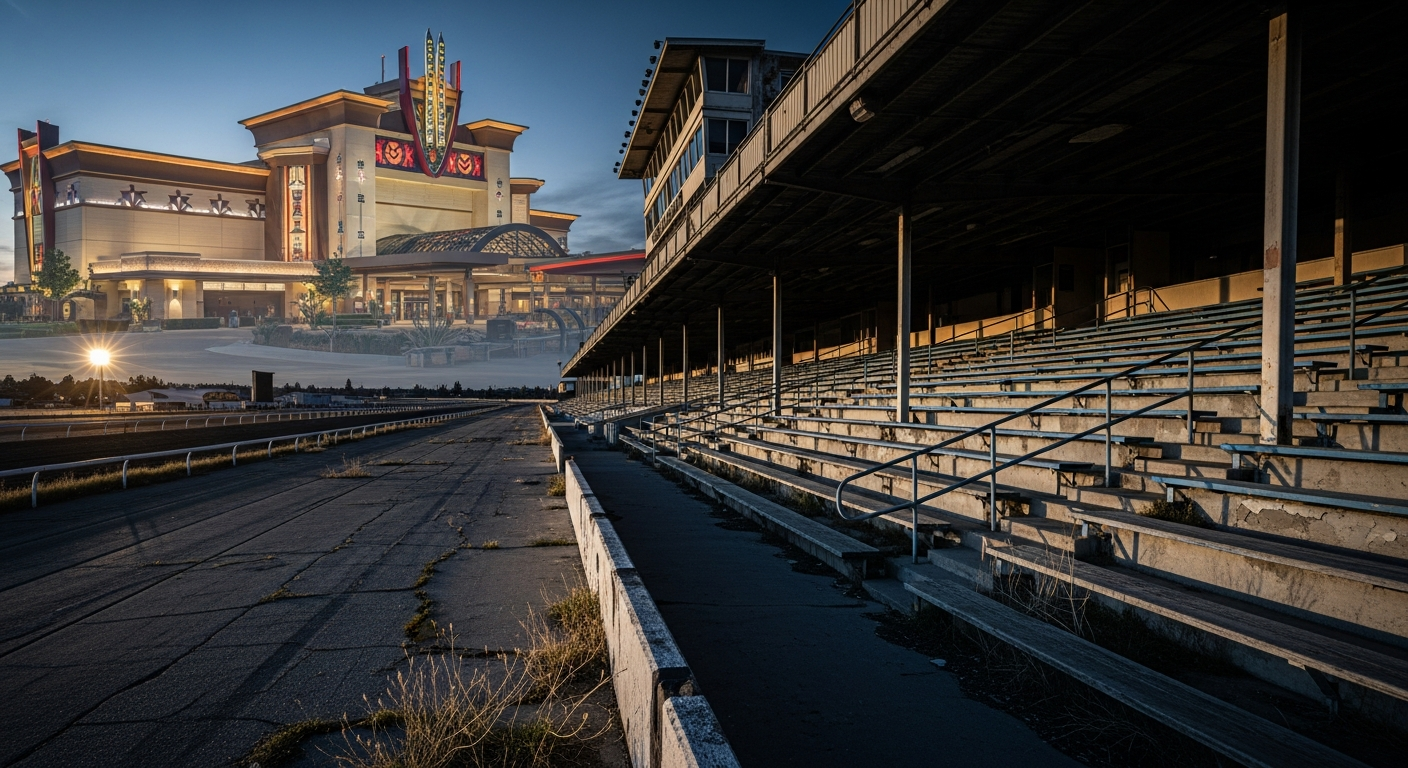
and the sanctity of tribal gaming exclusivity. The legal precedents set here could reverberate across the US, but for now, the eyes of the gaming world are firmly fixed on the Golden State, where the only certainty is that this particular race is far from over.
Public Sentiment
The public discourse, as represented by the key players, paints a stark picture of opposing ideologies. Scott Daruty, senior vice president of the Stronach Group, embodies a sentiment of indignant defence, arguing that Santa Anita acted on "solid legal ground" and was unfairly targeted despite providing advanced legal analysis to the Attorney General's office. His stance reflects a belief in the legality of their innovative approach and a frustration with what he perceives as a sudden, unwarranted challenge from the state. He's ready for a fight, confident that the law is on their side, portraying the state's action as an overreach.
In stark contrast, Victor Rocha, conference chair of the Indian Gaming Association, articulates a sentiment of weary vindication mixed with a touch of grim satisfaction. He views Santa Anita's move as a predictable, even desperate, miscalculation, a "fool's errand" in the face of established tribal power and state precedent. Rocha's commentary is laced with an almost fatalistic resignation regarding the horse racing industry's decline, implying that no amount of gaming innovation, short of a divine intervention, can truly save it. His perspective champions the clear boundaries of existing gaming laws and highlights the futility of attempts to bypass tribal compacts.
Conclusion
The Santa Anita machine seizure is more than a simple enforcement action; it’s a clarifying moment in the perpetually murky waters of US gambling regulation. It underscores the formidable political and legal power of California's tribal gaming industry, effectively drawing a line in the sand against any perceived encroachment. For the struggling horse racing sector, this incident is a bitter reminder of their precarious position and the limited avenues for diversification. While the Stronach Group readies for a legal defence, the odds, both metaphorical and literal, appear heavily stacked against them. The "looks like a slot" argument, despite its alleged anachronism, proved decisively effective. As the legal eagles sharpen their talons, one thing is abundantly clear: California's gambling future remains firmly rooted in its tribal compacts, and any attempt to re-engineer that landscape will be met with swift, decisive, and often ironic, force.