
The Union government has articulated a clear vision for India's future economic geography, emphasizing the pivotal role of cities as "engines" of growth, innovation, and opportunity. This ethos underpins the strategic focus announced in the Union Budget 2026-27: a concerted effort to enhance the modern infrastructure and basic amenities in India's burgeoning Tier 2 and Tier 3 cities, alongside its culturally significant temple towns.
Key Takeaways
-
Decentralized Growth: The Centre will intensify focus on Tier 2, Tier 3 cities, and temple towns to broaden economic development beyond major metros.
-
City Economic Regions (CERs): A new framework designed to harness agglomeration benefits by mapping regions based on specific growth drivers (manufacturing, tourism, services, logistics).
-
Substantial Funding: An allocation of Rs 5,000 crore per CER over five years has been announced.
-
Challenge Mode & Reforms: Funding is linked to a challenge mode, incentivizing states and urban local bodies (ULBs) for reforms and measurable outcomes.
-
Tamil Nadu Benefit: The state is specifically identified as a potential beneficiary, given its diverse economic profile and numerous temple towns.
Main Analysis: Reshaping India's Urban Fabric
A New Chapter for Urban Development
The declaration by Finance Minister Nirmala Sitharaman marks a departure from traditional metro-centric planning, recognizing that sustainable national growth necessitates a broader, more inclusive urban strategy. By directing investment and policy attention towards smaller cities and temple towns, the government aims to alleviate the pressures on overburdened Tier 1 cities while simultaneously creating new poles of economic activity and opportunity across the country. This move acknowledges the untapped potential in these regions, which often possess unique sectoral strengths but lag in infrastructure and basic services.
Introduction of City Economic Regions (CERs)
At the heart of this new strategy lies the concept of City Economic Regions (CERs). These regions are not merely administrative divisions but are envisioned as dynamic economic ecosystems, mapped based on their inherent growth drivers—be it robust manufacturing bases, burgeoning tourism potential, a strong services sector, or strategic logistical advantages. The goal is to "further amplify" economic potential by leveraging 'agglomeration benefits,' where proximity and concentration of related industries or activities spur greater productivity and innovation. This bespoke approach to urban planning, tailored to the specific strengths of each region, signals a more nuanced and effective deployment of resources.
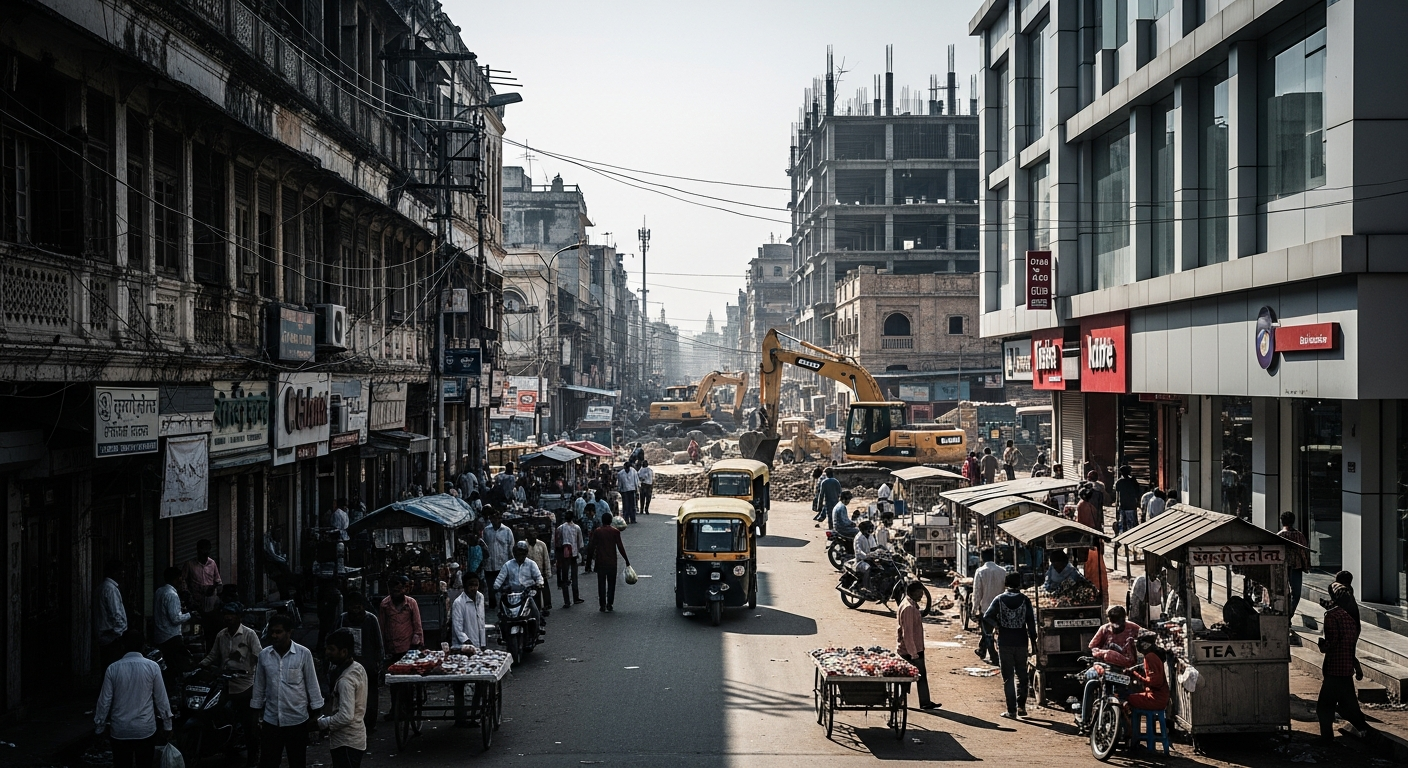
A bustling street in a Tier 2 Indian city, showcasing a blend of traditional architecture and modern commercial establishments, with ongoing infrastructure development visible in the background. The scene reflects dynamism and growth.
Innovative Funding: The Challenge Mode
To operationalize the CER framework, the Budget has allocated a substantial Rs 5,000 crore per CER over a period of five years. Crucially, this funding is not a direct grant but will be deployed through a 'challenge mode' linked to reforms and measurable outcomes. This 'reform-cum-results-based financing mechanism' is a strategic design choice, intended to instill discipline and efficiency in states and urban local bodies. It incentivizes them to not only plan ambitious projects but also to execute them effectively, adhere to timelines, and demonstrate tangible improvements in urban governance and service delivery. This performance-driven model could foster healthy competition among states, driving higher standards of urban planning and execution.
Implications for Tamil Nadu
The explicit mention of Tamil Nadu as a likely beneficiary is significant. The state possesses a diverse economic landscape, ranging from a strong manufacturing base in cities like Coimbatore and Tiruppur, a vibrant services sector in Chennai, to a rich tapestry of temple towns like Madurai, Kanchipuram, and Rameswaram, which attract millions of tourists annually. Many of its Tier 2 and Tier 3 cities are already experiencing organic growth. The CER framework could provide the necessary impetus to formalize and accelerate this development, channeling investments into critical infrastructure, improving connectivity, and enhancing tourist amenities, thereby amplifying its economic potential considerably. This could lead to a decentralization of economic activity and job creation within the state, reducing the burden on Chennai.
Challenges and Opportunities
While the vision is ambitious, its execution will face several challenges. Inter-state coordination, land acquisition hurdles, ensuring equitable distribution of benefits, and building robust local governance capacities will be critical. The success of the 'challenge mode' will hinge on transparent metrics and impartial evaluation. However, the opportunities are equally vast: a more balanced national economic growth, reduced rural-urban migration pressure on mega-cities, improved quality of life in smaller towns, and the creation of millions of new jobs. It represents a strategic investment in the future resilience and prosperity of India's diverse urban centres.
Public Sentiment
Initial reactions from urban planners and economists are largely optimistic, albeit with a pragmatic understanding of the implementation hurdles. Dr. Anya Singh, an urban policy expert, noted, "This budget addresses a long-standing need to look beyond the top-tier cities. The CER model, particularly with its performance-linked funding, could be a game-changer for regional development, provided the implementation is robust and transparent." State officials, particularly from states like Tamil Nadu, have expressed enthusiasm, viewing it as an opportunity to secure significant central funding for their development agendas. However, some civic activists voice concerns about ensuring public participation in planning and preventing potential displacement, stressing the need for inclusive growth strategies at the local level.
Conclusion
The Union Budget 2026-27's focus on Tier 2, Tier 3 cities, and temple towns, coupled with the innovative City Economic Regions framework and performance-linked funding, signals a determined effort to foster more inclusive and distributed national growth. If executed effectively, this strategy has the potential to redefine India's urban landscape, transforming smaller cities into vibrant economic hubs and cultural destinations, ultimately contributing to a more balanced and resilient national economy. The coming years will reveal how states and local bodies rise to this challenge, shaping the future of urban India.