
For generations, the world of antenna design has been described in hushed tones, almost reverentially, as a 'black art' or 'witchcraft'. This isn't just hyperbole; it speaks to the profound complexity, the years of empirical tweaking, and the almost mystical intuition required to coax electromagnetic waves into behaving precisely as desired. It’s a domain where seasoned engineers, often termed gurus, wielded experience akin to an innate sixth sense, fine-tuning devices that are the very heart of our wireless communication.
But what if this deeply cherished skill, honed over decades, could be augmented, perhaps even superseded, by the sheer, unyielding power of computational brute force? This isn't a dystopian fantasy, but a rapidly unfolding reality that India's burgeoning tech and aerospace sectors must confront head-on.
Key Takeaways:
-
The Mystique is Fading: Traditional, intuition-driven antenna design is being challenged by data-driven approaches.
-
Computational Power Unleashed: Evolutionary algorithms and AI can explore vast design spaces, unearthing novel solutions.
-
Democratisation of Design: This shift promises to lower barriers to entry, accelerating innovation in critical sectors.
-
A New Skill Paradigm: The role of the RF engineer is evolving from intuitive artisan to sophisticated algorithm supervisor.
-
India's Strategic Opportunity: Embracing this change can propel India's self-reliance in cutting-edge communication technologies.
The Myth of the 'Black Art': An Indian Perspective
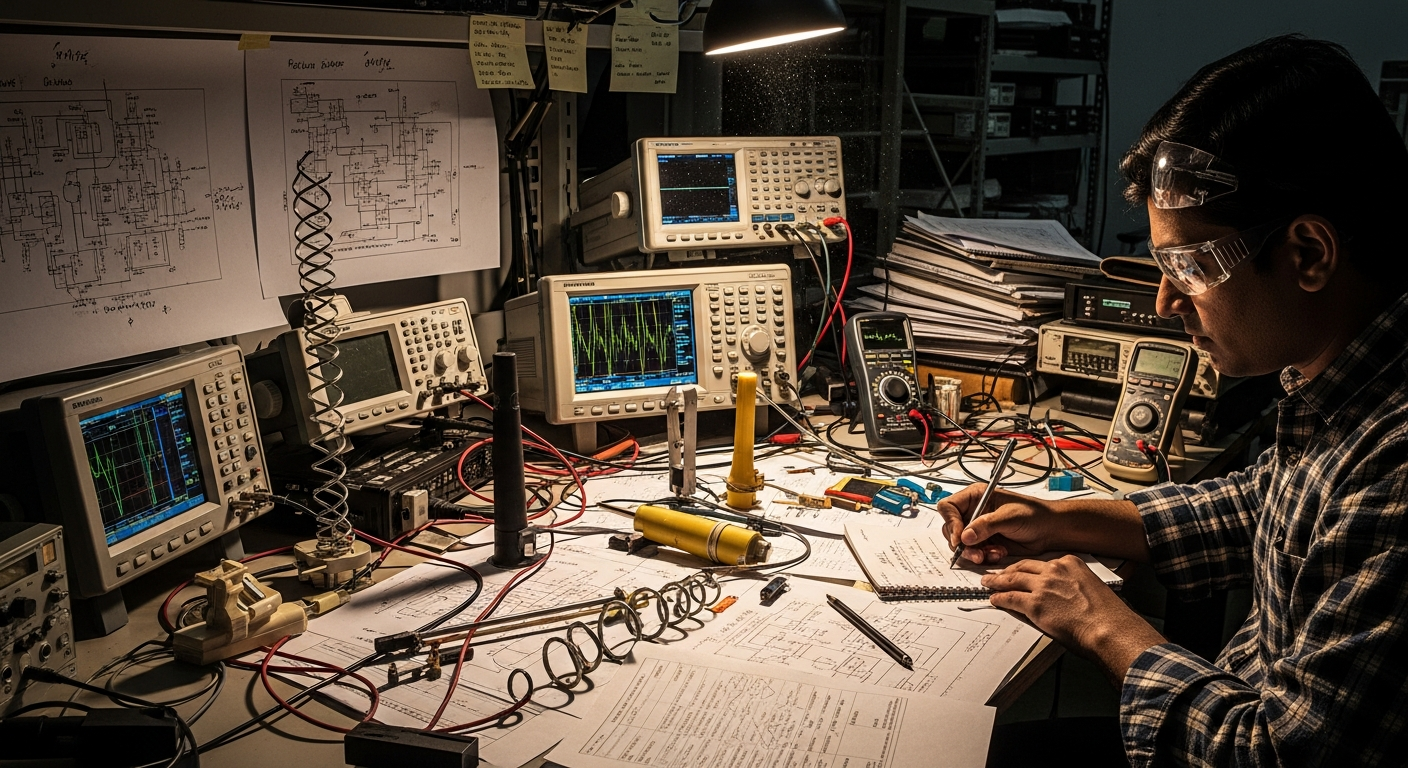
Across India, from ISRO's satellite dishes to the antennas powering our burgeoning 5G networks, the handprint of brilliant, experienced RF engineers is evident. Their expertise is often the result of rigorous theoretical understanding coupled with years of hands-on trial and error – a unique blend of science and craft. This laborious process, involving intricate calculations, numerous prototypes, and endless measurements in anechoic chambers, makes antenna design inherently slow and expensive. Intuition often guides where to start, but the final, optimal design is elusive, a dance between physics and painstaking refinement. For many, it's a testament to human ingenuity and perseverance.
Brute Force: The Digital Alchemist at Work
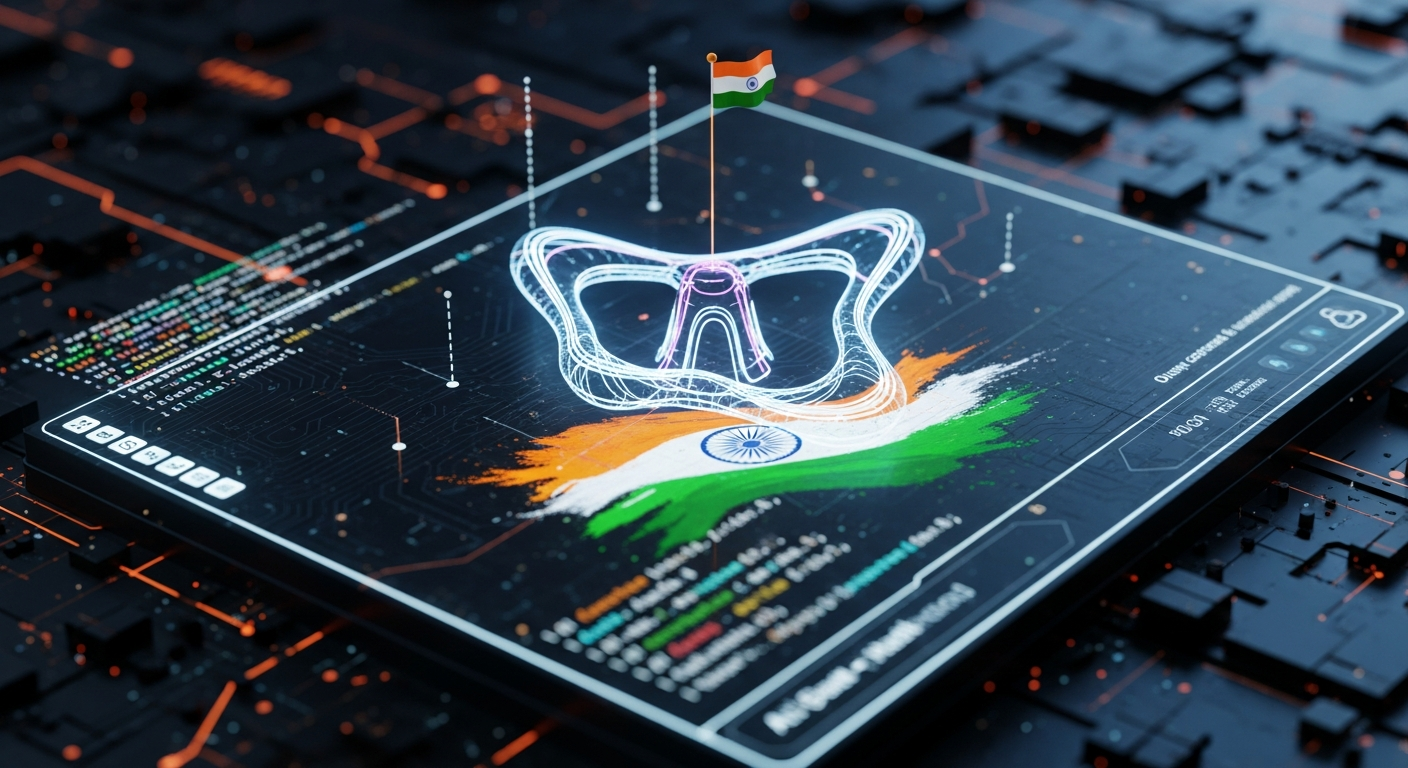
Now, imagine a scenario where instead of a human intuitionally guiding the design, a powerful algorithm systematically explores billions, even trillions, of potential antenna geometries. This is the essence of 'bruteforcing' antenna designs. Leveraging techniques like evolutionary algorithms, which mimic natural selection, or advanced machine learning, computational systems can generate and evaluate countless iterations, pushing the boundaries of what's physically possible. They don't have human biases; they don't get tired; they just compute. The results are often bizarre, 'accidental' shapes that a human engineer would likely never conceive – fractal patterns, irregular blobs, or asymmetrical structures – yet they perform with unparalleled efficiency. The 'black box' of human intuition is replaced by a different kind of black box: the opaque, yet highly effective, logic of the algorithm. This isn't about replacing skill with sheer numbers; it's about redefining what 'skill' means in the digital age.
India's RF Reckoning: Threat or Unprecedented Opportunity?
For a nation like India, rapidly advancing its digital infrastructure and space capabilities, this shift presents a profound duality. On one hand, it's an unprecedented opportunity to democratize advanced antenna design. Start-ups could iterate designs faster and cheaper, reducing reliance on costly foreign expertise or lengthy in-house R&D. Imagine rapid prototyping of custom antennas for IoT devices, or sophisticated phased arrays for next-generation radar systems, all designed in a fraction of the traditional time. This could significantly accelerate initiatives like 'Make in India' in electronics and defence.
However, there's a flip side. What happens to the seasoned RF engineers who have dedicated their lives to mastering this 'black art'? Will their hard-won knowledge become obsolete? The challenge for India isn't just about adopting these technologies, but about reskilling its vast engineering talent pool. The future RF engineer might spend less time soldering prototypes and more time crafting intelligent algorithms, interpreting AI-generated designs, and validating their performance. It's a transition from being the sole designer to becoming a conductor of powerful computational orchestras. Ignoring this paradigm shift is not an option; embracing it smartly is the key to maintaining our competitive edge.
Public Sentiment
"The idea that a computer can design an antenna better than a human is both exciting and terrifying," admits Dr. Anil Kumar, a veteran RF engineer from Bengaluru. "I've spent forty years learning the nuances; now, a machine might do it in forty minutes. We must adapt, learn to use these tools, or risk becoming dinosaurs." Young entrepreneur Priya Sharma, CEO of a telecom startup in Pune, offers a more optimistic view: "This is a game-changer for us. We can innovate faster, design custom solutions for niche markets without huge R&D budgets. It levels the playing field against bigger, established players. It's about accelerating our 'jugaad' spirit with algorithmic precision."
Conclusion
The era of antenna design as a mystical 'black art' is drawing to a close, giving way to a new age where computational brute force and human ingenuity collaborate. For India, this isn't just a technological upgrade; it's a strategic imperative. We must invest in the tools, train our engineers in these new methodologies, and foster an environment where algorithmic design is seen not as a threat, but as a powerful ally. The future of wireless communication, from our smartphones to our satellites, will be shaped by those who master this intricate dance between human intuition and machine intelligence. The question isn't whether algorithms will design our antennas, but how quickly India will lead the charge in harnessing their potential.